



The Hidden Cost of AI: How Data Centers Are Forcing Americans Out of Their Homes
A Crisis in Atlanta: One Woman’s Struggle to Stay Warm
In a well-appointed 3,000-square-foot home in Atlanta, Georgia, Carolyn Kayne finds herself living like a refugee in her own house. Despite the sunny weather outside, she bundles up in a ski suit indoors during winter months, desperately trying to stay warm without turning on the heat. This isn’t a lifestyle choice or an extreme energy-saving experiment—it’s become a matter of financial survival. Over the past two years, Kayne has watched helplessly as her electric bills have nearly doubled, forcing her to make impossible choices. She’s shut off the heat and hot water to most of her home, essentially abandoning the majority of her living space. Now, she confines herself to what she calls “a little apartment in the back” of her own house, a small area she can afford to keep minimally comfortable. For Kayne and thousands of other Georgians, the American dream of homeownership has transformed into a nightmare of impossible utility bills and shrinking living spaces.
The Numbers Tell a Shocking Story
Carolyn Kayne’s situation isn’t an isolated case of personal misfortune—it’s symptomatic of a much larger crisis affecting Georgia residents. Patty Durand, founder of the nonprofit advocacy group Georgians for Affordable Energy, has been tracking this alarming trend and the statistics she’s uncovered paint a troubling picture. Just a few years ago, the average Georgia Power customer could expect to pay around $150 per month for electricity—a manageable expense for most middle-class families. Today, that same average bill has jumped to $225 monthly, representing a 50% increase in a relatively short period. A CBS News investigation revealed that Georgia Power, the state’s largest energy provider, has imposed six separate rate hikes over the past three years alone. This pattern of continuous price increases has created a crisis for working families, retirees on fixed incomes, and anyone living paycheck to paycheck. What was once a predictable monthly expense has become an unpredictable burden that forces people to choose between electricity, food, medication, or other necessities. The rate hikes have been so frequent and substantial that many Georgia residents find themselves in Kayne’s position—rationing energy use in their own homes just to survive financially.
The Real Culprits: Nuclear Power and Data Centers
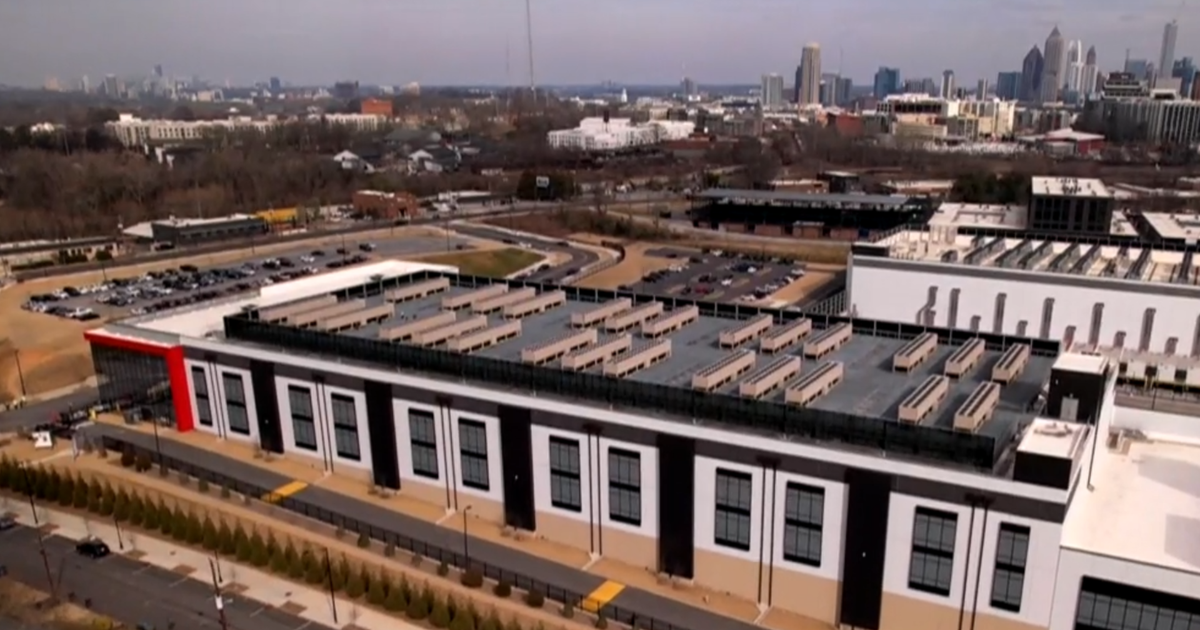
Two major developments help explain Georgia’s electricity crisis: the completion of the Vogtle nuclear power plant and an explosive growth in data centers throughout the state. The Vogtle plant, which went online during this period, represents a massive infrastructure investment whose costs have been partially passed along to consumers. But the data center boom has proven even more significant in driving up costs for ordinary residents. Georgia has actively courted these facilities with promises of discounted power rates, essentially offering them preferential pricing that others don’t receive. The timing couldn’t be worse for consumers—the artificial intelligence revolution has created unprecedented demand for data centers, which require enormous amounts of electricity to power their servers and cooling systems. These massive facilities have flocked to Georgia specifically because of the attractive energy rates being offered to them. According to Patty Durand and other consumer advocates, these data centers came to Georgia explicitly for discounted power, creating a two-tiered system where large corporate customers enjoy preferential rates while residential customers bear the burden. This isn’t just a Georgia problem—it’s a national crisis in the making. According to research from the Institute for Energy Economics and Financial Analysis, new data centers are driving up utility bills for consumers in at least 13 states across the country. A 2025 Bloomberg analysis delivered even more shocking findings: Americans living near data centers are paying as much as 267% more per month for energy than they were just five years ago.
The AI Boom’s Unexpected Victims
The artificial intelligence revolution has been celebrated as a technological breakthrough that will transform society, drive economic growth, and create new opportunities. What’s rarely discussed in these glowing predictions is who pays the price—literally—for this transformation. The AI applications that power everything from ChatGPT to sophisticated business analytics require massive computational resources, which means massive data centers, which in turn means massive electricity consumption. These facilities operate 24/7, drawing continuous power for both their computing operations and the extensive cooling systems needed to prevent the equipment from overheating. The electricity demands are so substantial that data centers can consume as much power as small cities. What makes this particularly galling for people like Carolyn Kayne is that they’re being forced to subsidize this technology boom. They’re not benefiting from discounted electricity rates. They’re not receiving dividends from the AI companies. They’re simply seeing their bills climb higher and higher while being told that economic development requires their sacrifice. The pattern is disturbingly familiar to anyone who’s watched economic development deals in recent decades—corporations receive incentives and subsidies while ordinary people bear the costs. In this case, the subsidy comes directly out of residential electricity customers’ pockets in the form of higher rates, and the impact is immediate and devastating for those on tight budgets.
Political Responses and Corporate Denials
The data center electricity crisis has begun generating political attention, though meaningful action remains elusive. This week, Maine Governor Janet Mills vetoed legislation that would have made her state the first in the nation to ban construction of new data centers—a drastic measure that reflects the severity of concerns about these facilities’ impact. In her statement explaining the veto, Governor Mills acknowledged the need to “examine and plan for the potential impacts of large-scale data centers in Maine, as the use of artificial intelligence becomes more widespread.” While she stopped short of supporting a complete ban, her comments signal growing awareness among policymakers that data centers’ electricity demands create significant challenges that need to be addressed. In Georgia, consumer advocates like Patty Durand are sounding urgent alarms about the future. “Data centers will add billions of dollars to costs to electricity rates in Georgia if we don’t get better protection than we have right now,” Durand warned. Georgia Power has recently announced a rate freeze and stated they’ve agreed to use revenue from large customers like data centers to help lower costs for residential customers. Aaron Mitchell, senior vice president for strategic growth at Georgia Power, has explicitly denied that residential customers are subsidizing data center growth, stating: “There is no risk that residential customers will end up paying for the costs of this large growth, including data centers.” However, this assurance rings hollow for customers like Carolyn Kayne, who have watched their bills nearly double regardless of what company officials claim. The disconnect between corporate statements and lived reality has left many Georgians skeptical about whether promised protections will materialize or make any meaningful difference.
An Uncertain Future: Home or Homelessness?
For Carolyn Kayne, the promises of future rate relief and assurances that costs aren’t being passed to residents come too late to save her situation. After years of making increasingly desperate sacrifices—wearing winter clothing indoors, shutting off heat and hot water, abandoning most of her living space—she’s reached the end of what’s financially sustainable. “I guess maybe it is time, you know, to give up my home,” Kayne said, the resignation in her words capturing the defeat felt by countless Americans facing similar circumstances. Her story represents a particularly cruel irony: someone who managed to achieve homeownership, that cornerstone of American stability and success, now finds that accomplishment meaningless because she can’t afford to actually live in the home she owns. The crisis Kayne faces illuminates a broader question about American priorities and values. As artificial intelligence companies and data center operators profit from the AI boom, and as Georgia celebrates landing these facilities as economic development victories, who is bearing the real cost? The answer appears to be working people, retirees, and families who are being systematically priced out of basic electricity access in their own homes. Carolyn Kayne’s situation should serve as a warning about the hidden human costs of technological progress pursued without adequate consideration for its impact on ordinary people. Her story—bundled in a ski suit in her own home, contemplating whether she’ll need to give up that home entirely—represents not just a personal tragedy but a policy failure that demands urgent attention and meaningful solutions before more Americans find themselves facing the same impossible choices.