



U.S. Regulators Join Forces to Bring Clarity to Cryptocurrency Markets
A New Chapter in Digital Asset Oversight
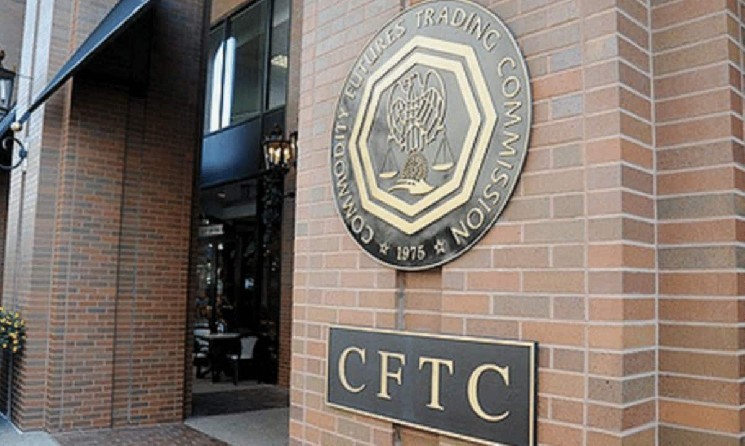
In a significant development for the cryptocurrency industry, two of America’s most powerful financial regulators have announced they’re working together to create clearer rules for digital assets. The U.S. Securities and Exchange Commission (SEC) and the Commodity Futures Trading Commission (CFTC) unveiled the relaunch of “Project Crypto” on January 29, signaling a fresh approach to overseeing the rapidly evolving world of digital currencies and blockchain technology. This collaborative effort represents a notable shift from previous regulatory strategies, with both agencies committing to work hand-in-hand rather than in separate silos. The initiative comes at a critical time when the cryptocurrency industry has been calling for regulatory certainty, and when the United States is competing globally to maintain its position as a leader in financial innovation. SEC Chair Paul Atkins and CFTC Chair Heath Tarbert jointly emphasized that America’s financial markets have earned their reputation as the world’s strongest and most trusted precisely because they’ve been built on foundations of clear rules and fair enforcement—principles they now want to apply consistently to the crypto sector.
Moving Beyond the Enforcement-First Approach
The relaunch of Project Crypto represents more than just a policy update; it marks a philosophical shift in how regulators are approaching the cryptocurrency industry. Under the previous administration, the crypto sector frequently complained about what many perceived as “regulation by enforcement,” where rules seemed unclear until companies found themselves facing legal action. This approach created an atmosphere of uncertainty that made it difficult for legitimate businesses to operate confidently in the United States. The regulatory leaders acknowledged this challenge in their statement, recognizing that recent years saw enforcement actions and regulations that often lacked clarity, leaving market participants confused about what was and wasn’t allowed. Under the current administration’s direction, both agencies have committed to returning to core principles that prioritize transparency, predictability, and fairness—concepts that businesses of all types need to thrive. This new approach aims to establish ground rules before taking action, rather than surprising companies with enforcement after the fact. The emphasis on “merit neutrality and free market principles” suggests that regulators want to create a level playing field where innovation can flourish within appropriate guardrails, rather than stifling new technologies through overly aggressive or unclear enforcement.
Preparing Markets for an On-Chain Future
Project Crypto is specifically designed to prepare American financial markets for a fundamental transformation in how financial activities are conducted. The initiative recognizes that the future of finance will increasingly involve trading, clearing, settlement, and custody happening “on-chain”—meaning directly on blockchain networks rather than through traditional intermediaries. This represents a potentially revolutionary change in financial infrastructure, comparable to how the internet transformed commerce and communication. The regulators understand that if the United States doesn’t adapt its regulatory framework to accommodate these technological changes, American companies and investors could be left behind as innovation migrates to countries with more accommodating regulatory environments. The statement from both agencies made this concern explicit, warning that failure to modernize oversight could push innovation and investment offshore to other jurisdictions that have developed clearer frameworks for digital assets. This acknowledgment reflects a growing awareness among policymakers that regulatory competition is real, and that overly restrictive or unclear rules don’t stop innovation—they simply drive it elsewhere, potentially leaving American consumers with less protection and American businesses at a competitive disadvantage in global markets.
Coordination with Congressional Efforts
The relaunch of Project Crypto doesn’t exist in isolation but rather complements legislative efforts already underway in Congress to establish a comprehensive federal framework for digital assets. Several bipartisan bills have been introduced in both chambers aimed at creating clear statutory authority for how cryptocurrencies and related technologies should be regulated. These legislative initiatives recognize that while agencies can interpret existing laws, some aspects of cryptocurrency regulation may require new laws specifically designed for digital assets rather than retrofitting regulations written decades ago for traditional securities and commodities. However, the SEC and CFTC have made clear that legislation alone won’t be sufficient to create an effective regulatory structure. In their statement, both agencies noted that even with new laws, effective oversight will require “disciplined execution grounded in merit neutrality and free market principles.” This means that how regulations are implemented and enforced matters just as much as what the rules say on paper. The agencies plan to focus on creating clear pathways for companies that make good-faith efforts to comply with requirements, updating surveillance tools to reflect modern trading practices that occur at digital speed and across multiple platforms, and implementing new rules in a planned, step-by-step manner that gives businesses time to adapt rather than facing sudden changes that could disrupt operations or force them to choose between compliance and viability.
Addressing the Jurisdictional Puzzle
One of the most persistent challenges in cryptocurrency regulation has been the overlapping and sometimes conflicting jurisdictions of different regulatory agencies. The same digital asset might be considered a security under SEC rules, a commodity under CFTC authority, or potentially neither or both depending on how it’s used or structured. This jurisdictional ambiguity has created significant compliance challenges for businesses that aren’t sure which regulator’s rules apply to their activities, or that must navigate multiple regulatory frameworks simultaneously. Project Crypto directly addresses this problem by making harmonization between the SEC and CFTC a primary objective. Rather than each agency developing its own separate approach to similar issues, the coordinated initiative aims to align definitions, coordinate supervision, and establish secure data-sharing mechanisms between the two regulators. This harmonization effort should reduce the duplicative compliance burdens that companies currently face and provide clearer guidance for both investors and businesses about what rules apply in different situations. The initiative builds on earlier individual efforts—the SEC’s previous Project Crypto and the CFTC’s Crypto Sprint—but represents a more integrated approach to inter-agency coordination. By working together rather than separately, the regulators hope to eliminate contradictions and gaps that have made compliance unnecessarily complex and created opportunities for regulatory arbitrage where companies structure activities to fall into whichever regulatory category seems most favorable rather than most appropriate.
Balancing Innovation with Investor Protection
The ultimate goal of Project Crypto is to strike a better balance between two objectives that sometimes seem to be in tension: fostering innovation and protecting investors. American regulators have traditionally taken investor protection very seriously, and rightfully so—the trust that investors place in U.S. markets depends on knowing that there are rules preventing fraud and manipulation. However, overly restrictive or unclear rules can prevent legitimate innovation from developing, depriving investors of new opportunities and pushing American entrepreneurs to build their companies elsewhere. The joint statement from Chair Atkins and Chair Tarbert reflects a belief that these goals don’t have to conflict—that it’s possible to create a regulatory environment that both protects market participants and encourages technological progress. By establishing clear rules in advance, companies will know what’s expected of them and can design their products and services to comply from the start, rather than operating in uncertainty or discovering after launch that their business model violates regulations they didn’t know applied. By coordinating between agencies, regulators can ensure that their oversight is comprehensive without being redundant, covering the risks that matter without imposing unnecessary burdens. And by committing to fair enforcement based on clear standards, the agencies signal that companies acting in good faith won’t face unexpected legal action for activities that weren’t clearly prohibited. This approach recognizes that the future of finance will include digital assets in some form, and that the question isn’t whether to allow innovation but how to enable it responsibly. If successful, Project Crypto could provide a model for how regulators can adapt to rapidly changing technologies without abandoning their core mission of protecting investors and maintaining fair, orderly markets.