




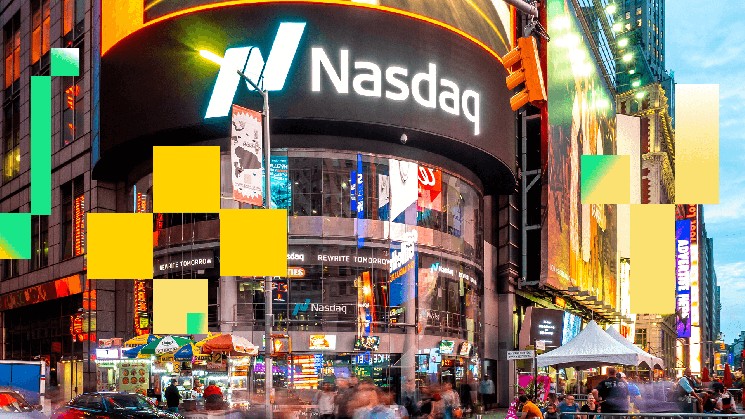

Wall Street’s Digital Revolution: How Traditional Exchanges Are Embracing Blockchain Technology
The Unlikely Alliance Between Old Finance and New Crypto
In a remarkable shift that would have seemed impossible just a few years ago, Wall Street’s most prestigious financial institutions are no longer viewing cryptocurrency exchanges as threats or fringe players. Instead, they’re actively partnering with them to reimagine how the entire $126 trillion global equity market operates. Over the past week alone, two of the world’s most influential exchange operators have announced major collaborations with digital asset platforms, signaling that the long-anticipated merger between traditional finance and blockchain technology is finally happening in earnest.
Nasdaq, the legendary tech-focused stock exchange, is working with Kraken’s parent company Payward to develop a revolutionary framework that would allow publicly traded companies to issue blockchain-based versions of their shares. What makes this particularly significant is that these digital tokens would maintain all the traditional ownership rights and governance structures that investors expect, essentially creating a bridge between the old world and the new. The exchange is targeting a launch date in the first half of 2027, giving the financial world just a couple of years to prepare for what could be a seismic shift in how stocks are bought, sold, and owned. Meanwhile, Intercontinental Exchange (ICE), which owns the iconic New York Stock Exchange, made its own splash by investing in crypto exchange OKX at a staggering $25 billion valuation. This partnership isn’t just a financial investment; it comes with ambitious plans to launch tokenized stocks and crypto futures, potentially giving ICE access to OKX’s massive user base of 120 million people worldwide.
The Dream of the “Everything Exchange”
These partnerships represent more than just isolated business deals—they point toward a fundamental transformation in how financial markets might function in the coming decades. For generations, the world of finance has been fragmented into separate silos. Stocks traded on one system, bonds on another, and each had its own set of trading hours, settlement procedures, and technological infrastructure. If you wanted to trade stocks, you had to wait until the market opened in the morning. If you wanted to buy bonds, that required a different platform entirely. This fragmented approach has created inefficiencies, limited access, and made global investing more complicated than it needs to be.
Blockchain technology promises to sweep away these barriers and create what industry insiders are now calling the “everything exchange”—a unified, always-on marketplace where all types of financial assets could trade on the same infrastructure, twenty-four hours a day, seven days a week. Antoine Scalia, who founded and runs Cryptio, a platform focused on crypto accounting and compliance, believes we’re witnessing the early stages of this transformation. He notes that for years, it was primarily cryptocurrency enthusiasts and blockchain believers who pushed the narrative that traditional finance and crypto would eventually merge. They were often dismissed as dreamers or radicals. But now that major exchanges like Nasdaq and the New York Stock Exchange are making concrete moves in this direction, it’s becoming clear that this vision wasn’t just wishful thinking—it was prescient. The involvement of these establishment institutions represents a realization that blockchain-based settlement of financial assets isn’t just a possibility; it’s increasingly looking like an inevitability.
Regulatory Clarity Finally Arrives
One of the biggest obstacles to Wall Street’s embrace of blockchain technology has been regulatory uncertainty. Financial institutions are notoriously risk-averse, particularly when it comes to compliance and legal issues. For years, they’ve watched the crypto world with a mixture of fascination and wariness, uncertain about whether regulators would ultimately approve of putting traditional securities on blockchains. That changed dramatically in January when the Securities and Exchange Commission released a Staff Statement on Tokenized Securities that finally provided the clarity the industry had been waiting for. The statement confirmed that tokenized equities—digital versions of stocks recorded on a blockchain—carry exactly the same legal weight as their traditional “paper” counterparts. This might sound like a technical detail, but its implications are enormous. With this regulatory green light, major financial institutions now have the legal cover they need to enter the tokenized equity trading market without fear that their innovations will be shut down or challenged by regulators. The SEC’s statement essentially said that a share is a share, whether it exists as a traditional entry in a centralized database or as a token on a blockchain, as long as the proper legal and ownership structures are maintained.
The Complex “Frenemy” Dynamic
As traditional exchanges and crypto platforms move into each other’s territory, an intriguing question emerges: Will these two worlds ultimately compete head-to-head for dominance, or will they find ways to cooperate and complement each other? The answer, according to industry observers, is probably both at the same time. This has created what Scalia describes as a “frenemy” relationship—part friendship, part rivalry, with elements of both cooperation and competition existing simultaneously. Traditional exchanges like Nasdaq bring incredible credibility, decades of regulatory experience, established relationships with major corporations and institutional investors, and sophisticated infrastructure that has been tested and refined over generations. What they lack is direct access to the millions of crypto-native traders who have grown comfortable with digital wallets, blockchain transactions, and round-the-clock trading.
Crypto exchanges, on the other hand, have built massive user bases of digitally savvy traders who are comfortable with technology that seems alien to many traditional investors. They’ve developed innovative trading mechanisms, figured out how to operate 24/7 markets, and created user experiences that appeal to a younger, more tech-forward generation of investors. What they lack is the distribution reach into mainstream finance and the institutional credibility that comes from decades of operating within established regulatory frameworks. This creates a situation where each side needs what the other has. Traditional exchanges want exposure to crypto’s trading population and the technological innovations that blockchain enables. Crypto platforms want the mainstream distribution and institutional trust that established financial infrastructure provides. The result is partnerships that blur the lines between competitors and collaborators. As Scalia notes, it’s a dynamic filled with both friction and complementarity, and watching how these relationships evolve over the coming years will be fascinating.
Why Tokenized Stocks Could Change Everything
At first glance, the current market for tokenized equities seems almost trivially small—about $1 billion in total value. When compared to the $126 trillion global equity market, it’s barely a rounding error. But focusing on today’s numbers misses the bigger picture. The potential for growth is staggering. A comprehensive study by the Boston Consulting Group and Ripple forecasted that tokenized assets across all asset classes could grow at a compound annual rate of 53%, reaching $18.9 trillion by 2033 in their base case scenario. The market for tokenized stocks specifically has shown even more explosive growth, tripling in value since mid-2025 as platforms like Kraken, Ondo Finance, Robinhood, and others rolled out token versions of equities.
The advantages of putting traditional equities on blockchains go far beyond just technical novelty. Yuki Yuminaga, founder of tokenization startup Tenbin Labs, points to continuous price discovery as one of the most significant benefits. Today’s stock markets operate on fixed trading hours—typically 9:30 AM to 4:00 PM Eastern Time for U.S. markets, with everything shut down on weekends and holidays. But important news doesn’t wait for convenient trading hours. Major announcements, earnings reports, geopolitical events, and economic data releases happen around the clock, but investors often can’t respond until the market opens, sometimes leading to dramatic price gaps and increased volatility. Blockchain-based assets, by contrast, never sleep. They can trade continuously, allowing for constant price discovery and potentially reducing the market volatility that comes from pent-up trading pressure. This continuous trading could unlock more capital, improve overall liquidity, and make markets more efficient.
Beyond 24/7 trading, tokenized stocks could enable entirely new ways of using equity holdings. Currently, if you own shares of a company, they mostly just sit in your brokerage account, potentially earning dividends but otherwise not doing much between the time you buy them and eventually sell them. Tokenization could change that by integrating stocks into decentralized finance (DeFi) ecosystems. Your tokenized shares could be used as collateral in lending markets, allowing you to borrow against them more efficiently than current margin lending systems allow. This would increase capital efficiency throughout the financial system and enable new financing opportunities that simply aren’t possible with today’s infrastructure. Perhaps most importantly, the entry of giants like Nasdaq and the New York Stock Exchange into the tokenized stocks market could solve one of the biggest problems currently plaguing this nascent industry: liquidity. As Yuminaga explains, tokenized equities have struggled because traditional markets and blockchain-based markets have operated as completely separate pools of liquidity. If Nasdaq successfully connects these two pools—allowing seamless interaction between traditional equity markets and tokenized versions—it could fundamentally change the equation and accelerate adoption far beyond what smaller crypto-native platforms could achieve on their own.
The Road Ahead
As we look toward the coming years, the financial landscape appears poised for changes more dramatic than anything we’ve seen since the introduction of electronic trading revolutionized markets decades ago. The partnerships between traditional Wall Street powerhouses and crypto-native exchanges represent more than just business deals or technological experiments—they signal a fundamental reimagining of how financial markets can and should function. The vision of an “everything exchange” where all asset classes trade seamlessly on unified blockchain infrastructure, available around the clock to anyone with an internet connection, is moving from science fiction to business planning. With regulatory clarity finally emerging, technological infrastructure maturing, and major institutions committing resources, the pieces are falling into place for this transformation to accelerate. Whether the ultimate winners will be traditional exchanges adapting to new technology, crypto platforms gaining mainstream legitimacy, or entirely new hybrid entities that emerge from their collaboration remains to be seen. What seems increasingly certain is that the financial markets of 2030 will look dramatically different from those of today, and the partnerships announced over the past week are early indicators of just how profound those changes might be.









