


Face the Nation: Global Crisis as Iran War Intensifies
The Unfolding Conflict and Its Global Consequences
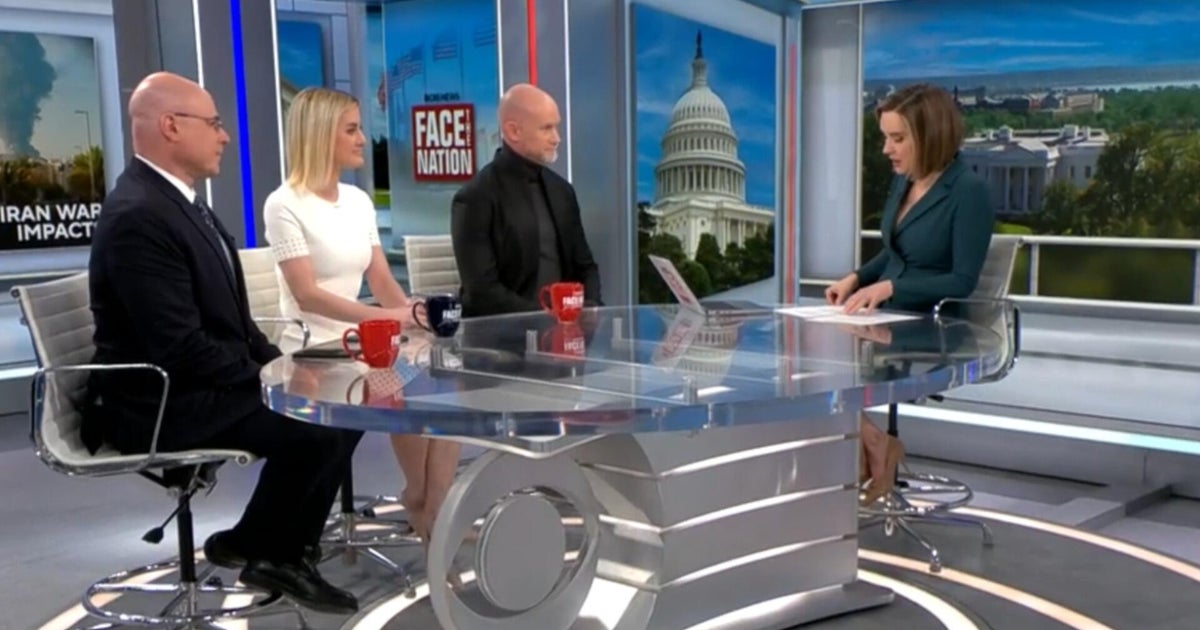
The latest episode of “Face the Nation” painted a sobering picture of an escalating conflict that’s sending shockwaves across the world. Margaret Brennan opened the broadcast by addressing what has become the most significant oil supply disruption in history, according to the International Energy Agency. The war with Iran, now in its third week, has transformed from a regional conflict into a crisis with global implications that Americans are beginning to feel every time they fill up their gas tanks.
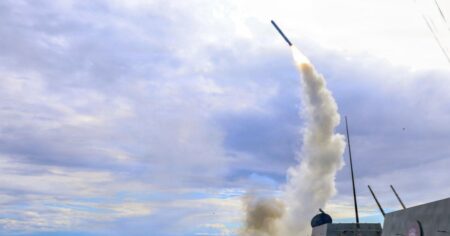
The situation in the Strait of Hormuz has become particularly critical. This narrow waterway, through which a significant portion of the world’s oil passes, has effectively become a battlefield. Iran has deployed mines and used speedboats to stop at least 16 vessels, creating what amounts to a maritime blockade. President Trump has taken the unusual step of asking allies—including China—to send warships to help keep the strait open. Meanwhile, Iranian forces continue to strike back at American positions throughout the region, with 13 U.S. service members now counted among the casualties, including six who died when their refueling aircraft crashed in Iraq. The human cost continues to mount on all sides, with a particularly tragic incident involving an elementary school in Minab, Iran, where nearly 200 civilians, including many children, were killed in what appears to have been the result of faulty intelligence used for targeting coordinates.
Iran’s Defiant Stance
In a rare television interview, Iranian Foreign Minister Abbas Araghchi spoke directly to the American public, and his message was uncompromising. Speaking via Zoom from Iran—where regular citizens don’t have open internet access—Araghchi made it clear that his government has no intention of backing down or seeking a cease-fire. He characterized the conflict as “a war of choice by President Trump,” suggesting the American president started it simply because “it is fun.” His tone was bitter when discussing the negotiations that were happening just 48 hours before American strikes began.
Araghchi revealed that Iran had been in active negotiations with Trump administration representatives, including the president’s son-in-law Jared Kushner and special envoy Steve Witkoff. In those discussions, Iran had reportedly offered a significant concession: they were willing to dilute or give away their stockpile of 440 kilograms of 60 percent enriched uranium—the material that could potentially be used in nuclear weapons. This offer, according to Araghchi, was presented to demonstrate that Iran never wanted nuclear weapons. However, after American strikes destroyed Iran’s nuclear facilities, that enriched material now sits buried under rubble. When asked if Iran would still be willing to give up that uranium today, the foreign minister’s answer was vague—everything depends on future negotiations, if there are any.
The foreign minister also defended Iran’s strikes on neighboring Gulf states, arguing that these countries allowed American forces to use their territory to attack Iran. He insisted that Iran only targets American military assets, though evidence suggests Iranian drones have hit civilian areas, including hotels and industrial plants. Regarding the Strait of Hormuz, Araghchi confirmed that several European countries have approached Iran seeking safe passage for their vessels, and his government has been selectively allowing some ships through—raising the troubling prospect that America’s allies might cut separate deals with Tehran, potentially leaving U.S. interests isolated.
Economic Shockwaves Hit Home
Kevin Hassett, President Trump’s top economic adviser, tried to project confidence about the economic impact, but the numbers tell a difficult story. Gas prices have jumped more than 20 percent since the conflict began. In Virginia, Senator Mark Warner noted that prices went from $2.81 per gallon just two weeks ago to $3.45 now. Airlines are already raising ticket prices due to soaring jet fuel costs. American farmers are facing a 40 percent increase in fertilizer costs, threatening to push food prices even higher.
Hassett’s response was to emphasize America’s oil production capacity and suggest that unlike the 1970s oil crisis, the U.S. is now a major producer and can weather this storm better than most countries. He pointed to oil futures markets, which he said are predicting a “rapid, rapid end” to the situation with prices potentially dropping to $60 or even below $50 per barrel in the long term. His timeline? Four to six weeks from the start of the conflict, with operations “ahead of schedule.” By his calculation, that means a potential resolution around early April.
However, energy analyst Kevin Book offered a more cautious perspective. Even if the Strait of Hormuz reopened immediately, it would take weeks to bring oil production back online, and damaged facilities might need months to repair. The world has already drawn down 400 million barrels from strategic reserves—that’s both the good news (we have reserves to use) and the bad news (we’re using up our insurance policy). Book noted that we’re talking about three to four percent of global energy consumption going offline, and while the U.S. is relatively insulated as a net exporter, the global economy will definitely feel the pain. Asian refiners are already cutting production, and export controls are being implemented to keep refined products from leaving certain economies.
Homeland Security Concerns Rise
Beyond the economic pain, Americans are facing a surge in security threats at home. The broadcast highlighted three violent attacks in one week, including a particularly chilling incident at Old Dominion University in Virginia. A gunman who had previously served prison time for attempting to support ISIS walked into an Army ROTC classroom and shot the instructor dead, injuring two others. The question hanging in the air: How does a convicted ISIS supporter slip through the cracks and carry out an attack right under the nose of law enforcement?
Senator Mark Warner placed blame squarely on the Trump administration’s FBI Director Kash Patel, accusing him of gutting the bureau’s counterterrorism capabilities. According to Warner, nearly a third of FBI agents have been pulled off counterterrorism and other critical investigations and reassigned to immigration enforcement. “I knew this was going to come back and bite us,” Warner said, arguing that the FBI needs to get back to its core mission of protecting the homeland from terrorists and foreign spies.
The threat landscape, according to the experts on the panel, has never been more diverse or voluminous. Samantha Vinograd, a CBS News national security contributor and former Biden administration counterterrorism official, explained that threats now come from multiple directions: individuals inspired or directed by countries like Iran, foreign terrorist organizations like Hezbollah and ISIS, and people motivated by domestic political grievances. The internet has become a “force multiplier,” giving would-be attackers easy access to radicalizing content and practical information about tactics, techniques, and targets. This means attacks can be planned more quickly and executed more effectively. Another incident highlighted the complexity of the threat: a 41-year-old naturalized U.S. citizen drove a car loaded with explosives into Michigan’s largest synagogue. His brothers had been Hezbollah members recently killed in Lebanon along with their children, though investigators haven’t yet determined if the attacker himself had Hezbollah connections.
The Military and Strategic Picture
Congressman Dan Crenshaw, a former Navy SEAL, offered his perspective on the military dimensions of the conflict. He defended Secretary of Defense Pete Hegsett’s controversial rhetoric about “no quarter, no mercy” for enemies, arguing that anyone who served in Iraq and Afghanistan understands what bad rules of engagement look like. According to Crenshaw, Hegsett is simply providing clarity that the military will target Iranian military forces without hesitation—not sending a message that American troops should violate the laws of war.
The deployment of a few thousand additional Marines to the region, Crenshaw explained, signals seriousness about supporting contingency operations—possibly including evacuating American citizens from Gulf states—rather than indicating a ground invasion. He pointed out that the U.S. practices Strait of Hormuz defense scenarios yearly with more than 30 nations, so Trump’s call for allied support makes strategic sense.
However, Senator Warner was far more critical of the entire venture. He characterized it as “a war of choice” rather than a necessary conflict, noting that U.S. intelligence leaders had testified just a year ago that Iran was not building a nuclear weapon and that the Supreme Leader had not reauthorized their suspended nuclear weapons program. Warner ticked through President Trump’s stated objectives—regime change, eliminating enriched uranium, destroying missiles, and sinking Iran’s navy—and suggested none have been successfully accomplished. The new supreme leader is arguably worse than his predecessor, enriched uranium would require ground troops to fully secure, missile capabilities have only been partially degraded, and Iran still has hundreds of speedboats capable of planting mines in the Strait of Hormuz.
The cost of the conflict is also mounting rapidly. Hassett confirmed that approximately $12 billion had been spent so far, though more than $5 billion was spent in just the first week on munitions alone. Whether the administration will need to ask Congress for additional funding remains an open question, though Hassett suggested they currently have what they need to complete the mission.
Domestic Political Fallout
The conflict is creating political tensions at home beyond just the security concerns. For the fourth time, the Senate failed to advance Homeland Security funding, leaving TSA agents missing paychecks—a half paycheck last time, with a full paycheck missed this Friday. Video footage showed TSA workers on food lines, unable to make ends meet. Airline CEOs are complaining that Congress isn’t paying the people who secure air travel, even as ticket prices rise due to jet fuel costs.
Senator Warner proposed a compromise: pay TSA, FEMA, the Coast Guard, CISA, and even Customs and Border Patrol if lawmakers can’t agree on ICE reforms. “Why won’t they just take yes for an answer?” he asked, arguing that funding 95 percent of the Department of Homeland Security should be acceptable. Republicans, however, insist on wholesale funding rather than piecemeal appropriations.
Meanwhile, disturbing rhetoric from some Republican lawmakers has raised concerns about Islamophobia. Congressman Andy Ogles stated, “Muslims don’t belong in American society.” Florida’s Randy Fine said, “we need more Islamophobia, not less.” Senator Tommy Tuberville posted a picture of the 9/11 attacks next to New York City’s mayor breaking his Ramadan fast with the caption “the enemy is inside the gates.” When asked about this language, Crenshaw dismissed it as “fairly fringe” and suggested that fighting it internally might give it more attention than it deserves. He noted that speaking out against similar issues around anti-Semitism had only inflamed the situation.
Crenshaw also reflected on his recent primary loss, attributing it partly to what he called a “culture of misinformation.” He described how only about 20 percent of Republican voters participate in primaries, and many of those who do voted based on online conspiracies and smears—including false claims about insider trading and personal wealth. Democrats, he said, spent nearly a million dollars amplifying these smears on television, meaning Republican voters went to the polls believing what Democrats told them based on misleading headlines. His lesson: “Republican voters are going to have to decide if they’re going to believe everything they read online.”
The broadcast captured a moment of genuine crisis—not just overseas but here at home. The war with Iran is creating economic pain at the gas pump and grocery store, security threats are multiplying, political divisions are deepening, and essential government workers aren’t getting paid. Whether President Trump’s strategy will achieve its objectives or whether the costs—human, economic, and political—will prove too high remains the central question hanging over Washington and the rest of the world.