



Coinbase’s Earnings Report Sparks Debate on Wall Street Over Crypto Platform’s Future
Mixed Reactions Following Disappointing First Quarter Results
Coinbase, one of the world’s leading cryptocurrency trading platforms, recently released its first-quarter earnings report, and the results have created quite a stir among financial analysts and investors. The company fell short of Wall Street’s expectations on both revenue and adjusted EBITDA, primarily due to a noticeable slowdown in trading activity across the broader cryptocurrency market. This underperformance has reignited an ongoing debate about whether Coinbase is successfully building a more stable, diversified business model or if it remains fundamentally tied to the unpredictable boom-and-bust cycles that have characterized the crypto industry since its inception. In the immediate aftermath of the earnings announcement, Coinbase shares dropped 3.6% in pre-market trading, reflecting investor concern about the company’s near-term prospects. However, the picture emerging from analyst commentary is far from uniform, with some firms seeing significant potential in Coinbase’s strategic initiatives while others remain skeptical about the platform’s ability to break free from cryptocurrency’s inherent volatility.
Regulatory Clarity Could Transform the Landscape
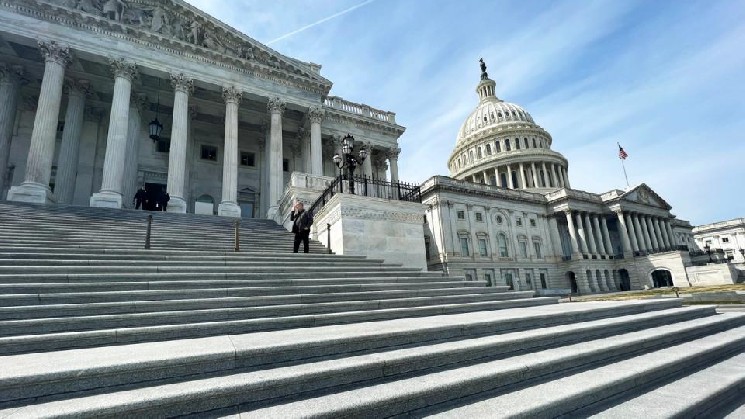
Despite the disappointing quarterly numbers, several prominent analysts remain optimistic about Coinbase’s medium to long-term prospects, largely due to potential regulatory developments in Washington. JPMorgan, one of the world’s largest investment banks, acknowledged that the first quarter reflected “a challenging environment” but emphasized that Coinbase has “positioned the company well to operate in an increasingly digital world.” The bank maintained its overweight rating on the stock, expressing confidence that pending U.S. crypto legislation could significantly improve the outlook heading into the second half of 2026 and throughout 2027. The legislative centerpiece of this optimism is the CLARITY Act, a proposed market structure bill that would establish clear regulatory guidelines for how crypto assets are governed in the United States. This legislation would definitively determine which digital assets fall under the jurisdiction of the Securities and Exchange Commission (SEC) and which would be overseen by the Commodity Futures Trading Commission (CFTC). For years, Coinbase and other cryptocurrency companies have argued that regulatory ambiguity has been a major impediment to mainstream adoption, preventing banks, asset managers, and large corporations from fully embracing crypto-related activities. According to Coinbase executives, a Senate Banking Committee markup is expected this month, with a broader vote anticipated later in the summer, suggesting that clarity could be just months away.
New Revenue Streams Show Promising Growth
Beyond the regulatory optimism, several analysts pointed to Coinbase’s efforts to diversify its revenue streams as evidence of strategic progress. Clear Street, while lowering its price target from $140 to $107 in response to weaker trading volumes, maintained a constructive outlook on the shares heading into the second half of 2026, citing “multiple catalysts ahead.” The firm specifically highlighted impressive growth in newer product offerings, including prediction markets, which had already generated more than $100 million in annualized revenue by March, and retail derivatives, which surpassed a $200 million annualized revenue pace. These figures are particularly significant because they demonstrate that Coinbase is successfully developing revenue sources that aren’t directly tied to spot cryptocurrency trading volumes. Oppenheimer echoed this sentiment, noting that Coinbase’s push beyond traditional spot crypto trading is beginning to gain meaningful traction. The firm singled out prediction markets as “one of the fastest growing new products” and expressed enthusiasm about the company’s “Everything Exchange strategy,” which encompasses stablecoins, derivatives, payments, and tokenized assets alongside conventional crypto trading. This diversification approach could potentially shield Coinbase from the worst effects of crypto market downturns by creating multiple revenue pillars rather than relying predominantly on trading fee income.
Infrastructure Investments Signal Long-Term Vision
William Blair offered perhaps one of the most optimistic takes on Coinbase’s situation, suggesting that the disappointing first quarter might actually represent the low point of the current crypto cycle. “If Bitcoin has bottomed, as we suspect it has, April could be the trough spot volume month of the cycle,” the firm wrote in its analysis. Beyond the cyclical perspective, William Blair also highlighted Coinbase’s strategic investments in foundational crypto infrastructure as evidence of the company’s evolving role in the digital asset ecosystem. Specifically, the firm pointed to growth in USDC stablecoin activity and the development of Coinbase’s Base blockchain network as indicators that the company is becoming more deeply embedded in crypto infrastructure beyond simply collecting trading fees. USDC, a stablecoin co-issued by Coinbase through its Circle partnership, has become one of the most widely used dollar-pegged cryptocurrencies in the world, facilitating transactions across numerous blockchain networks. Meanwhile, Base, Coinbase’s Ethereum layer-2 blockchain solution, has been gaining adoption among developers and users looking for faster, cheaper transactions. These infrastructure plays represent a fundamental shift in Coinbase’s business model—from being primarily a platform where people trade cryptocurrencies to becoming a critical piece of the underlying plumbing that makes the entire crypto ecosystem function. If successful, this transformation could provide Coinbase with more stable, recurring revenue streams that are less vulnerable to the trading volume fluctuations that have plagued the company’s financial performance.
Skeptics Question the Transformation Narrative
Not everyone on Wall Street is buying into the optimistic narrative surrounding Coinbase’s strategic evolution. Barclays maintained its Underweight rating on the stock, warning that “profitability [is] under pressure” as trading activity continues to weaken significantly. The bank expressed particular concern that second-quarter transaction revenue trends remain well below Wall Street expectations, suggesting that the challenges Coinbase faced in the first quarter may extend well into the current period. Compass Point took an even more critical stance, maintaining a Sell rating and arguing that Coinbase “remains entirely beholden to crypto cycles five years after going public.” This is a particularly damning assessment because it suggests that despite Coinbase’s efforts to diversify and despite five years as a public company, it hasn’t made meaningful progress in decoupling its financial performance from cryptocurrency market volatility. Compass Point also raised concerns about declining monthly user activity, questioning whether Coinbase’s newer products are actually attracting new customers to the platform or simply cannibalizing the company’s existing trading businesses. This distinction is crucial—if new products are merely shifting existing users from one revenue stream to another rather than expanding the overall customer base or increasing engagement, then they don’t represent genuine growth but rather a lateral movement that doesn’t fundamentally change Coinbase’s vulnerability to crypto market cycles.
The Path Forward Remains Uncertain
The divergent views on Coinbase reflect broader uncertainty about the future of cryptocurrency as both an asset class and a technology platform. On one hand, believers see an industry on the cusp of mainstream acceptance, with regulatory clarity potentially opening the floodgates for institutional adoption and Coinbase positioned as the primary beneficiary of this transition. They point to the company’s strategic investments in new products, infrastructure, and regulatory compliance as evidence of management’s foresight and ability to build a durable business that transcends crypto’s notorious volatility. On the other hand, skeptics see a company still fundamentally dependent on an asset class characterized by speculative excess and regulatory uncertainty, with declining user engagement suggesting that crypto’s appeal may be waning even among its existing user base. For investors trying to navigate these conflicting perspectives, the next several months will be critical. The progress of crypto legislation through Congress, the trajectory of Bitcoin and broader crypto prices, the growth rates of Coinbase’s newer business lines, and monthly user activity trends will all provide important signals about which narrative is more accurate. What’s clear is that Coinbase stands at a crossroads—either successfully transforming into a diversified financial services and infrastructure company that happens to focus on digital assets, or remaining trapped in the boom-bust cycles that have defined cryptocurrency since its inception. The company’s performance over the remainder of 2026 will likely determine which path it’s truly on, with profound implications for both Coinbase shareholders and the broader cryptocurrency industry.