


Zcash Charts Ambitious Path to Quantum Security and Mass Adoption
Leading Privacy Coin Unveils Revolutionary Quantum-Resistant Technology Timeline
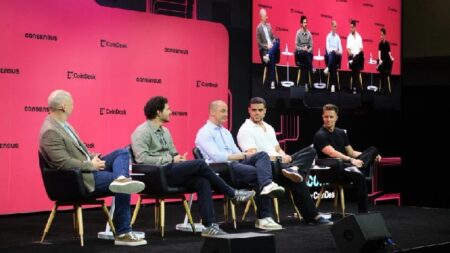
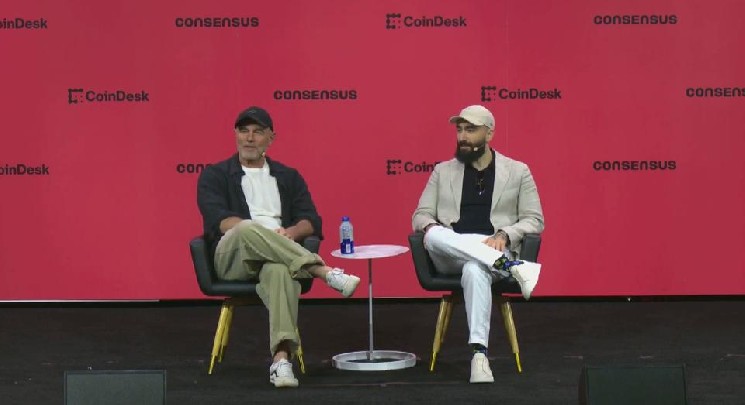
In a significant announcement that’s sending ripples through the cryptocurrency community, Zcash is preparing to launch quantum-recoverable wallets within the next month, with plans to achieve complete post-quantum security within 12 to 18 months. This groundbreaking revelation came from Josh Swihart, founder and CEO of Zcash Open Development Lab, during a highly anticipated session at Consensus Miami on Thursday. The discussion, moderated by Mert Mumtaz, founder of Solana infrastructure firm Helius, outlined an ambitious roadmap that positions Zcash as not just a privacy-focused cryptocurrency, but as a future-proof digital payment system ready to withstand the coming quantum computing revolution. This announcement coincides with impressive market performance, as the $ZEC token has surged more than 110% over the past month, signaling growing investor confidence in privacy-focused cryptocurrencies. The timing couldn’t be more strategic, as concerns about quantum computing threats to blockchain security continue to mount across the industry.
Bitcoin’s Privacy Failings and Zcash’s Solution to Cypherpunk Ideals
Swihart didn’t mince words when addressing Bitcoin’s current state, arguing that the original cryptocurrency no longer lives up to its foundational promise as genuine cypherpunk-grade money. While acknowledging that Bitcoin functions adequately as an ETF wrapper and maintains its reputation as a store of value, he made a compelling case that it has fundamentally failed as a peer-to-peer private payment system. The core issue, according to Swihart, lies in Bitcoin’s transparent ledger design, where every balance and transaction is visible to anyone with an internet connection. This transparency, once touted as a feature for accountability, has become a critical vulnerability in an era of increased government surveillance and asset seizures. When governments can see exactly what you own and where it’s stored, they can seize it—a reality that’s becoming increasingly relevant in today’s geopolitical climate. This critique echoes recent statements from Multicoin Capital’s Tushar Jain, who emphasized similar concerns about wealth visibility when announcing his fund’s substantial investment in Zcash. The argument is simple but powerful: true financial freedom requires privacy, and privacy requires technology that makes transactions genuinely untraceable rather than pseudonymous.
Scaling Ambitions Target Payment Industry Giants
Beyond quantum resistance, Zcash is pursuing an equally ambitious scaling strategy designed to compete directly with traditional payment processors. The project has set its sights on achieving throughput comparable to MasterCard and Visa within the same 12 to 18-month timeframe as its quantum security rollout. This dual-track approach addresses two of the most pressing challenges facing cryptocurrency adoption: security in a post-quantum world and the ability to handle real-world transaction volumes. Currently, major credit card networks process thousands of transactions per second, a benchmark that most blockchain networks struggle to approach without compromising decentralization or security. For Zcash to achieve this level of performance while maintaining its privacy features would represent a genuine breakthrough in blockchain technology. One concrete proposal already under active discussion in the project’s community forum involves cutting Zcash’s target block time from 75 seconds down to 25 seconds—a three-fold improvement that would significantly enhance transaction speed. Additionally, bridges to high-performance networks like Solana and Hyperliquid are already operational, creating pathways for cross-chain liquidity and expanded use cases that could drive adoption among users seeking both privacy and performance.
Market Performance Backed by Strategic Investment and Growing Adoption
The recent surge in $ZEC’s value—more than doubling in just 30 days—reflects more than typical cryptocurrency volatility. This rally has been fueled by a confluence of factors, most notably the disclosure from Multicoin Capital, one of the most respected crypto-focused investment firms, that it has made a sizable investment in Zcash. When prominent institutional investors put their money behind a project, it signals serious conviction and typically attracts additional capital from investors who respect the firm’s research and track record. Sentiment data confirms that the broader privacy narrative has gained significant traction among cryptocurrency investors, reflecting growing awareness of surveillance concerns and the value proposition of truly private transactions. The real measure of sustainability, however, lies not in price action but in actual usage. Swihart revealed that approximately $600 million to $700 million has flowed through Zcash’s integration with Near Intents since its October launch, with the majority of transactions involving conversions to and from USD and USDC stablecoins. This integration allows users to seamlessly swap assets like Bitcoin, Solana, and USDC directly into shielded $ZEC through a user-friendly interface that handles the complex multi-step, cross-chain routing in the background. Near Protocol data shows that its broader intent-based system has processed close to $800 million in volume over just the past 30 days, with Ethereum, Solana, and Zcash representing the dominant blockchain networks in this emerging ecosystem.
User Experience Innovation Through Electric Coin Company’s Mobile Wallet
The practical gateway for most users engaging with Zcash’s privacy features has been the Electric Coin Company’s mobile wallet, which underwent a transformative upgrade in October with the integration of Near Intents technology. This integration represents a significant leap forward in user experience, addressing one of the most persistent barriers to cryptocurrency adoption: complexity. Rather than requiring users to understand the technical intricacies of cross-chain bridges, wrapped tokens, or multi-step swap procedures, Near Intents allows users to simply state their desired outcome—for example, converting USDC into private ZEC—and the system handles all the technical complexity behind the scenes. Specialized routers automatically determine the optimal path, execute the necessary trades across different blockchains, and deliver the final result to the user’s wallet. This “intent-based” approach to blockchain interactions represents a paradigm shift in how people interact with decentralized systems, prioritizing outcomes over processes and abstracting away the technical details that intimidate mainstream users. The substantial volume flowing through this integration—hundreds of millions of dollars in just a few months—demonstrates that when privacy is made accessible and user-friendly, demand is substantial. This suggests that previous low adoption of privacy features in cryptocurrency wasn’t necessarily due to lack of interest, but rather due to poor user experience and unnecessary technical barriers.
Community Governance and the Path Forward for Traders and Believers
Looking ahead, Zcash is also planning to implement token-holder voting through its Zashi interface, though Swihart was careful to clarify that this wouldn’t represent formal governance in the traditional sense. Instead, it will function as an opinion layer that feeds into the project’s existing rough-consensus decision-making model—a more nuanced approach that seeks community input without falling into the governance gridlock that has plagued some other blockchain projects. For traders and investors evaluating Zcash’s prospects, the most immediate test will be whether the project can actually deliver quantum-recoverable wallets within the ambitious one-month timeline Swihart outlined at Consensus Miami. Delivery on this promise would demonstrate technical execution capability and build credibility for the longer-term roadmap. The project does have a significant safety net: the shielded pool, which contains Zcash held in privacy-preserving accounts rather than transparent addresses, has grown to approximately 30% of all circulating $ZEC—an all-time high. This metric is particularly important because it indicates that the recent price rally isn’t purely speculative. When the shielded pool grows alongside price, it suggests that new buyers are actually using Zcash for its intended purpose—private transactions—rather than simply gambling on price appreciation. If this trend continues, with both the shielded pool percentage and the token price rising together, it would provide strong evidence that the rally is fundamentally backed by genuine adoption rather than mere speculation, potentially justifying higher valuations and positioning Zcash as a leader in the next generation of privacy-focused, quantum-resistant cryptocurrency technology.