


The Great Convergence: How Cryptocurrency Is Becoming the Backbone of Modern Finance
From Speculative Asset to Critical Infrastructure
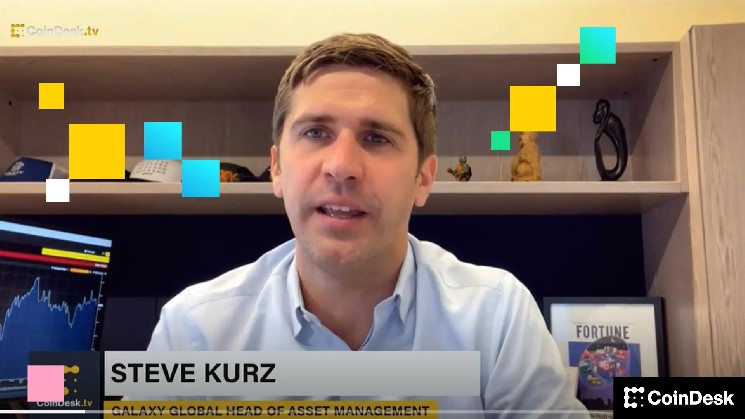
The cryptocurrency landscape is undergoing a fundamental transformation that goes far beyond the typical boom-and-bust cycles that have defined the industry in the past. According to Steve Kurz, Galaxy Digital’s global head of asset management, we’re witnessing what he calls “The Great Convergence”—a pivotal moment where cryptocurrency is evolving from a speculative asset class into essential financial infrastructure. This shift represents more than just another market cycle; it’s a structural evolution in how the global financial system operates. Galaxy Digital, founded by Michael Novogratz in 2018, has positioned itself at the intersection of traditional finance and the emerging cryptocurrency ecosystem, offering everything from institutional trading and asset management to custody services and consumer-facing products. The firm manages approximately $12 billion in assets and serves as a bridge connecting old-world finance with new blockchain technology. Kurz’s vision for 2026 is pragmatically optimistic—acknowledging current market challenges while maintaining conviction in the long-term trajectory of cryptocurrency as both an investment vehicle and a technological foundation for future financial services.
Understanding the Current Market Environment
The cryptocurrency market today finds itself in an unusual position, caught between what Kurz describes as “a lot of cycles sitting on top of each other.” Recent price pullbacks have been substantial, yet they’ve occurred against a backdrop of increasingly positive fundamental developments in the industry. This disconnect between price action and underlying progress is particularly puzzling for industry observers. The most recent market weakness stems primarily from liquidity constraints and deleveraging—a natural market cycle rather than a systemic crisis. Unlike the catastrophic events of 2022, when liquidations exposed structural weaknesses in an immature market infrastructure, today’s pullback represents a healthier correction in a more sophisticated ecosystem. The market now benefits from better risk management frameworks, more developed trading instruments, and stronger institutional participation. While token prices have retreated, the infrastructure supporting them has continued to strengthen and mature. Kurz emphasizes that infrastructure typically builds ahead of price appreciation, not the other way around. When blockchain activity and user engagement inevitably increase again, market sentiment will likely shift to reflect these underlying improvements. Though he acknowledges the possibility of further downside, Kurz believes the most dramatic selling has likely concluded, with consolidation or gradual appreciation more probable than a V-shaped recovery in the coming months.
Crypto Enters Wall Street’s Main Dashboard
Perhaps the most significant development in cryptocurrency’s evolution is its integration into mainstream financial systems—what Kurz calls being placed on “a much bigger dashboard of global assets.” This integration represents both an achievement and a challenge for the crypto industry. On one hand, it signals maturation and legitimacy; on the other, it means cryptocurrency must now compete directly with established asset classes like gold, traditional equities, and emerging investment themes for institutional capital allocation. The bar for attracting investment has been raised considerably. This heightened competition reflects cryptocurrency’s new reality as part of the broader financial ecosystem rather than an isolated alternative. The relationship between crypto and traditional finance, while still developing, is deepening rapidly. Public blockchains are increasingly viewed as legitimate institutional infrastructure rather than experimental technology. Stablecoins are reshaping how payments work, while tokenization is transforming market structure across various asset classes. The infrastructure tendrils of cryptocurrency are spreading throughout financial services, creating what Kurz characterizes as a “bull market in crypto plumbing.” While improvements in custody solutions, compliance frameworks, and integration with banks and fintech companies may not immediately translate to price appreciation, they create the foundation for sustainable long-term value in both the technology itself and the assets built upon it.
The Fusion of Asset Class and Technology Stack
At the heart of “The Great Convergence” lies the fusion of cryptocurrency as an investable asset with cryptocurrency as a fundamental technology platform. This integration distinguishes the current cycle from previous ones, where speculation often ran far ahead of utility and adoption. Today’s market is characterized by the parallel development of both cryptocurrency assets and the infrastructure that makes them useful in the real economy. This dual development is creating a more robust and larger onchain economy with genuine use cases beyond speculation. Galaxy Digital’s strategy reflects this understanding, maintaining focus on crypto-native assets while building the infrastructure that connects these assets to traditional capital markets. Kurz is emphatic that this perspective requires patience—it’s not about trying to time short-term price movements or “buying the dip” in search of quick profits. Instead, it represents a multiyear structural transformation of financial services. The company is positioning itself across the entire value chain, from the underlying blockchain infrastructure and payment rails to public market investment vehicles and professional asset management services. This comprehensive approach allows Galaxy to capture value from both the technological integration of crypto into traditional finance and the ongoing financialization of crypto assets themselves, creating multiple revenue streams that aren’t entirely dependent on token price appreciation.
Sentiment, Risk Assessment, and Market Bottoming
One of the most striking observations Kurz makes is that the gap between market prices, investor sentiment, and actual business activity in cryptocurrency has “never been wider.” While token prices have struggled and sentiment has turned negative, business activity—particularly in infrastructure development—remains robust and growing. This divergence between perception and reality gives Galaxy confidence in its long-term positioning. Kurz dismisses some existential fears, such as quantum computing threats to cryptographic security, as overblown in the near term. More interesting is his observation that periods of intense negativity often coincide with market bottoms. However, he identifies a more subtle risk: apathy. If cryptocurrency loses relevance in broader market conversations and fails to capture mindshare among investors and builders, that would be more concerning than volatility or negative sentiment. Bitcoin’s behavior offers interesting insights into broader market dynamics. Kurz notes that Bitcoin has historically acted as a “canary in the coal mine,” detecting and reacting to macroeconomic risk before other markets. It’s possible that Bitcoin’s recent weakness reflected broader risk-off conditions that other assets hadn’t yet priced in. This sensitivity works in both directions, meaning Bitcoin might also be among the first assets to respond to improving conditions. Crucially, cryptocurrency no longer trades in isolation from broader markets—it’s increasingly correlated with global liquidity conditions and risk appetite, behaving more like a traditional cyclical asset that responds to macroeconomic forces.
Galaxy’s Strategic Position and the Road Ahead
Against this complex backdrop, Galaxy Digital reports strong momentum across its core business lines, particularly in infrastructure services and asset management. The firm’s infrastructure division is expanding its work with traditional banks and fintech companies, providing technology and payment services that integrate cryptocurrency capabilities into existing financial systems. This integration work represents the practical implementation of “The Great Convergence” thesis. On the asset management side, Galaxy is broadening its product offerings, including launching a fintech hedge fund targeting wealth management and high-net-worth channels. This product recognizes that the disruption of traditional financial services market structure creates investment opportunities in both public and private markets—what Kurz calls a “Fintech 2.0” moment. The Galaxy Fintech Fund focuses on public market winners and losers from this transformation, while Galaxy Ventures invests in early-stage companies building high-quality, crypto-enabled financial services businesses. Institutional interest remains strong despite subdued prices. Galaxy reports winning business across multiple client segments, including banks, wealth intermediaries, pension funds, and sovereign wealth funds. These sophisticated allocators increasingly view cryptocurrency as a legitimate cyclical asset class deserving strategic allocation. The gap between weak prices and steady institutional engagement reinforces Galaxy’s confidence in the long-term thesis. Looking toward 2026, Kurz’s outlook is measured but constructive. He doesn’t expect dramatic V-shaped recovery, but rather continued consolidation, gradual maturation, and steady infrastructure development. Cryptocurrency will compete on an increasingly level playing field with other global assets for institutional capital. The narrative will eventually catch up to the underlying activity once it accelerates. The fundamental plumbing for a larger, more durable onchain economy is being installed now, even if prices don’t immediately reflect this progress. For those with conviction and patience, this represents not a temporary dip to trade, but a structural shift to position for—one where cryptocurrency becomes genuinely integrated into the global financial system as both valuable assets and essential infrastructure.