





Litecoin Narrowly Avoids Network Crisis Thanks to Swift Mining Pool Response
Understanding the Chain Split Emergency
On April 25, the Litecoin network found itself in a precarious situation that could have resulted in a significant disruption to one of cryptocurrency’s longest-running blockchains. The incident began when a series of invalid transactions related to the MimbleWimble Extension Block (MWEB) – a privacy-focused feature added to Litecoin – triggered what’s known in blockchain terminology as a “chain split.” For those unfamiliar with the technical aspects, a chain split occurs when different parts of a decentralized network disagree about which transactions are valid, effectively creating two competing versions of the truth. In this case, some mining nodes began accepting and building upon blocks that contained technical errors in MWEB transactions, while others continued following the correct consensus rules. This created a fork in the road, so to speak, where the blockchain’s single, unified history temporarily diverged into two separate paths. The situation posed a real threat to the network’s integrity, as prolonged chain splits can lead to confusion, double-spending risks, and a loss of confidence among users and investors. What made this particular incident noteworthy was not just that it occurred, but how quickly it was identified and resolved, showcasing both the vulnerabilities inherent in complex blockchain systems and the resilience built into well-maintained networks with active, responsible participants.
F2Pool’s Critical Intervention and Leadership
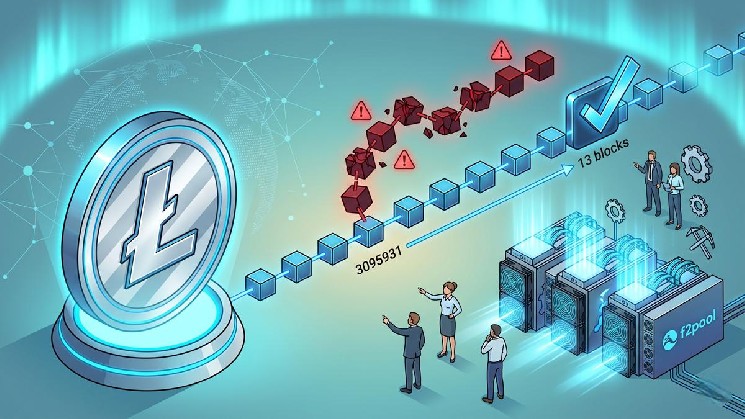
The hero of this story was f2pool, one of the world’s largest and most established cryptocurrency mining pools. Mining pools are collectives where individual miners combine their computational resources to increase their chances of successfully mining blocks and earning rewards. F2pool’s size and influence in the Litecoin network meant that their actions carried significant weight in determining which chain would ultimately prevail. When f2pool’s technical team detected the anomaly – blocks containing invalid MWEB transactions being accepted by portions of the network – they made a swift and decisive choice. Rather than continuing to mine on the potentially more profitable but technically invalid chain, they committed their substantial hash power (computing resources) exclusively to the correct chain that followed proper consensus rules. This wasn’t a decision to be taken lightly, as mining on the “wrong” chain, even temporarily, could result in wasted electricity and lost revenue. However, f2pool recognized that their responsibility to the network’s long-term health outweighed short-term financial considerations. Their leadership was crucial because in blockchain networks, the “longest chain rule” typically determines which version of history the network accepts as canonical. By dedicating their resources to the valid chain, f2pool helped ensure that it would accumulate more proof-of-work than the invalid version, eventually causing the network to converge on the correct history through a process called reorganization.
The Technical Resolution Process
The resolution of the chain split involved what blockchain developers call a “reorganization” or “reorg” – a process where nodes in the network recognize that an alternative chain has more accumulated proof-of-work and switch to accepting that chain as the valid one. During this tense period, two competing chains existed simultaneously, with miners divided between them. The valid chain, supported by f2pool and other conscientious miners, needed to outpace the invalid chain by accumulating more blocks and, more importantly, more computational work. This became a race against time, with each block representing roughly 2.5 minutes of network activity. For 13 blocks – approximately 32.5 minutes – the network remained in this uncertain state, with transactions being processed on both chains. Finally, at block height 3095931, the valid chain achieved decisive superiority, and the network’s nodes began rejecting the invalid chain and its transactions. All blocks and transactions on the invalid chain were essentially discarded and would need to be reprocessed according to correct consensus rules. The fact that this reorganization happened relatively quickly – within just 13 blocks – was remarkable and prevented more serious complications. Longer chain splits can lead to situations where users believe transactions have been confirmed when they haven’t, potentially enabling fraud or causing legitimate transactions to disappear. The swift resolution meant that disruption to normal network operations was minimal and no user funds were permanently lost or compromised.
Charlie Lee’s Response and Broader Implications
Litecoin founder Charlie Lee, who remains an influential voice in the project despite stepping back from day-to-day development, publicly acknowledged the gravity of the situation and the importance of f2pool’s intervention. In a statement on social media, Lee expressed gratitude to f2pool, noting that “the situation would be a lot worse today without f2pool’s quick action.” This acknowledgment highlighted an important aspect of decentralized networks that often goes unrecognized: while these systems are designed to operate without central authority, the actions of large participants still matter tremendously. Lee’s comments served multiple purposes – they gave credit where credit was due, reassured the Litecoin community that the situation had been handled properly, and subtly reminded everyone that maintaining a healthy blockchain ecosystem requires active participation and responsibility from major stakeholders. The incident also prompted broader reflection on the balance between decentralization and coordination in cryptocurrency networks. While blockchain technology is celebrated for its trustless, decentralized nature, events like this demonstrate that human judgment, expertise, and sometimes rapid decision-making by influential actors remain essential components of network security. This doesn’t necessarily contradict the principles of decentralization; rather, it illustrates that decentralization exists on a spectrum and that having knowledgeable, responsible major participants can be an asset rather than a liability when technical issues arise.
Lessons About Privacy Technology and Network Vulnerability
The fact that this incident involved the MimbleWimble Extension Block specifically highlights ongoing challenges in implementing privacy-preserving technologies in cryptocurrency. MWEB was added to Litecoin to enhance transaction privacy, allowing users to optionally shield transaction details through a separate block extension. While privacy features are highly valued by many in the cryptocurrency community, they also introduce additional technical complexity. The cryptographic protocols that make transactions private are sophisticated and can create new attack surfaces or unforeseen bugs. This incident appears to have been caused by some form of technical error in how MWEB transactions were being validated – though specific details of the bug weren’t fully disclosed in initial reports, likely to prevent potential exploitation while fixes were being implemented. The episode serves as a reminder that innovation in blockchain technology, particularly around privacy, requires careful implementation, extensive testing, and ongoing vigilance. It also demonstrated that the Litecoin network’s fundamental architecture remained sound; the problem was contained to a specific feature rather than affecting the core protocol. This modular aspect of the design actually worked in Litecoin’s favor, as it meant the issue could be identified and isolated relatively quickly rather than requiring a complete network overhaul.
Market Response and Future Confidence
Perhaps one of the most telling aspects of this incident was how the market responded – or more accurately, how calmly it reacted. Following official explanations from developers and confirmation that no permanent damage had occurred to the ledger or user funds, Litecoin’s price remained relatively stable without the panic selling that might have accompanied such news in earlier, less mature phases of the cryptocurrency market. This measured response suggests that investors and users have developed a more sophisticated understanding of blockchain technology and recognize the difference between serious fundamental problems and technical issues that, while concerning, can be resolved through proper network mechanisms. The incident may actually have strengthened confidence in Litecoin’s ecosystem by demonstrating that its combination of technical design, mining infrastructure, and community response could effectively handle unexpected challenges. However, the event also leaves important lessons for the future of not just Litecoin but the broader cryptocurrency ecosystem. It underscores the importance of rigorous testing for new features, particularly those involving complex cryptography. It highlights the value of having experienced, responsible mining pools that prioritize network health over short-term profits. And it reminds developers and users alike that constant vigilance is necessary – blockchain networks may be designed to operate automatically, but they exist in a complex technical environment where bugs, attacks, and unforeseen interactions can always emerge. Moving forward, the Litecoin development community will likely conduct thorough post-mortem analysis of this incident, implementing additional safeguards to prevent similar occurrences while continuing to enhance privacy features that make the network valuable to users who prioritize financial confidentiality.









