
California’s Wide-Open Gubernatorial Race: A Battle for the State’s Future
A Crowded Field with No Clear Frontrunner
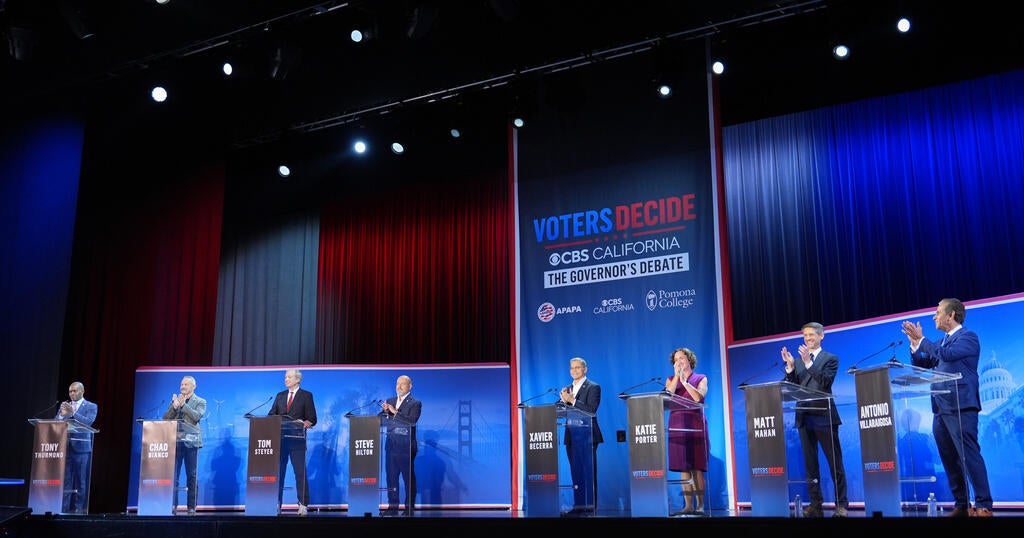
With just over a month remaining until California’s gubernatorial primary election, voters face a remarkably unsettled race that could reshape the nation’s most populous state. The contest has drawn a diverse field of candidates offering starkly different visions for California’s future, and recent polling suggests the outcome remains anyone’s guess. At this week’s CBS News debate—the largest gathering of candidates to date—six Democrats and two Republicans took the stage at Pomona College to make their case to voters. The Democratic field spans the ideological spectrum, from progressive firebrands like billionaire environmental activist Tom Steyer and former Congresswoman Katie Porter to more moderate voices including Xavier Becerra, who served as Health and Human Services Secretary under President Biden, San Jose Mayor Matt Mahan, former Los Angeles Mayor Antonio Villaraigosa, and State Superintendent Tony Thurmond. On the Republican side, Trump-endorsed former Fox News host Steve Hilton currently leads the polls, with Riverside County Sheriff Chad Bianco trailing close behind.
What makes this race particularly intriguing—and concerning for Democrats—is how tight the numbers are. Recent CBS News polling shows Hilton in first place, but progressive candidate Steyer sits just one percentage point behind him. Perhaps most significantly, a full quarter of California voters remain undecided, meaning the race could shift dramatically in the coming weeks. The debate highlighted the key issues weighing on Californians’ minds: healthcare costs, insurance affordability, education quality, homelessness, and immigration. But threading through every discussion was the overwhelming concern about California’s cost of living—an issue that has pushed many middle-class families to the breaking point and prompted some residents to leave the state entirely. The candidates offered vastly different diagnoses of what ails California and competing prescriptions for fixing it, setting up a choice that will determine whether the Golden State continues on its current progressive path or pivots toward a different approach.
The Moderate Lane Gets Crowded as Becerra Gains Ground
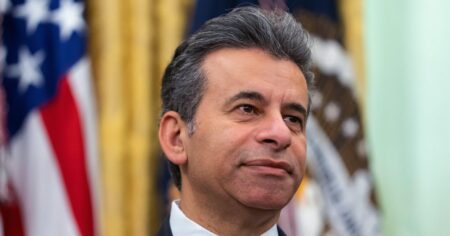
Xavier Becerra walked onto the debate stage with newfound momentum, making him the primary target for attacks from both sides of the aisle. His rise in the polls came after former Congressman Eric Swalwell, who was competing for the same moderate Democratic voters, dropped out of the race amid sexual assault allegations that Swalwell has denied. Since Swalwell’s exit, Becerra has climbed into double digits in both CBS News and Emerson College polling, positioning himself as the moderate alternative in a field that includes several progressive candidates. His experience in the federal government—serving in the Biden administration and previously as California’s Attorney General—gives him credentials that appeal to voters looking for someone with a proven track record in executive leadership. However, Becerra still trails both Republican frontrunner Hilton and progressive challenger Steyer in the most recent surveys.
The debate revealed the challenges Becerra faces in consolidating moderate support. San Jose Mayor Matt Mahan, who is also competing for moderate voters, directly challenged Becerra’s policy proposals, particularly attacking his plan for a home insurance rate freeze as unworkable. Former Congresswoman Katie Porter took a different approach, criticizing Becerra for offering “lovely plans” without providing the numbers and specifics to back them up—a pointed jab suggesting his proposals lack substance. But Becerra showed he could counterpunch effectively, delivering what may have been the night’s most memorable line when asked about expiring healthcare subsidies. Rather than simply answering the policy question, he pivoted to attack the Republican frontrunner: “The first thing we have to do is stop Steve Hilton’s daddy,” Becerra said, referring to President Trump’s endorsement of Hilton. He positioned himself as the candidate who would “fight Donald Trump, not agree with him”—a message designed to appeal to California’s deep-blue electorate. The exchange highlighted Becerra’s strategy of presenting himself as both a competent moderate and someone willing to stand up to Republican policies, attempting to bridge different factions within the Democratic coalition.
Porter and Steyer Champion Progressive Change
Katie Porter and Tom Steyer represent the progressive wing of the Democratic field, though they bring very different backgrounds to their shared ideology. Porter, a former congresswoman who represented an Orange County district, has built her political brand around being a no-nonsense advocate for working families. As the only woman among the race’s top-tier candidates, she leaned into her identity as a single mother of three teenagers during the debate, connecting voters’ economic anxieties to her personal experience. “I worry that that one kid is never going to get off my couch and get into a home,” Porter said, articulating a fear that resonates with many California parents watching housing prices soar beyond their children’s reach. “I’m somebody who’s concerned about child care, because I’ve paid the bills and I’ve gassed up my minivan.” Porter told CBS News after the debate that she felt she had successfully differentiated herself from other candidates, though she acknowledged the crosstalk and interruptions reminded her of her “kids at the dinner table, bickering back and forth.”
Despite a strong showing in early polling last September, Porter’s numbers have declined in recent months. She’s faced headwinds from negative press, including an unearthed video showing her yelling at a former staffer and a tense interview with CBS News California’s Julie Watts—who happened to be one of Tuesday’s debate moderators, creating an awkward dynamic. Porter has embraced progressive policy positions, including advocating for single-payer healthcare, aligning herself with the Bernie Sanders wing of the Democratic Party. Tom Steyer shares many of Porter’s policy positions but brings a more unusual profile to the progressive lane. The billionaire former hedge fund manager has reinvented himself as an environmental activist and champion of taking on corporate special interests. “The problem in California is: People can’t afford to live here anymore, can’t afford to buy a house and aren’t getting the education they deserve,” Steyer argued during the debate. “And in order to change that, we’re going to have to take on the corporate special interests that are driving up your costs and profiting off you. I am the person who is willing to do that.”
Steyer’s billionaire status—Forbes estimates his net worth at $2.4 billion—creates an ironic tension with his populist message, and opponents haven’t hesitated to exploit it. When Steyer criticized oil companies for pollution, Porter pointedly asked why his hedge fund had previously invested in the same kinds of fossil fuel companies he now condemns. Steyer has acknowledged these investments as “mistakes” from his past. Despite his wealth, Steyer has won the endorsement of Our Revolution, the Bernie Sanders-founded organization dedicated to electing progressives, which praised his willingness to “challenge the very system that benefits people like him.” His campaign represents a bet that California voters will accept a billionaire champion of progressive causes—a category that includes former presidential candidates like Michael Bloomberg and himself in 2020, though neither found success on the national stage. The most divisive issue among Democrats is a proposed one-time 5% tax on billionaires’ assets that will appear on California’s November ballot. Interestingly, neither Porter nor Becerra supports the measure, with Becerra, Villaraigosa, and Mahan also opposing it. Mahan warned it would “crash [the state’s] innovation engine.” Steyer says he supports higher taxes on billionaires generally but has concerns about this specific proposal’s design. Only Thurmond has unequivocally endorsed the measure, and even outgoing Governor Gavin Newsom opposes it, fearing it could drive wealthy residents out of state.
Republicans Unite Around a Message of Democratic Failure
While the Democratic field fragments across ideological and tactical differences, the two Republican candidates presented a unified message: California is broken, and decades of Democratic rule are to blame. Steve Hilton, the Trump-endorsed former Fox News host, and Chad Bianco, the Riverside County Sheriff, both framed their campaigns as rescue missions for a state they argue has been driven into crisis by progressive policies. “California is broken because of what has been happening in Sacramento, because of an absolute failed Democrat, progressive agenda that is destroying California,” Bianco declared during the debate. This message resonates with California’s Republican voters, who according to recent CBS News polling believe not only that things aren’t going well in the state but that California’s economy is worse than the nation’s as a whole—a striking perception in a state that, despite its challenges, boasts the world’s fifth-largest economy.
Both Republican candidates pledged to cut taxes if elected, with particular emphasis on eliminating California’s gas tax, currently the highest in the nation. For many California residents, the gas tax symbolizes the hidden costs of living in the state—the accumulation of fees, taxes, and expenses that make everyday life prohibitively expensive for working families. The Republican pitch is straightforward: Democratic leadership has taxed and regulated California into unaffordability, driving businesses and middle-class families to flee to lower-cost states like Texas, Arizona, and Florida. Meanwhile, the Democrats on stage—including Becerra, Porter, and Steyer—said they would not eliminate the gas tax, arguing that it funds critical infrastructure improvements the state desperately needs. This divide captures the fundamental choice facing California voters: whether to address affordability through tax cuts and deregulation, as Republicans propose, or through increased government intervention in markets and expanded public services, as most Democrats advocate. Hilton’s position at the top of the polls, albeit by a narrow margin, suggests the Republican message is finding an audience even in deep-blue California, where Democrats significantly outnumber Republicans in voter registration.
California’s Unique Primary System Creates General Election Uncertainty
California’s “jungle primary” system adds an additional layer of complexity and uncertainty to this already chaotic race. Unlike traditional primaries where Democrats choose their nominee and Republicans choose theirs, California’s nonpartisan system sends the top two vote-getters to the November general election regardless of party affiliation. This means it’s theoretically possible for two Republicans or two Democrats to advance, locking out one entire party from the general election. With the Democratic field so fractured—six candidates splitting the vote among various ideological factions—and with Hilton and Bianco as the only Republicans, some Democrats worry about a nightmare scenario where both Republicans finish in the top two positions, leaving Democrats without a candidate in the general election.
This concern isn’t merely theoretical. The mathematics are straightforward: if the roughly 40-50% of California voters who lean Republican consolidate around one or both GOP candidates, while the 50-60% who lean Democratic split their votes six ways, Republicans could claim both spots despite being outnumbered overall. This dynamic creates pressure on lower-polling Democratic candidates to drop out and consolidate support, but so far, no one has shown willingness to exit. Each candidate believes they have a path to the general election, and with so many voters undecided, they may be right. The jungle primary system was designed to produce more moderate candidates by forcing them to appeal to voters across party lines in the general election, but in this cycle, it may produce the opposite effect—potentially elevating candidates who appeal to party bases in a fragmented field rather than those with the broadest appeal.
A State at a Crossroads Searches for Direction
As California voters prepare to make their choice in just over a month, the wide-open nature of this race reflects deeper uncertainty about the state’s direction. For decades, California has been a laboratory for progressive policies—from environmental regulations to worker protections to social programs—that have often been adopted by other states and even at the federal level. But the state also faces undeniable challenges: a homelessness crisis that has made tent encampments a common sight in major cities, housing costs that have made homeownership unreachable for many middle-class families, an exodus of businesses and residents to lower-cost states, and quality-of-life concerns that have shaken residents’ faith in their government’s ability to solve problems. These challenges have created an opening for Republicans in a state that hasn’t elected a GOP governor since Arnold Schwarzenegger left office in 2011.
The candidates’ divergent visions for addressing these challenges offer voters a genuine choice. Republicans blame overregulation, high taxes, and progressive policies for driving up costs and driving out residents, promising to cut red tape and reduce the tax burden. Moderate Democrats like Becerra argue for competent governance and incremental reforms, positioning themselves as pragmatic problem-solvers who can work across party lines. Progressive candidates like Steyer and Porter contend that California’s problems stem from corporate power and insufficient government intervention, calling for bold action to confront special interests and expand public services. With the race still wide open and one-quarter of voters undecided, the coming weeks will likely see intensified campaigning, sharper attacks, and possibly the consolidation of support around frontrunners. But for now, California’s gubernatorial race remains remarkably fluid, with no clear favorite and multiple possible outcomes—a fitting reflection of a state that has always prided itself on defying expectations and charting its own course.