


The Explosive Growth and Growing Pains of Prediction Markets
A New Financial Frontier Emerges
The world of prediction markets has experienced unprecedented growth, transforming from a niche financial product into a multi-billion dollar industry seemingly overnight. What started as $1.2 billion in monthly trading activity at the beginning of 2025 has skyrocketed to over $20 billion just one year later, according to analysis from TRM Labs. Platforms like Polymarket and Kalshi have led this charge, but they’re no longer alone—major players including Coinbase and Crypto.com have jumped into the arena, alongside institutional partners and online gambling operations. These platforms allow users to bet on an astonishing variety of events: the specific words President Donald Trump might use in a speech, when a popular music album will drop, how much wealthier a billionaire might become by month’s end, or which baseball team will claim the American League pennant. Political bets have dominated the sector, followed closely by sports contracts, creating a new form of engagement that blends financial speculation with real-world events in ways we’ve never seen before.
However, this meteoric rise hasn’t gone unnoticed by regulators and lawmakers, who are increasingly concerned about where to draw the line between legitimate financial derivatives and what many consider thinly veiled gambling. State officials and a growing chorus of federal lawmakers argue that popular sports bets have crossed from regulated financial instruments into territory that should fall under state gambling oversight. Even more troubling to critics are bets focused on sensitive government actions, including military operations, assassinations, and other events that raise serious ethical questions. The most alarming concern centers on whether insiders with advance knowledge of these events are using prediction markets to profit illegally, essentially turning these platforms into vehicles for sophisticated insider trading that could undermine public trust in both markets and government.
A Legislative Avalanche Takes Aim
The response from Congress has been swift and comprehensive, with more than half a dozen bills introduced in recent weeks to regulate or restrict prediction market activity. While many of these proposals come from Democrats, several have garnered bipartisan support, suggesting genuine concern across party lines. The STOP Corrupt Bets Act, introduced by Senator Jeff Merkley of Oregon and Representative Jamie Raskin of Maryland, takes the broadest approach by proposing to ban event contracts on elections, most government actions, sports, and military operations entirely. Meanwhile, the Public Integrity in Financial Prediction Markets Act may carry more weight due to its bipartisan backing from senators including Republicans John Curtis of Utah and Todd Young of Indiana. This legislation would prohibit election officials and government employees from betting on anything they have inside knowledge about, extending to the president, vice president, cabinet members, and congressional lawmakers—a direct response to suspicious betting patterns observed around the Iran military actions.
Similar legislative efforts include the End Prediction Market Corruption Act and the PREDICT Act (Preventing Real-time Exploitation and Deceptive Insider Congressional Trading Act), both addressing insider trading concerns from slightly different angles. The BETS OFF Act (Banning Event Trading on Sensitive Operations and Federal Functions) specifically targets wagers on military actions in Iran and Venezuela that appeared to demonstrate prior knowledge, banning trades from those with insider awareness of government actions, terrorism, war, assassination, and similar events. The Prediction Markets Are Gambling Act, backed by Senators Adam Schiff and John Curtis, supports state gambling regulators’ efforts to keep sports event contracts within state jurisdiction. Finally, the Prediction Markets Security and Integrity Act from Senators Richard Blumenthal and Andy Kim focuses on preventing insider trading and market manipulation while also requiring age verification and banning trades on war, death, and military action. Together, these bills represent a comprehensive effort to rein in what lawmakers see as a Wild West industry that has grown too quickly without adequate safeguards.
The Trump Factor and Political Realities
Despite this legislative momentum, significant political obstacles stand in the way of meaningful reform. Even if Democrats successfully regain control of the House of Representatives—currently rated at 85% likelihood by Polymarket itself—and potentially the Senate, any legislation would ultimately require President Trump’s signature. This creates a substantial complication because the Trump family has deep ties to the prediction market industry. Don Trump Jr. serves in advisory roles for both Kalshi and Polymarket, and a venture capital firm he’s involved with has invested in Polymarket. Additionally, the Trump family’s stake in World Liberty Financial Inc. connects them to prediction platform Myriad, which uses WLF’s stablecoin as a settlement asset. President Trump himself has reportedly praised prediction markets as superior to traditional polling for election forecasting, suggesting he views them favorably as both a business and a political tool.
The industry’s close relationship with the cryptocurrency world further strengthens its position with the current administration. Prediction markets often operate on blockchains and conduct business in tokens, making them part of the broader crypto ecosystem that President Trump has made elevating a leading priority of his administration. This shared DNA means that attacking prediction markets could be seen as attacking crypto innovation more broadly—something the White House has made clear it won’t tolerate. Legal experts like Liz Davis, a former chief trial attorney in the Commodity Futures Trading Commission’s enforcement division, note that “every day brings a new lawsuit,” while Jake Preiserowicz, a former CFTC special counsel, predicts the jurisdictional battle “may take two years, but it almost certainly seems to be going down that path and will go to the Supreme Court.” Until then, he describes the regulatory landscape as a “minefield” that companies must carefully navigate.
States Draw Their Battle Lines
While congressional action remains uncertain and the White House appears sympathetic to the industry, state governments have no such impediments and are taking prediction markets to court with increasing aggression. The central argument from state regulators is straightforward: if a person can bet $100 on a state-regulated sportsbook like BetMGM that the University of Michigan will advance in March Madness and win roughly the same amount they would betting on Kalshi’s platform, then both should be considered gambling under state jurisdiction. Nevada courts have already halted Kalshi’s operations based on this reasoning, while states like Washington have filed similar complaints. Arizona has taken the most aggressive stance, with the attorney general charging Kalshi with 20 criminal counts for allegedly running an unlicensed gambling business that offered illegal election wagering.
The states have found an unexpected ally in Mick Mulvaney, who served as White House chief of staff during Trump’s first administration. Mulvaney has established the Gambling Is Not Investing Coalition specifically to counter prediction markets’ claims that they deserve federal derivatives regulation rather than state gambling oversight. The coalition’s website makes its position clear: “If it looks like gambling and functions like gambling, it should follow gambling rules,” arguing that states and tribal governments should be the proper watchdogs. Kalshi has pushed back forcefully against these accusations, with head of communication Elisabeth Diana insisting that her company “is a regulated, nationwide exchange for real-world events, and it is subject to exclusive federal jurisdiction.” She emphasizes that Kalshi’s offerings are “very different from what state-regulated sportsbooks and casinos offer their customers” and expresses confidence in their legal arguments. This fundamental disagreement over jurisdiction—federal versus state, derivatives versus gambling—will likely require Supreme Court intervention to resolve definitively.
The Regulatory Turf War
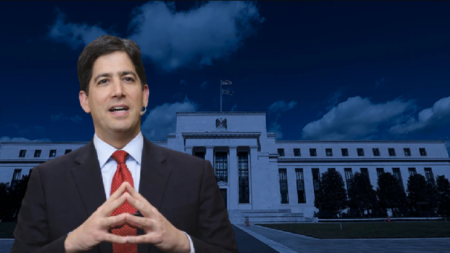
Current Commodity Futures Trading Commission Chairman Mike Selig has emerged as the prediction markets’ most powerful advocate within government, pursuing a very public campaign to assert that the CFTC has exclusive authority over event contracts, not the states. Regulating prediction markets has become one of his top policy priorities, and he’s filed court briefs arguing that states are improperly infringing on CFTC jurisdiction. “This power grab ignores the law and decades of precedent,” Selig declared, as his agency works on new regulations for the sector. The CFTC has even secured an unprecedented memorandum of understanding with Major League Baseball for information sharing, demonstrating the regulatory ambition Selig brings to this issue.
Selig has also pointed to recent enforcement actions at Kalshi as evidence that the platform is fulfilling its duties to police fraud and manipulation. Kalshi suspended and fined a producer working with the popular Mr. Beast show for betting on the show’s outcomes and took action against a politician for betting on his own candidacy for California’s governorship. Polymarket recently refreshed its market-integrity rules to clarify that trading on tips or stolen information from people with legal confidentiality duties is prohibited, as is trading by people who can influence the outcome of bets. However, federal prosecutors have reportedly been speaking with prediction market firms about whether certain instances could trigger insider-trading prosecutions, suggesting that self-regulation may not be sufficient. As the sole member of what’s normally a five-member commission, Selig can act quickly without consulting others, and experts estimate the CFTC could finalize new regulations before year’s end, potentially establishing a regulatory framework before Congress acts.
The Insider Trading Shadow
Perhaps the most troubling concern surrounding prediction markets involves potential insider trading on sensitive government operations. A TRM Labs analysis identified suspicious betting patterns around the recent U.S. military strike on Iran that suggest some bettors had advance knowledge of the attack. The Polymarket question “Will the US strike Iran by Feb 28, 2026?” became the platform’s largest market with $73 million in interest, and the date marked the beginning of actual military operations. TRM identified four wallets that bet approximately $40,000 on the strike and eventually won $872,000. These four wallets had minimal trading history, were funded through the same method within a narrow time period, placed their bets at similar times, and went dark after collecting their winnings—a pattern that, while not definitive proof, raises serious red flags about insider knowledge.
If Trump administration officials are discovered wagering on military actions or other sensitive government decisions, it could provide the political momentum needed to pass restrictive legislation despite White House opposition. Some government officials aren’t waiting for federal action. California Governor Gavin Newsom has pursued a statewide policy banning government officials from making prediction market trades on topics they have inside information about. Representative Seth Moulton of Massachusetts has banned his own staff from participating in prediction markets involving matters that may come before them, stating: “My office has not, and will not, engage in these trades that run counter to every principle of a clean, honest government that works for the people.” Legal expert Liz Davis notes that some of her clients are already asking whether they need new confidentiality duties to formally identify employees who could be considered insiders in this betting realm. Despite the regulatory uncertainty and ethical concerns, Davis believes prediction markets, like the crypto industry before them, are “just going to keep on continuing to grow and actually become more institutionalized.” Kalshi has launched an advertising campaign in Washington, D.C., emphasizing that it bans insider trading because it’s “a federal regulated U.S. exchange,” attempting to reassure both users and policymakers that self-regulation can address these concerns before government intervention becomes necessary.