


California’s Billionaire Tax Proposal: A Battle Between Economic Justice and Fiscal Risk
Historic Signature Drive Puts Wealth Tax on the Ballot
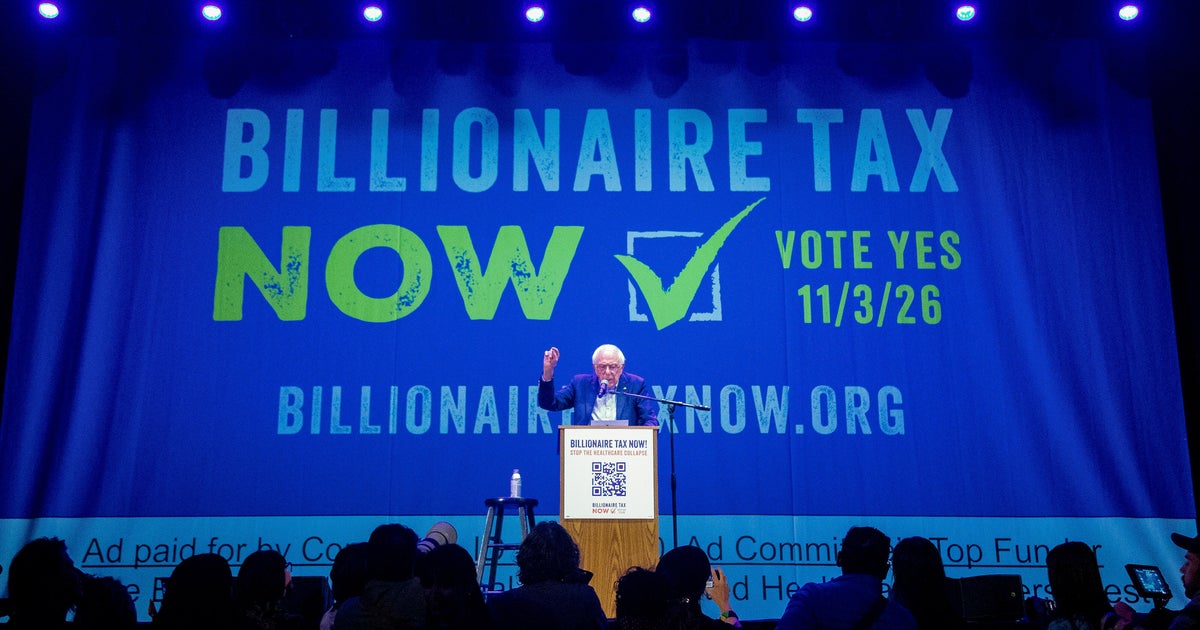
In what’s shaping up to be one of the most contentious political battles in California’s recent history, a groundbreaking proposal to tax the state’s billionaires has cleared its first major hurdle. The Service Employees International Union-United Healthcare Workers West (SEIU-UHW), representing over 120,000 healthcare professionals across California, has announced they’ve gathered more than 1.5 million signatures supporting their “2026 Billionaire Tax Act.” This impressive haul significantly surpasses the 875,000 signatures required to secure a spot on the November ballot, marking a significant victory for labor organizers and progressive activists who have long argued that the ultra-wealthy aren’t paying their fair share. The measure proposes a straightforward yet radical solution: a one-time 5% tax on any Californian with a net worth exceeding $1 billion. For context, California is home to approximately 200 billionaires who have collectively amassed an estimated $2 trillion in wealth, making the Golden State one of the wealthiest regions in the entire world. The successful signature gathering campaign represents months of grassroots organizing, with healthcare workers going door-to-door and setting up tables at community events to convince everyday Californians that this tax represents a fair way to address growing inequality and fund critical services.
What the Tax Would Fund and Why It Matters Now
The proposed billionaire tax isn’t just about redistribution for its own sake—it’s designed to address what organizers describe as an impending crisis in California’s healthcare system and public services. According to the measure’s backers, the tax would generate approximately $100 billion over five years, money that would be specifically earmarked for three critical areas: preventing hospital and clinic closures across the state, funding public education from kindergarten through community college (K-14), and supporting state food assistance programs that serve millions of vulnerable Californians. The timing of this proposal is particularly significant given the financial pressures facing California’s healthcare infrastructure. Many community hospitals and rural clinics have been operating on razor-thin margins, with some facing closure due to insufficient funding and the rising costs of providing care. Healthcare workers on the front lines have witnessed firsthand how budget constraints have affected patient care, leading to longer wait times, reduced services, and in some cases, the complete shuttering of facilities that served as lifelines for their communities. The $100 billion price tag might sound enormous, but when spread across five years and weighed against the needs of California’s 39 million residents, supporters argue it represents a reasonable investment in the state’s future. Education advocates point out that California’s K-14 system has struggled with funding for decades, often ranking in the bottom half of states for per-pupil spending despite being the world’s fifth-largest economy. Meanwhile, food insecurity has become an increasingly urgent issue, with inflation and economic uncertainty leaving more families struggling to put meals on the table.
The Stark Disparity: Billionaires vs. Middle-Class Tax Rates
At the heart of the debate lies a stunning inequality in effective tax rates that has galvanized support for the measure among working-class Californians. Analysis by the Institute on Taxation and Economic Policy reveals that California’s roughly 200 billionaires, sitting atop their combined $2 trillion in wealth, pay less than 1.5% of that wealth in annual taxes. Meanwhile, middle-class Californians earning between $25,000 and $70,000 annually face state tax rates ranging from 4% to 8%—significantly higher than what the ultra-wealthy effectively contribute. This disparity exists because of how wealth versus income is taxed in the American system. While working people pay taxes on their salaries and wages, the super-rich accumulate most of their wealth through assets like stocks, real estate, and business holdings that aren’t taxed until they’re sold. Even then, these gains are often taxed at preferential rates or shielded through various legal strategies available primarily to those who can afford sophisticated tax planning. The billionaires can live lavishly by borrowing against their assets at low interest rates, effectively accessing their wealth without triggering taxable events. This structural advantage means that despite having exponentially more resources, the ultra-wealthy often contribute a smaller percentage of their economic position to public coffers than a teacher, nurse, or construction worker. For many supporters of the ballot measure, this isn’t just an economic issue—it’s a moral one that strikes at fundamental notions of fairness and civic responsibility.
Governor Newsom’s Concerns and the Opposition’s Arguments
Despite California’s reputation as a progressive stronghold, the billionaire tax proposal has encountered significant resistance, including from Democratic Governor Gavin Newsom himself. The governor has expressed concern that imposing such a tax could trigger an exodus of wealthy residents to states with more favorable tax climates, potentially harming California’s economy and ironically reducing overall tax revenue. Newsom’s worry isn’t purely theoretical—California has seen some high-profile departures in recent years, with wealthy individuals and companies relocating to states like Texas and Florida that have no state income tax. The opposition’s arguments extend beyond just the risk of residents leaving. Critics contend that wealth taxes are notoriously difficult to administer and value, particularly when wealth is tied up in privately held companies, art collections, real estate, and other assets that don’t have clear market prices. They also raise constitutional questions about whether such a tax might run afoul of federal or state legal protections. Bill Ackman, a billionaire hedge fund manager based in New York, has been particularly vocal in his opposition, characterizing wealth taxes as “effectively an expropriation of private property” with “many unintended and negative consequences.” Opponents also argue that California’s wealthy residents already contribute substantially to state revenues through existing income taxes, capital gains taxes, and property taxes, and that many are generous philanthropists who direct their wealth toward causes they believe in more efficiently than government programs could. Some critics suggest that rather than imposing new taxes, California should focus on controlling spending, improving government efficiency, and creating conditions that encourage economic growth that would benefit everyone.
Healthcare Workers’ David vs. Goliath Narrative
For the frontline healthcare workers leading this campaign, the battle over the billionaire tax has taken on symbolic significance that transcends the specific policy details. Suzanne Jimenez, chief of staff at SEIU-UHW and a lead organizer of the measure, framed the fight in explicitly biblical terms—as a David versus Goliath struggle between ordinary workers and the ultra-wealthy elite. In a statement celebrating the signature milestone, Jimenez acknowledged that “controversial billionaires” have attempted to derail the measure but insisted that the signature count proves that “frontline healthcare workers will prevail in bringing this commonsense proposal to voters.” This rhetoric isn’t merely colorful language—it reflects a genuine belief among supporters that California faces a fundamental choice about whose interests will be prioritized in an era of growing inequality. Healthcare workers, who risked their lives during the COVID-19 pandemic and continue to work long hours in often understaffed facilities, have watched as their patients suffer from inadequate resources while the state’s billionaire class has grown even wealthier. Jimenez made clear that reaching the ballot is just the beginning: “Healthcare workers and our allies won’t quit until we fully protect our patients from the looming healthcare disaster that will be caused by $100 billion in cuts to California healthcare.” This statement references anticipated budget cuts that could devastate the healthcare system without new revenue sources. The coalition backing the measure includes not just healthcare workers but also teachers, community organizers, faith leaders, and ordinary citizens who believe the current system is fundamentally unfair and unsustainable.
What Happens Next and the Broader Implications
With more than enough signatures gathered, the billionaire tax measure will now undergo verification by election officials before being formally certified for the November ballot. Assuming it qualifies—which seems nearly certain given the signature surplus—California voters will face a consequential decision that could reshape the state’s fiscal landscape and potentially influence national conversations about wealth taxation. The campaign leading up to November promises to be intense and expensive, with both sides likely to pour millions of dollars into advertising and organizing. Supporters will emphasize the fairness argument and the urgent needs that would be addressed by the revenue, while opponents will warn of economic consequences and constitutional concerns. Polls will be watched closely to gauge whether California’s famously progressive electorate is ready to take this unprecedented step. Beyond California, the measure is being watched nationally as a potential model for other states and even for federal policy. Progressive politicians and economists who have advocated for wealth taxes at the national level see the California proposal as an important test case. If it passes and is successfully implemented without triggering the predicted exodus or economic disruption, it could provide momentum for similar measures elsewhere. Conversely, if it fails or leads to the problems critics predict, it might set back the wealth tax movement significantly. The outcome will likely depend on whether voters are more persuaded by the fairness argument and the promise of improved services, or by warnings about economic risks and unintended consequences. Regardless of the result, the fact that such a measure has gathered sufficient support to reach the ballot reflects a profound shift in public attitudes about wealth inequality and the obligations of the ultra-rich to contribute to the societies that enabled their success. The November vote will reveal whether Californians are ready to fundamentally restructure how the wealthiest among them contribute to the common good.