


Understanding the Recent Crypto Market Turbulence and Whale Activity Trends
The Federal Reserve’s Impact on Cryptocurrency Markets
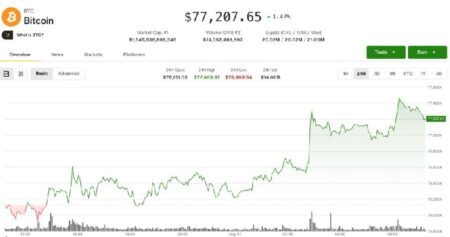
The cryptocurrency market experienced a significant shakeup recently when Bitcoin and various altcoins took a nosedive following the Federal Reserve’s latest policy announcement. The digital currency landscape, which had been riding a wave of optimism, suddenly found itself facing harsh reality as investors digested news about persistent inflation risks and the dimming prospects for interest rate cuts in the near future. Bitcoin, the flagship cryptocurrency that often sets the tone for the entire market, tumbled to the $71,000 mark—a substantial drop that sent ripples throughout the crypto ecosystem. Ethereum, the second-largest cryptocurrency by market capitalization, wasn’t spared either, experiencing its own considerable pullback alongside numerous altcoins that have been vying for investor attention. This market-wide correction serves as a stark reminder of how interconnected traditional financial policy remains with the supposedly decentralized world of digital assets. The Federal Reserve’s decisions continue to wield enormous influence over crypto markets, despite the industry’s attempts to position itself as an alternative to traditional finance. For many investors who had grown accustomed to the recent bullish momentum, this sudden reversal came as an unwelcome wake-up call, demonstrating once again that the crypto market remains highly sensitive to macroeconomic factors and policy decisions made by central banks.
Divided Opinions Among Market Analysts
In the wake of this dramatic price action, the cryptocurrency analysis community finds itself split into two distinct camps, each with compelling arguments for their respective positions. On one side, we have the optimistic analysts who view this decline as nothing more than a temporary setback—a healthy correction in an otherwise robust upward trend. These bullish commentators point to historical patterns, suggesting that Bitcoin and the broader crypto market have weathered similar storms before and emerged stronger. They argue that the fundamental drivers behind cryptocurrency adoption remain intact, including growing institutional interest, increasing regulatory clarity in various jurisdictions, and the ongoing development of blockchain technology and its applications. These optimists encourage investors to see this dip as a potential buying opportunity rather than a reason to panic. On the opposing side stand the more cautious analysts who believe this downturn could have longer-lasting implications. These bears point to the stubborn nature of inflation, the Federal Reserve’s hawkish stance, and the possibility of further economic headwinds that could keep pressure on risk assets like cryptocurrencies for an extended period. They warn that the recent bull run may have gotten ahead of itself, with valuations that weren’t sustainable given the current macroeconomic environment. This divergence of opinion creates an atmosphere of uncertainty that permeates the market, leaving individual investors to navigate conflicting narratives and make their own informed decisions.
What Whale Activity Tells Us About Market Sentiment
As everyday investors grapple with this uncertainty and try to determine their next moves, sophisticated market watchers have turned their attention to a particularly revealing indicator: whale activity. In cryptocurrency parlance, “whales” refer to large holders who possess enough digital assets to potentially influence market movements through their trading decisions. These wealthy individuals and institutions often have access to better information, more sophisticated analysis tools, and deeper market insights than the average retail investor. That’s why tracking their behavior can provide valuable clues about where the market might be heading. Santiment, a respected blockchain analytics platform that specializes in monitoring on-chain data, has just released fascinating information about which altcoins are currently attracting the most attention from these influential market players. By analyzing transaction data on various blockchains, Santiment identified the cryptocurrencies experiencing the most dramatic increases in large-scale transactions—specifically, those involving transfers of $100,000 or more. This research focused on established projects with market capitalizations exceeding $500 million, filtering out smaller, more speculative tokens to focus on assets with genuine liquidity and market presence. The resulting list provides a window into where sophisticated money is flowing during this period of market turbulence, potentially revealing opportunities that haven’t yet been recognized by the broader market or identifying projects that whales believe will weather the current storm better than others.
The Top Performers in Whale Transaction Activity
The data revealed by Santiment paints an intriguing picture of where major players are directing their attention and capital. Leading the pack with an absolutely staggering 600% increase in large transactions is Mantle (MNT), a layer-2 scaling solution that has apparently captured the imagination of big-money investors. This dramatic surge in whale activity suggests that major players see significant potential in Mantle’s technology and ecosystem, despite the broader market downturn. Following behind is DAI on the Binance Smart Chain, showing a 340% increase—a particularly interesting development given that DAI is a stablecoin, suggesting that whales may be positioning themselves in stable assets within specific ecosystems while waiting for market conditions to improve. Third on the list is Maker DAO’s governance token MKR, with a 200% increase in large transactions, indicating strong confidence in one of decentralized finance’s most established protocols. Artificial Superintelligence Alliance’s FET token comes in fourth with a 178% jump, reflecting the ongoing enthusiasm surrounding artificial intelligence projects in the crypto space. Rain Protocol’s RAIN token rounds out the top five with a 100% increase, while Astar (not “Aster” as sometimes misspelled) shows an 89% rise, demonstrating continued interest in projects building on Polkadot’s ecosystem. Notably, USDD on Ethereum jumped 82%, followed by the meme sensation Pepecoin (PEPE) with a 61% increase—proving that even in uncertain times, whales aren’t completely abandoning speculative plays. Finally, Tether (USDT) on Optimism and Circle’s USDC on Binance Smart Chain saw increases of 58% and 57% respectively, further reinforcing the theme of strategic positioning in stablecoins across various blockchain networks.
Reading Between the Lines of Whale Behavior
What makes this data particularly fascinating is what it reveals about whale strategy during market uncertainty. The presence of multiple stablecoins (DAI, USDD, USDT, and USDC) on the list tells a compelling story about risk management. Rather than completely exiting the cryptocurrency space or moving funds back to traditional banking systems, these large investors appear to be relocating capital into stablecoins across different blockchain ecosystems. This suggests they’re maintaining readiness to deploy capital quickly when opportunities arise, while simultaneously reducing exposure to price volatility. The specific choice of platforms—such as Binance Smart Chain, Ethereum, and Optimism—indicates whales are strategically distributing their holdings across multiple networks, possibly to take advantage of different yield opportunities or to position themselves for ecosystem-specific developments. Meanwhile, the strong showing of projects like Mantle, Maker DAO, and Astar reveals that sophisticated investors aren’t abandoning their conviction in promising technology and established decentralized finance protocols. Even the inclusion of PEPE, a meme coin, demonstrates that whales maintain a diversified approach that includes both serious infrastructure plays and more speculative, community-driven tokens. This balanced strategy—combining stablecoins for safety, established DeFi protocols for steady growth potential, emerging technologies for upside opportunity, and even meme coins for asymmetric risk-reward scenarios—offers a masterclass in portfolio construction during uncertain times.
Navigating the Current Crypto Landscape
For individual investors trying to make sense of these turbulent market conditions, the whale activity data provides valuable context but shouldn’t be interpreted as direct investment advice—a disclaimer that bears repeating because following whale movements blindly can be as dangerous as ignoring them entirely. Whales operate with different risk tolerances, time horizons, and investment theses than typical retail investors. They can afford to be patient through extended downturns, have the resources to weather significant temporary losses, and often possess information or analytical capabilities that aren’t available to the general public. That said, there are still lessons to be learned from observing their behavior. The emphasis on diversification across different types of assets and blockchain ecosystems is a principle that applies to investors of all sizes. The strategic use of stablecoins as a parking place for capital during uncertain times—rather than exiting crypto markets entirely—represents a middle path that more investors might consider. The continued confidence in established DeFi protocols suggests that projects with proven track records and genuine utility may offer better risk-adjusted returns during volatility compared to newer, untested alternatives. As the Federal Reserve continues to navigate the complex challenge of managing inflation without triggering a recession, cryptocurrency markets will likely remain sensitive to macroeconomic news and policy decisions. Whether the current decline proves temporary or extended will depend on factors that extend far beyond the crypto space itself—inflation trends, employment data, geopolitical developments, and the overall health of the global economy will all play roles. In this environment, staying informed about both traditional financial indicators and crypto-specific metrics like whale activity provides the most complete picture for making investment decisions. Above all, maintaining a long-term perspective, managing risk appropriately, and never investing more than you can afford to lose remain the timeless principles that should guide any cryptocurrency investment strategy, regardless of what the whales are doing.