



AI-Powered Brain Chip Turns Thoughts Into Action: A New Era of Human-Computer Connection
The Revolutionary Technology Transforming Lives
Imagine being able to control your smartphone, computer, or even robotic limbs using nothing but your thoughts. This concept, which once belonged solely to the realm of science fiction, has become an astonishing reality thanks to groundbreaking advancements in brain-computer interface (BCI) technology. At the forefront of this revolution are AI-powered brain chips that can interpret neural signals and transform them into actionable commands, offering unprecedented hope to people with paralysis and other severe disabilities. These remarkable devices represent one of the most significant leaps forward in neurotechnology, combining artificial intelligence with sophisticated brain implants to create a direct communication pathway between the human mind and external devices.
The technology works by implanting tiny electrode arrays directly onto or into the brain’s surface, where they can detect and record electrical signals produced by neurons when we think, plan movements, or process information. These neural patterns are then translated by advanced AI algorithms into digital commands that can control computers, prosthetic devices, wheelchairs, or virtually any electronic equipment. What makes this technology particularly revolutionary is its ability to learn and adapt to individual users over time, becoming more accurate and responsive as the AI system better understands each person’s unique brain patterns. For individuals who have lost the ability to move or speak due to spinal cord injuries, strokes, or neurodegenerative diseases, these brain chips offer the possibility of regaining independence and reconnecting with the world in ways that were previously unimaginable.
Real-World Success Stories That Inspire Hope
The most compelling evidence of this technology’s potential comes from real people whose lives have been transformed by these AI-powered brain implants. One of the most remarkable cases involves individuals with complete paralysis who have successfully used thought-controlled interfaces to operate robotic arms with impressive precision. These users can perform complex tasks like grasping objects, drinking from cups, or even playing simple games—all by thinking about the movements they wish to make. The emotional impact of regaining such capabilities after years of immobility cannot be overstated; participants in clinical trials often describe overwhelming feelings of restored dignity and independence.
Another breakthrough application has been in communication for people who cannot speak. Some brain chip recipients who lost the ability to talk due to brainstem strokes or conditions like amyotrophic lateral sclerosis (ALS) can now generate text on computer screens simply by thinking about what they want to say. The AI system decodes their intentions from brain activity patterns and converts these thoughts into written words at speeds approaching natural conversation. One participant was able to communicate at approximately 62 words per minute—a dramatic improvement over traditional eye-tracking or switch-based communication methods that typically manage only 5-10 words per minute. This advancement has given a voice back to those who had been locked in silence, allowing them to express needs, share thoughts, and maintain relationships with loved ones.
Beyond assistive applications, researchers have also demonstrated the potential for brain chips to restore sensory feedback, creating a true bidirectional interface. Some advanced systems can not only read commands from the brain but also send tactile information back to users, allowing them to “feel” objects grasped by prosthetic hands. This sensory integration makes movements more natural and intuitive, as users can adjust their grip strength based on what they feel, just as they would with their biological hands. These successes, while still relatively limited to research settings, point toward a future where the boundaries between human bodies and assistive technology become increasingly blurred.
How the Technology Actually Works: From Brain to Action
Understanding how these devices translate thoughts into actions requires examining the sophisticated interplay between neuroscience, engineering, and artificial intelligence. The human brain contains approximately 86 billion neurons that communicate through electrical and chemical signals. When you decide to move your hand, specific patterns of neural activity occur in the motor cortex—the brain region responsible for planning and executing movements. Brain-computer interfaces capture these electrical signals through electrodes that sit on the brain’s surface or penetrate slightly into neural tissue, depending on the device design.
The raw signals captured by these electrodes are incredibly complex and noisy, containing far more information than needed for any single task. This is where artificial intelligence becomes indispensable. Machine learning algorithms are trained to recognize specific patterns in the neural data that correspond to different intended actions or thoughts. During initial calibration sessions, users perform tasks or imagine movements while the system records their brain activity, building a personalized “decoder” that maps neural patterns to specific commands. Advanced deep learning techniques can identify subtle features in the brain signals that even human researchers might miss, continuously improving accuracy as the system gathers more data.
The most sophisticated current systems use adaptive algorithms that evolve alongside the user. As people learn to control the interface more effectively—essentially training their brains to produce clearer, more distinct signals for different commands—the AI simultaneously refines its interpretation of these signals. This co-adaptation creates a remarkably efficient symbiosis between human and machine. Modern processors can interpret these signals and execute commands with minimal delay, often in milliseconds, making the control feel natural and responsive rather than frustratingly sluggish. The entire process, from thought to action, becomes almost as seamless as moving your own biological limbs.
Challenges and Obstacles on the Path Forward
Despite these encouraging advances, significant challenges remain before brain-computer interfaces become widely accessible and practical for everyday use. One major hurdle is the longevity and biocompatibility of implanted devices. The brain is an extraordinarily delicate organ, and the immune system naturally responds to foreign objects by forming scar tissue around implants, which can degrade signal quality over time. Current electrodes may lose effectiveness after months or years, potentially requiring replacement surgeries that carry inherent risks. Researchers are actively developing new materials and coatings that minimize immune responses and improve the long-term stability of these implants.
Another substantial challenge involves the complexity and expense of the procedures. Brain surgery, even minimally invasive approaches, requires specialized neurosurgical expertise and facilities, making these interventions costly and accessible only at specialized medical centers. The devices themselves are also expensive to manufacture, and the extensive calibration and training required to use them effectively demands significant time from skilled technicians and therapists. For brain-computer interfaces to benefit the millions of people worldwide who could potentially use them, these costs must decrease dramatically, and the procedures must become more standardized and widely available.
Ethical considerations also loom large as this technology advances. Questions about privacy and data security are paramount—neural data is perhaps the most intimate information imaginable, containing patterns related to thoughts, emotions, and intentions. How can we ensure this information is protected from unauthorized access or misuse? There are also concerns about equity and access: will these life-changing technologies only be available to wealthy individuals in developed nations, or will efforts ensure broader accessibility? Additionally, as brain-computer interfaces potentially expand beyond medical applications into cognitive enhancement for healthy individuals, society will need to grapple with profound questions about fairness, human identity, and what it means to be authentically human when our minds can directly interface with machines.
The Competitive Landscape: Who’s Leading the Revolution
Several companies and research institutions are competing to develop the most effective brain-computer interface technology, each taking slightly different approaches. Neuralink, founded by entrepreneur Elon Musk, has garnered significant attention with its ambitious vision of high-bandwidth brain-computer communication. The company’s device, called the Link, features thousands of flexible electrode “threads” thinner than human hair that can be precisely inserted into brain tissue by a specialized robotic surgeon. Neuralink recently received approval for human trials and aims not only to help people with disabilities but eventually to enable a symbiotic relationship between human intelligence and artificial intelligence.
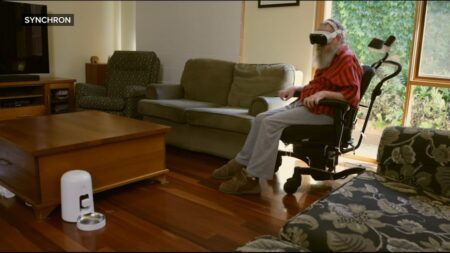
Synchron, an Australian-American company, has taken a notably different approach with a less invasive device called the Stentrode. Rather than requiring open brain surgery, this device is inserted through blood vessels, similar to cardiac stents, and positioned in a blood vessel next to the motor cortex. This approach significantly reduces surgical risks and recovery time, though it may offer somewhat lower signal resolution than devices with direct brain contact. Synchron has already implanted its device in several patients in Australia and the United States, with users successfully controlling digital devices through thought.
Academic institutions and other companies are also making valuable contributions. Blackrock Neurotech has been developing brain-computer interfaces for research purposes for over two decades and holds the record for the longest-functioning brain implant in a human participant. University research labs at Stanford, Brown, Duke, and other institutions continue to push the boundaries of what’s possible, often publishing their findings openly to advance the entire field. Meanwhile, tech giants like Meta (Facebook’s parent company) and Apple are reportedly exploring non-invasive brain-interface technologies that could eventually bring consumer versions of this technology to the mass market, albeit with more limited capabilities than surgically implanted devices.
Looking Ahead: The Future of Thought-Controlled Technology
The trajectory of brain-computer interface technology points toward an increasingly integrated future between human minds and digital systems. In the near term, we can expect continued refinement of medical applications, with more people with paralysis, communication disorders, and limb loss gaining access to devices that restore lost functions. As surgical techniques improve and become less invasive, and as devices become more reliable and longer-lasting, the risk-benefit calculation will shift favorably for more potential users. Within the next decade, thought-controlled prosthetics and communication devices will likely transition from experimental treatments to established medical options covered by health insurance in many countries.
Looking further ahead, the potential applications extend far beyond medical therapy. Researchers envision brain-computer interfaces that could enhance memory, accelerate learning, or enable direct brain-to-brain communication. Imagine being able to share complex ideas, emotions, or experiences directly from one mind to another without the limitations of language. In professional contexts, surgeons might control multiple instruments simultaneously during operations, pilots could interface directly with aircraft systems, or designers could sculpt three-dimensional models using thought alone. The technology might eventually allow people to control smart home systems, vehicles, or virtual reality environments with unprecedented naturalness and efficiency.
However, realizing this future responsibly will require careful navigation of technical, ethical, and social challenges. Society will need robust frameworks for ensuring consent, privacy, and security as brain interfaces become more common. Regulations will need to balance innovation with safety, ensuring devices are thoroughly tested without creating barriers that prevent people from accessing potentially life-changing technology. Perhaps most importantly, the development of brain-computer interfaces should remain focused on genuinely improving human wellbeing rather than pursuing technological advancement for its own sake. The goal should be empowering people, restoring lost capabilities, and expanding human potential in ways that respect human dignity and promote equality. As we stand at the threshold of this remarkable new frontier, the decisions we make today about how to develop and deploy these technologies will shape the relationship between human minds and machines for generations to come.