


First Space Crew to Explore Earth’s Polar Regions Returns with Splashdown Landing
A Historic Mission Comes to a Close
In a remarkable achievement for space exploration, a pioneering crew of astronauts has successfully returned to Earth after completing an unprecedented mission focused on studying our planet’s polar regions from space. The crew made a safe splashdown landing, marking the end of a groundbreaking journey that has opened new doors for understanding some of the most critical and rapidly changing areas of our world. This mission represents a significant milestone in how we use space technology to monitor and comprehend Earth’s climate systems, particularly in regions that are becoming increasingly important as indicators of global environmental change. The successful return of these space explorers not only celebrates their personal achievement but also marks a turning point in our approach to studying the poles, areas that have traditionally been difficult to observe continuously due to the limitations of conventional satellite orbits.
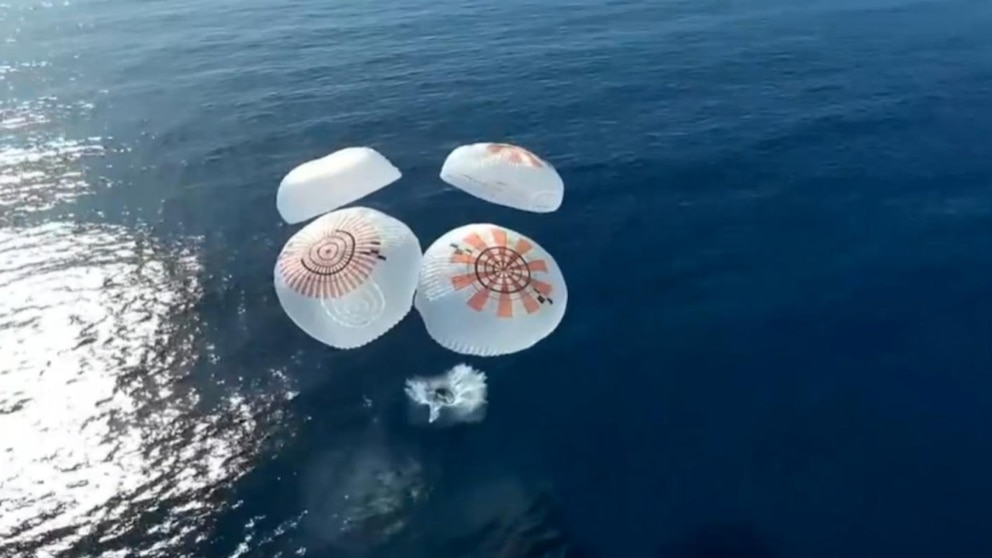
The splashdown itself was executed flawlessly, with recovery teams quickly reaching the capsule and ensuring the crew’s safe extraction. Family members, mission controllers, and scientists around the world breathed collective sighs of relief as the spacecraft touched down in the designated recovery zone. The astronauts emerged from their capsule in good health and high spirits, despite having spent an extended period in the unique conditions of their specialized orbit. Their safe return means that the valuable data they collected, along with their firsthand experiences and observations, can now be analyzed and shared with the scientific community. This wealth of information promises to enhance our understanding of polar ice dynamics, atmospheric patterns, and the interconnected systems that regulate our planet’s climate.
The Unique Challenge of Polar Observation
What made this mission truly special was its orbital path, specifically designed to provide unprecedented views and data collection opportunities over Earth’s Arctic and Antarctic regions. Traditional space stations and many satellites operate in equatorial or mid-latitude orbits, which means they rarely, if ever, pass directly over the poles. This leaves significant gaps in our observational coverage of these crucial regions. The crew’s spacecraft, however, followed a polar or near-polar orbit, allowing them to pass over or very near both the North and South Poles multiple times each day. This unique vantage point enabled them to conduct continuous monitoring of ice sheets, sea ice extent, polar weather patterns, and other phenomena that are difficult to observe from other orbital positions.
The polar regions are experiencing some of the most dramatic effects of climate change, with temperatures rising at rates faster than the global average and ice loss accelerating in both the Arctic and Antarctic. Understanding these changes is vital for predicting future climate scenarios, sea-level rise, and impacts on global weather patterns. The astronauts aboard this mission were equipped with state-of-the-art instruments designed specifically for polar observation, including advanced cameras capable of capturing details in the extreme lighting conditions found near the poles, radar systems that can penetrate clouds and darkness to image ice structures, and atmospheric sensors that measured temperature, composition, and other variables throughout the polar atmosphere. The human element of this mission also proved invaluable—the crew could make real-time decisions about observation targets, respond to unexpected phenomena, and provide qualitative assessments that automated systems might miss.
Life in a Polar Orbit
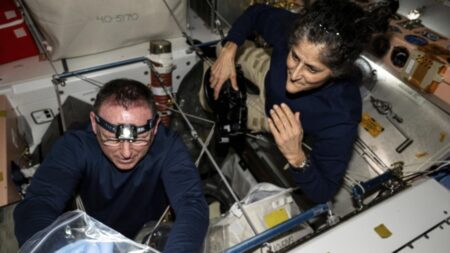
Living and working in a polar orbit presented unique challenges for the astronauts that differed significantly from those faced by crews on the International Space Station or other missions. The orbital mechanics meant that their relationship with the Sun was constantly changing in unusual ways, creating rapid day-night cycles that didn’t follow the patterns experienced in lower-inclination orbits. This affected everything from thermal management of the spacecraft to the crew’s sleep schedules and circadian rhythms. The astronauts had to adapt to these unusual conditions while maintaining their focus on the mission’s scientific objectives, demonstrating the resilience and adaptability that define the best space explorers.
Communication with ground control also posed special challenges, as polar orbits meant the spacecraft wasn’t always in range of traditional tracking stations located at lower latitudes. This required careful planning and the use of satellite relay systems to maintain contact throughout critical mission phases. Despite these hurdles, the crew maintained regular communication with mission control, providing updates on their observations, reporting on equipment performance, and sharing their personal experiences of viewing the polar regions from their unique perspective. The astronauts described awe-inspiring views of the aurora borealis and aurora australis, the dancing curtains of light that appear near the poles when charged particles from the Sun interact with Earth’s magnetic field. They also reported sobering observations of ice loss and changes to polar landscapes that were visible even to the naked eye.
Scientific Treasures Brought Home
The mission’s primary purpose was scientific observation and data collection, and by all accounts, it succeeded beyond expectations. The crew gathered terabytes of data covering various aspects of polar environmental conditions, from detailed imagery of ice sheet surfaces to measurements of atmospheric chemistry and temperature profiles. One of the mission’s key focuses was monitoring the stability of major ice shelves in Antarctica, particularly those that scientists believe may be vulnerable to collapse as ocean and air temperatures rise. The astronauts captured high-resolution images that will help researchers identify cracks, measure ice thickness, and track changes in ice shelf extent and structure.
In the Arctic, the crew documented the extent and condition of sea ice, which has been declining dramatically over recent decades. Their observations included measurements of ice thickness, identification of melt pond formation on the ice surface, and tracking of ice movement patterns. These observations complement data from automated satellites but add the critical element of human judgment and the ability to focus on interesting or unexpected features. The crew also studied polar atmospheric phenomena, including unique cloud formations, the behavior of the polar vortex, and the distribution of greenhouse gases and other atmospheric constituents in polar air masses. Understanding these atmospheric processes is crucial because the polar regions play a disproportionate role in regulating global climate patterns, and changes in polar atmospheres can have far-reaching effects on weather and climate at all latitudes.
Implications for Future Polar Research and Climate Action
The success of this mission has important implications for the future of Earth observation and climate science. It demonstrates that crewed missions in polar orbits are not only feasible but can provide valuable scientific returns that justify the additional complexity and cost compared to automated satellites. The astronauts’ ability to identify targets of opportunity, make judgment calls about observation priorities, and perform complex equipment adjustments in real-time proved to be significant advantages. This suggests that future polar observation missions might benefit from including human crews, especially as we face increasingly urgent questions about the pace and impacts of climate change in these sensitive regions.
The data collected during this mission will be distributed to research institutions around the world, where scientists will spend months or even years analyzing the findings and incorporating them into climate models, ice dynamics simulations, and forecasts of future changes. Some of the insights gained may inform policy decisions about climate mitigation and adaptation strategies. For example, better understanding of ice shelf stability could help refine predictions of sea-level rise, which is critical information for coastal communities planning for the future. Improved knowledge of Arctic sea ice decline could inform discussions about Arctic shipping routes, resource extraction, and the protection of Arctic ecosystems and indigenous communities.
The mission also serves an important role in raising public awareness about polar regions and climate change. The astronauts’ personal accounts of what they witnessed, combined with the stunning imagery they captured, help make these distant and often abstract regions feel more immediate and relevant to people’s lives. When astronauts describe seeing the effects of climate change from space, it carries a weight and credibility that can influence public understanding and concern. In this way, the mission contributes not just to scientific knowledge but to the broader social and political conversations about humanity’s relationship with our planet and our responsibility to protect it for future generations.
As these pioneering astronauts readjust to life back on Earth, they carry with them memories of sights few humans have ever witnessed and knowledge that will benefit us all. Their safe return marks not an ending but a beginning—the start of a new era in polar research and Earth observation. The courage they showed in undertaking this challenging mission and the dedication they displayed in executing its scientific objectives deserve our recognition and gratitude. They have shown us our planet’s polar regions as never before, and in doing so, they have given us new tools and motivation to protect these irreplaceable environments that play such a vital role in regulating the climate of our entire world.