
Russia Emerges as Unexpected Winner in Middle East Oil Crisis
The Windfall Nobody Predicted
In the complex chess game of global geopolitics, sometimes the most significant victories go to players who aren’t even on the battlefield. While the world watches anxiously as tensions between the United States, Israel, and Iran escalate into direct military confrontation, one nation thousands of miles away is quietly celebrating an unexpected economic windfall. Russia, already embroiled in its costly war in Ukraine and supposedly crippled by Western sanctions, has found itself in an enviable position as oil prices skyrocket following strikes on Iranian facilities. The irony is almost theatrical: a conflict designed partly to contain authoritarian expansion is instead providing Vladimir Putin’s regime with exactly the financial lifeline it desperately needed. Just two weeks before the latest escalation, the Russian economy was showing genuine signs of strain under the weight of international sanctions. Today, with the Strait of Hormuz effectively closed and global oil supplies suddenly constrained, Russia is experiencing what can only be described as an economic renaissance, turning geopolitical chaos into cold, hard cash.
From Pressure to Profit in a Fortnight
The speed of Russia’s transformation from economically squeezed pariah state to energy market victor has been nothing short of remarkable. According to the Centre for Research & Clean Air (CREA), Russian oil revenues had fallen by a substantial 18% over the previous year, with further declines apparent in January. This downward trajectory was placing genuine pressure on the Russian economy, threatening Putin’s ability to sustain his military operations in Ukraine while maintaining domestic stability. Western sanctions, particularly those targeting the so-called “shadow fleet” of tankers Russia relies upon to transport its crude oil around the world, appeared finally to be achieving their intended effect. The Russian government was being forced to offer significant discounts on its Urals crude just to find buyers, cutting into profit margins and state revenues. Then came the strikes on Iran, and everything changed virtually overnight. In the span of just two weeks, Russian oil revenues surged by 17%, while exports from northern Russian ports jumped by an impressive 24%. The discount that Russia had been forced to offer on its crude—previously trading at $13 below benchmark Brent crude—has essentially disappeared, meaning Russia is now receiving nearly full market price for every barrel it sells.
A Journey Worth Tracking
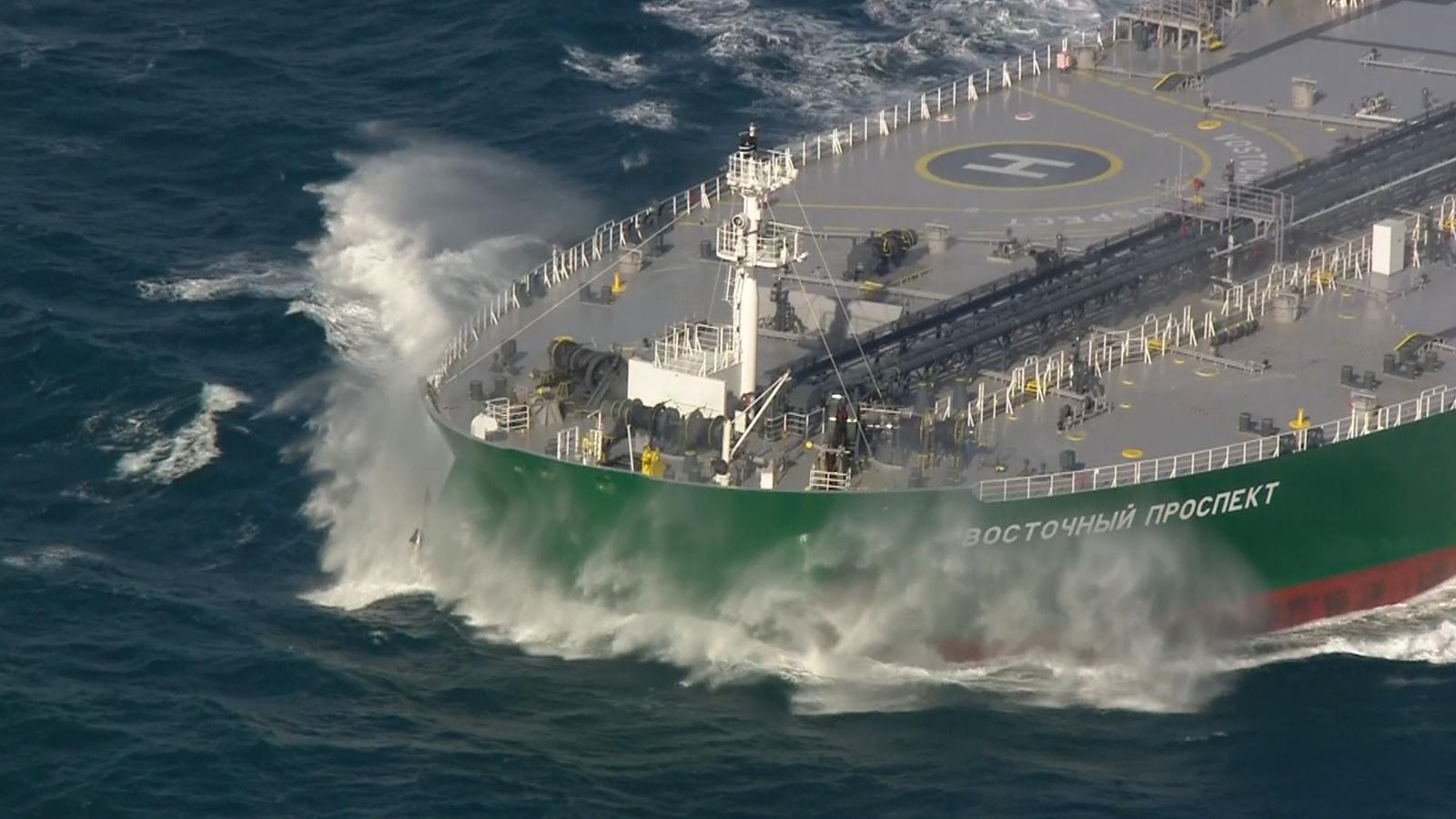
The dramatic shift in Russian fortunes can be illustrated perfectly by following the journey of a single vessel in Russia’s shadow fleet—the Kousai, a Sierra Leone-flagged tanker that Sky News tracked through international waters in February and March. When this tanker loaded approximately 750,000 barrels of crude oil at the Russian port of Ust-Luga in the Baltic Sea on February 2nd, its cargo was valued at roughly $40 million based on the prevailing market prices. Eight days later, as the vessel passed through the Strait of Dover, that same cargo had already appreciated to approximately $42 million, with Urals crude trading at $56 per barrel—still $13 below the Brent crude benchmark, reflecting the discount Russia was forced to accept. But then the Iranian war began, and the mathematics changed dramatically. By nine days into the conflict, Urals crude had reached a peak exceeding $100 per barrel. As the Kousai passed Sri Lanka on its way to India on March 9th, its cargo’s value had soared to an impressive $75 million—nearly double its value when loaded. By Thursday morning, as the tanker approached the Indian port of Paradip, the cargo’s worth had settled at around $65 million, reflecting a barrel price of $87. For this single voyage, the Iranian crisis had effectively gifted Russia an additional $25 million in revenue—money that flows directly into funding Putin’s war machine in Ukraine.
The Sanctions That Couldn’t Hold
The events of recent weeks have essentially undone years of painstaking work by Western nations to constrain Russian oil revenues. Since Russia’s invasion of Ukraine, the United Kingdom, European Union, Australia, Canada, and the United States have implemented sanctions targeting thousands of Russian individuals and companies, along with hundreds of tankers in the shadow fleet Moscow uses to circumvent restrictions. With Western markets effectively closed for business, India and China became Russia’s primary customers for crude oil. These relationships seemed vulnerable when the United States introduced new sanctions against India in February specifically targeting purchases of Russian oil, a move that appeared to deliver a serious blow to Russia’s export capabilities. However, the Iranian crisis forced an immediate recalculation of priorities. Last week, in a move that represents a tacit acknowledgment of new realities, the United States offered India a 30-day waiver to those very restrictions. The reasoning was straightforward, if uncomfortable for Western policymakers: with approximately 20% of global oil supply choked off by the closure of the Strait of Hormuz, preventing India from purchasing Russian crude would only push prices higher still, potentially triggering economic consequences Western nations are unprepared to accept.
China’s Supply Gap Becomes Russia’s Opportunity
Russia is also benefiting substantially from disruptions to Chinese oil supplies. China typically sources close to half of its oil imports from Gulf states, but with the Strait of Hormuz closed to tanker traffic, those suppliers cannot reach Chinese ports. This creates an immediate supply deficit that Russia is perfectly positioned to fill, strengthening Moscow’s relationship with Beijing while generating additional revenue. The situation creates a perverse feedback loop: the longer the Iranian conflict continues, the more dependent China becomes on Russian supplies, potentially cementing energy relationships that will persist even after the immediate crisis passes. This growing interdependence between Russia and China represents exactly the kind of authoritarian axis Western policy has long sought to prevent, yet current circumstances are accelerating its development. Isaac Levy, an analyst at the Centre for Research & Clean Air, summarized the situation bluntly: “The spike in energy prices triggered by the closure of the Strait of Hormuz is boosting the Kremlin’s oil and gas revenues, helping fund its war chest. In effect, geopolitical turmoil and policy loopholes are handing Russia a windfall just as sanctions were beginning to bite.”
The Uncomfortable Truth About Oil Wars
The current situation reveals uncomfortable truths about the limitations of economic warfare in an interconnected global economy, particularly when energy markets are involved. Western nations have discovered that their ability to sustain sanctions against Russia depends heavily on stable global oil supplies and manageable prices. When those conditions disappear, as they have following the strikes on Iran, the political will to maintain pressure on Russia evaporates remarkably quickly. The 30-day waiver granted to India represents not just a temporary adjustment but a fundamental acknowledgment that energy security and affordable prices may trump other foreign policy objectives when push comes to shove. For Vladimir Putin, the timing of this crisis could hardly be better. Just as sanctions were beginning to genuinely constrain Russian economic options and threaten his ability to sustain military operations in Ukraine, external events have provided relief without any action required on his part. The longer the Iranian conflict continues, the more Russia stands to profit, with each passing day of elevated oil prices translating directly into increased state revenues. Meanwhile, the very nations imposing sanctions on Russia find themselves scrambling to prevent oil prices from rising further, even if that means temporarily relaxing pressure on Moscow. It’s a paradox that highlights the complex, often contradictory nature of modern geopolitics, where actions taken in one theater can produce entirely unintended consequences in another, and where yesterday’s pariah can become tomorrow’s necessary supplier through nothing more than the accidents of geography and timing.