
Tragedy at Old Dominion University: ROTC Students’ Heroism Prevents Greater Loss of Life
The Heroic Response That Saved Lives
On an otherwise ordinary Thursday at Old Dominion University in Norfolk, Virginia, a terrifying situation unfolded that would test the courage and training of a classroom full of ROTC students. When a gunman burst into a College of Business classroom and opened fire, these young students found themselves facing a nightmare scenario. Instead of fleeing in panic, they did something extraordinary—they confronted the shooter directly. According to CBS News, one of these brave students ultimately stopped the attacker using a knife, ending a rampage that had already claimed one life and injured two others. FBI officials and law enforcement personnel were quick to recognize the exceptional bravery displayed by these students, with Dominique Evans, the special agent in charge of the FBI’s Norfolk Office, stating plainly that without their intervention, the death toll could have been catastrophically higher. “The brave ROTC members in that room subdued him, and if not for them, I’m not sure, you know, what else he may have done,” Evans told assembled reporters. These words underscore a difficult truth: in those critical moments when seconds count, these students became the thin line between tragedy and absolute catastrophe.
The Attack and Its Victims
The shooter, identified by the FBI as 36-year-old Mohamed Bailor Jalloh, entered the classroom with apparent intent and purpose. According to a law enforcement source who spoke with CBS News, Jalloh specifically asked whether the room he had entered was an ROTC class. Upon receiving confirmation that it was, he immediately began shooting. His first victim was the class instructor, Lieutenant Colonel Brandon Shah, a devoted military educator who dedicated his life to training the next generation of military leaders. Virginia Governor Abigail Spanberger later publicly identified and honored Lt. Col. Shah, writing that he “didn’t just lead a life of service to our country, he taught and led others to follow that path.” The attack also left two other individuals wounded. One victim remained in critical condition following the shooting, fighting for their life in an area hospital, while the second was treated and fortunately released. The randomness and brutality of the attack shocked the campus community and the nation, but the focused heroism of those ROTC students prevented what could have been an even more devastating massacre. Their military training, which emphasizes running toward danger rather than away from it, undoubtedly played a role in their lifesaving response.
A Troubled History and Terrorist Connections
The investigation into the shooting quickly revealed a deeply concerning background for the attacker. Mohamed Bailor Jalloh was not simply a troubled individual acting on impulse—he had a documented history with terrorism that should have served as warning signs. In October 2016, Jalloh pleaded guilty to the serious charge of attempting to provide material support to ISIS, one of the world’s most dangerous and notorious terrorist organizations. The following year, in 2017, he was sentenced to 11 years in federal prison for this crime. However, he was released early in December 2024, according to records from the Federal Bureau of Prisons—just months before carrying out this attack. FBI Special Agent Evans confirmed to reporters that Jalloh had been “formally a subject of a FBI investigation into material supporting terrorism” and that investigators had “confirmed reports that prior to him conducting this act of terrorism, he shouted, stated, ‘Allahu Akbar.'” This phrase, meaning “God is great” in Arabic, has unfortunately been associated with numerous terrorist attacks. Because of this background and these circumstances, the FBI is investigating Thursday’s shooting as an act of terrorism rather than simply a mass shooting incident. This classification has significant implications for the investigation and potential policy responses.
Military Service and the Question of Motive
Adding another layer of complexity to this already troubling case is Jalloh’s history of military service. The Virginia National Guard confirmed that Jalloh served as a combat engineer from April 30, 2009, to April 29, 2015, when he received an honorable discharge. He held the rank of specialist and served in the 276th Engineer Battalion, 91st Troop Command. A U.S. Army official also confirmed that Jalloh had no deployments during his service and left the military with the rank of specialist. This raises difficult questions about how someone who once served in the U.S. military could become radicalized to the point of attempting to support ISIS and ultimately carrying out a terrorist attack targeting a military training program. Investigators are working to understand Jalloh’s trajectory from service member to terrorist, though FBI Special Agent Evans noted that investigators have found no evidence pointing to the ongoing conflict in the Middle East as a possible motive for this specific attack. The investigation continues as authorities piece together what led to this tragic day, examining Jalloh’s activities since his early release from prison and any contacts or influences that may have pushed him toward violence.
The Investigation and Security Measures
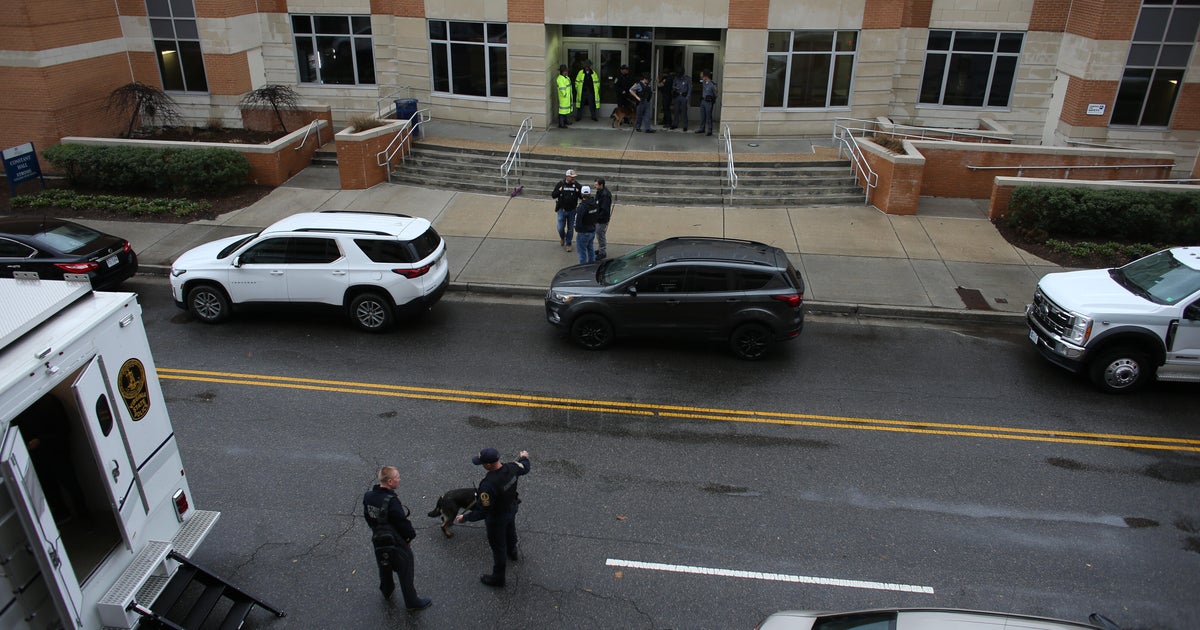
In the immediate aftermath of the attack, investigators moved quickly to secure the scene and determine whether additional threats existed. According to Special Agent Evans, investigators believe that Jalloh was carrying only one weapon during the attack, and importantly, no explosives or additional weaponry have been discovered in his vehicle or at other locations connected to him. This finding provided some measure of relief, as it suggested that the attack, while horrific, was limited in its immediate scope. The FBI’s Norfolk Office is leading the investigation with support from local law enforcement agencies, working to build a complete picture of how the attack was planned and executed. Authorities are examining Jalloh’s communications, movements, and associations in the months leading up to the attack, particularly since his release from federal prison in December 2024. They are also investigating whether he acted alone or had any assistance or encouragement from others. The fact that he specifically sought out an ROTC classroom suggests premeditation and targeting, which investigators are working to understand more fully. CBS News reached out to Old Dominion University’s Army ROTC program for comment on the attack, as the program processes this loss and supports affected students and faculty members.
A Community’s Response and Moving Forward
The response from officials and the community has been one of profound grief mixed with deep gratitude for the heroism displayed by the ROTC students. FBI Director Kash Patel publicly acknowledged their bravery on social media, writing that “The shooter is now deceased thanks to a group of brave students who stepped in and subdued him – actions that undoubtedly saved lives along with the quick response of law enforcement.” Governor Spanberger similarly expressed her thanks to “the brave students, first responders, and law enforcement officers who responded quickly to today’s horrific attack.” These statements reflect a difficult reality: while we mourn the loss of Lt. Col. Shah and pray for the recovery of the injured, we must also acknowledge that the death toll could have been far worse. The students who confronted the gunman embodied the very values their fallen instructor worked to instill—courage, selflessness, and a willingness to stand between evil and the innocent. As the Old Dominion University community begins the long process of healing, difficult questions will undoubtedly arise about how someone with Jalloh’s history was able to carry out such an attack, and whether there were warning signs that were missed or opportunities for intervention that were not taken. These are important questions that deserve thorough examination, but they should not overshadow the heroism displayed by ordinary students who became extraordinary defenders of their classmates and their instructor’s memory.