


Paralyzed Man Regains Independence Through Groundbreaking Brain Chip Technology
A Life-Changing Innovation Brings Simple Joys Back Within Reach
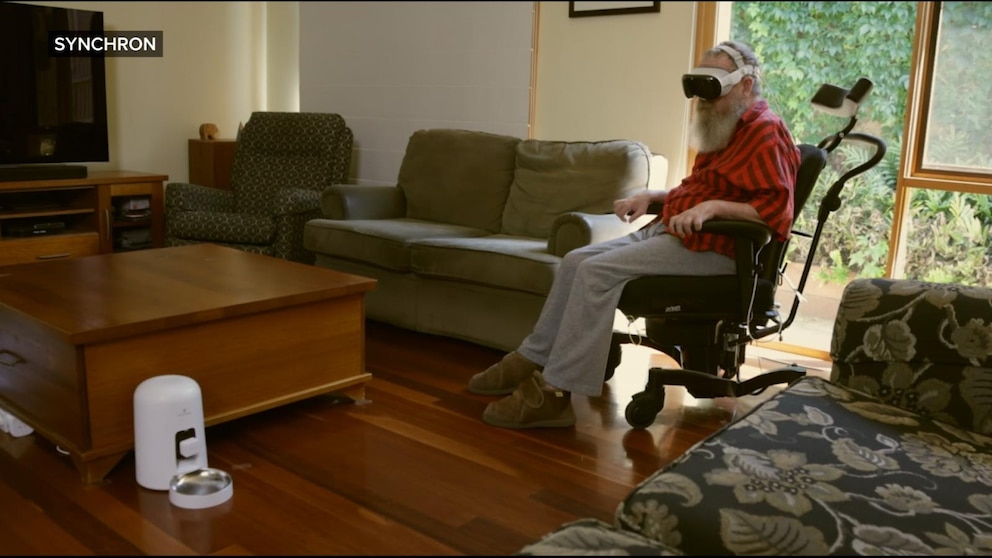
In a remarkable demonstration of how far medical technology has come, a paralyzed man has regained the ability to perform everyday tasks that most of us take for granted—vacuuming his home and feeding his beloved dog. This isn’t science fiction; it’s the real-world application of brain-computer interface technology that’s offering renewed hope and independence to people living with paralysis. The breakthrough comes courtesy of a brain chip implant that translates the man’s thoughts directly into actions, bypassing his damaged spinal cord and allowing him to control robotic assistance through the power of his mind alone. This development represents not just a technical achievement, but a deeply human story about reclaiming dignity, autonomy, and the small moments that make life meaningful—like caring for a pet or keeping a tidy home.
For individuals who have lost mobility due to spinal cord injuries, strokes, or degenerative diseases, the loss extends far beyond physical movement. It encompasses independence, privacy, and the ability to perform the countless small acts of daily living that define our sense of self-sufficiency. Being unable to feed yourself, clean your living space, or care for a pet can be emotionally devastating, creating a sense of helplessness that compounds the physical challenges. This is why developments like this brain chip technology carry such profound significance. They’re not merely about restoring movement; they’re about restoring a sense of agency and normalcy to lives that have been fundamentally disrupted by paralysis.
How the Revolutionary Brain Chip System Works
The technology at the heart of this breakthrough is a brain-computer interface (BCI), which creates a direct communication pathway between the human brain and external devices. The system works by having an array of tiny electrodes implanted in the motor cortex—the region of the brain responsible for planning and executing voluntary movements. These electrodes are incredibly sensitive, capable of detecting the electrical signals that neurons fire when a person thinks about moving, even if their body can no longer respond to those commands due to injury or disease. The chip records these neural signals and transmits them to a computer system equipped with sophisticated algorithms that have been trained to interpret the patterns and translate them into specific commands.
What makes this technology particularly impressive is the level of control it provides. This isn’t just about triggering simple on-off switches; the system allows for nuanced, coordinated movements that require real-time adjustments. When the user thinks about reaching for something, grasping it, or moving it to a particular location, the BCI translates those intentions into fluid, natural-looking actions performed by robotic arms or other assistive devices. The algorithms involved use machine learning to improve over time, becoming better at interpreting the individual’s unique neural patterns and responding more accurately to their intentions. It’s a collaboration between human thought and artificial intelligence, working together to overcome the disconnect between brain and body caused by paralysis.
The training process for using such a system requires patience and dedication from both the user and the medical team. Initially, the user must think about specific movements while the system records the associated neural patterns, building up a library of signals that correspond to different intended actions. Through repeated practice sessions, the algorithms learn to recognize these patterns with increasing accuracy, while the user develops an intuitive understanding of how to “think” in ways that the system interprets reliably. Over time, what begins as a conscious, effortful process becomes more natural and automatic, much like learning to ride a bicycle or type on a keyboard. The brain’s remarkable plasticity allows users to adapt to this new way of interacting with the world, essentially learning a new skill that bypasses their physical limitations.
The Personal Impact: Vacuuming, Pet Care, and Restored Dignity
For the man at the center of this story, the practical applications of the technology have transformed his daily life in ways both large and small. The ability to vacuum his own floors might seem mundane to those of us who view it as just another chore, but for someone who has been unable to perform such tasks independently, it represents something much more significant. It means being able to maintain his living space according to his own standards and schedule, without having to rely on caregivers or wait for assistance. It’s about exercising control over his environment and taking pride in keeping his home clean—simple pleasures that contribute enormously to self-esteem and mental well-being.
Feeding his dog carries even deeper emotional resonance. Pets provide companionship, unconditional love, and a sense of purpose for many people, and this is especially true for individuals dealing with disabilities or isolation. The relationship between a person and their pet is built on mutual care and dependence—you care for them, and they provide emotional support in return. Being able to personally feed and care for his dog allows this man to maintain that reciprocal relationship rather than becoming solely the recipient of care from others. It preserves his role as a caregiver, not just someone who is cared for, which is psychologically invaluable. The joy of interacting with a beloved pet, meeting its needs, and receiving its affection in return adds immeasurable quality to daily life.
These accomplishments also point to a broader restoration of independence and choice. With the brain chip system, the user can decide when to perform tasks, how to arrange his environment, and how to spend his time without being constrained by the availability of human assistants or the limitations of simpler assistive technologies. This autonomy extends to privacy as well—there are aspects of daily living that most people prefer to manage without an audience, and reducing dependence on constant human assistance allows for greater personal privacy and dignity. The psychological benefits of regaining even partial independence cannot be overstated; they include reduced depression, increased motivation, better self-image, and a renewed sense that life holds possibilities rather than just limitations.
The Broader Implications for Paralysis Treatment and Accessibility
This successful application of brain-computer interface technology is part of a larger wave of innovation in the field of paralysis treatment and assistive technology. Researchers and developers around the world are working on various approaches to helping people with mobility impairments regain function, from exoskeletons and functional electrical stimulation to spinal cord implants and regenerative therapies. What sets BCIs apart is their ability to work even when the spinal cord is completely severed or the muscles have atrophied—they bypass the damaged pathways entirely by reading intention directly from the brain and transmitting it to external devices.
The potential applications extend far beyond household chores and pet care. Similar technology is being developed and tested for enabling paralyzed individuals to control wheelchairs, operate computers and smartphones, communicate through text or synthesized speech, manipulate objects with robotic arms, and even control their own limbs through functional electrical stimulation systems that activate muscles in precise sequences. Some experimental systems are working toward even more ambitious goals, such as restoring the sense of touch through feedback systems that send sensory information back to the brain. As these technologies mature and become more sophisticated, they promise to address an increasingly wide range of activities and needs.
However, significant challenges remain before such technology can become widely accessible. The current systems are expensive, require surgical implantation with its associated risks, and need extensive technical support and calibration. The hardware must be reliable enough for daily use over many years, and the software must be user-friendly enough that people can operate it without constant expert assistance. There are also questions about insurance coverage, equitable access across different socioeconomic groups, and the infrastructure needed to support widespread adoption. Researchers and advocates are working to address these barriers, with some focusing on less invasive approaches (such as sensors that don’t require surgery), while others are working to reduce costs and improve the durability and ease of use of existing systems. The ultimate goal is to make these life-changing technologies available not just to a fortunate few in research programs, but to everyone who could benefit from them.
Looking Ahead: The Future of Brain-Computer Interfaces
The field of brain-computer interfaces is advancing rapidly, driven by improvements in neuroscience, materials science, computer processing power, and artificial intelligence. Next-generation systems are being designed with smaller, more biocompatible implants that pose less surgical risk and can last longer in the body without degradation. Wireless technology is eliminating the need for physical connections that penetrate the skull, reducing infection risk and improving user comfort. Machine learning algorithms are becoming more sophisticated at decoding neural signals, requiring less training time and providing more accurate, responsive control.
One of the most exciting frontiers is the development of bidirectional systems that not only read signals from the brain but also send information back, potentially restoring sensory feedback. Imagine a paralyzed person using a robotic hand who could actually feel what they’re touching, sense temperature and texture, and gauge how tightly they’re gripping something—this would make the experience far more intuitive and enable much finer control. Researchers are also exploring ways to use BCIs for rehabilitation, with evidence suggesting that using these systems might help retrain neural pathways and potentially restore some natural function even in cases of severe injury.
The convergence of BCIs with other emerging technologies opens up even more possibilities. Integration with virtual and augmented reality could provide new forms of therapy, training, and entertainment. Connection to smart home systems could allow users to control lighting, temperature, appliances, and security systems through thought. As artificial intelligence becomes more advanced, it could work in partnership with users to anticipate needs, suggest actions, and handle routine tasks semi-autonomously while keeping the human in control. The long-term vision is of a world where paralysis, while still a serious condition, no longer means the loss of independence, productivity, or the ability to engage fully with life. While we’re not there yet, stories like this one—of a man vacuuming his home and feeding his dog through the power of thought—show us that this future is not just a distant dream, but something already beginning to take shape in laboratories and homes today.