
Iranian-Backed Terror Plot: Pakistani Businessman Convicted of Attempting to Assassinate U.S. Politicians
A Chilling Scheme Exposed on American Soil
In a case that reads like a spy thriller but unfolded in real life, a Pakistani businessman named Asif Merchant found himself at the center of an international terrorism trial that ended with his conviction on Friday. The 47-year-old entrepreneur, who had built a respectable career working in Pakistani banks before transitioning to the clothing business, stood accused of something far more sinister than commerce: attempting to orchestrate the assassination of American political leaders during the heated 2024 presidential campaign. A Brooklyn jury took mere hours to reach their verdict, finding Merchant guilty of terrorism and murder-for-hire charges that could keep him behind bars for the rest of his life. What makes this case particularly alarming isn’t just the audacity of the plot, but the alleged involvement of Iran’s Revolutionary Guard—a powerful paramilitary force that the United States has designated as a foreign terrorist organization. The trial offered a disturbing glimpse into what prosecutors described as Iran’s efforts to carry out deadly operations on American soil, targeting the highest levels of U.S. leadership. Though the Iranian government has categorically denied orchestrating any attempts to kill American officials, the evidence presented in court painted a picture of international intrigue, coercion, and a plot that was thankfully disrupted before it could claim any lives.
The Unraveling of a Murder-for-Hire Scheme
The plot began to fall apart not because of sophisticated surveillance technology or international intelligence sharing, but because of something far more human: Merchant’s decision to confide in an acquaintance proved to be his downfall. According to testimony presented during the trial, Merchant demonstrated his deadly intentions in a surprisingly mundane setting—using everyday objects arranged on a napkin to illustrate how a shooting at a political rally might unfold. He asked this acquaintance to help him find professional assassins who could carry out the killings. Instead of becoming an accomplice, the acquaintance did what any responsible citizen should do and contacted the authorities. What Merchant didn’t know was that when he thought he was meeting with potential hit men, he was actually sitting across from undercover FBI agents who were carefully documenting his every word and action. The acquaintance who introduced them was also secretly recording their conversations, building a case that would eventually lead to Merchant’s arrest and conviction. In a parked car in Manhattan, Merchant handed over $5,000 in cash to these supposed assassins, discussing what he described as services that would include killing “some political person.” This transaction, captured on recording, became one of the most damning pieces of evidence against him.
A Complicated Defense: Coercion and Fear
When Merchant took the witness stand in his own defense—a risky but sometimes necessary move in criminal trials—he offered a narrative that attempted to portray himself not as a willing terrorist but as a victim caught in an impossible situation. Speaking in Urdu through a court interpreter, Merchant testified that approximately three years before his arrest, he had met an operative from Iran’s Revolutionary Guard intelligence division. According to his testimony, this handler provided him with countersurveillance training and then assigned him various tasks, including the assassination scheme at the heart of the trial. Merchant maintained that he felt compelled to follow through with these instructions because his loved ones in Iran—he has two families, one in Pakistan and another in Iran—would face grave danger if he refused. He claimed he was “going along with it” but never truly intended for anyone to be killed, believing that he would be arrested by American authorities and could then explain his predicament before any violence occurred. His defense attorney attempted to paint a picture of a man acting under duress, forced to choose between carrying out terrible acts or watching his family suffer. However, prosecutors punched significant holes in this narrative by pointing out that Merchant never proactively approached authorities to explain his situation. When FBI agents later offered him the possibility of a cooperation agreement, he didn’t mention being coerced through threats to his family—a glaring omission that undermined his courtroom testimony.
The Targets: America’s Political Leadership in the Crosshairs
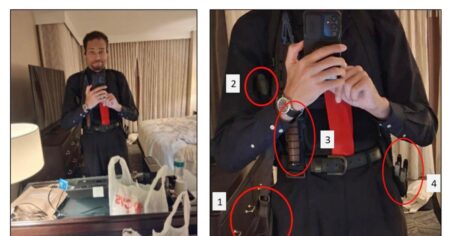
Perhaps the most chilling aspect of Merchant’s testimony was his revelation about potential targets. According to his account, while his Revolutionary Guard handler never specified exactly who should be assassinated, the conversation included some of the most prominent names in American politics. The list allegedly discussed included then-President Donald Trump, who was running for reelection; then-sitting President Joe Biden; and Nikki Haley, the former United Nations ambassador who was also competing in the presidential race at that time. The fact that such high-profile political figures were potentially targeted underscores the seriousness of the threat and the international implications of the plot. This wasn’t about targeting mid-level officials or local politicians—the alleged scheme aimed at the very top of American political leadership during one of the most consequential presidential campaigns in recent history. When Merchant was finally arrested on July 12, 2024, he was in the midst of packing for a flight back to Pakistan. Investigators searching his belongings discovered a handwritten note containing codewords for various aspects of the plot—physical evidence that further contradicted his claims of reluctant participation. In a bizarre coincidence, Merchant was arrested just one day before an actual assassination attempt on Donald Trump occurred in Butler, Pennsylvania. However, officials were quick to clarify that these were separate, unrelated incidents—the Butler gunman appeared to have acted alone, though authorities had been monitoring separate intelligence about Iranian threats against Trump’s life.
The Government’s Response: Justice Prevails
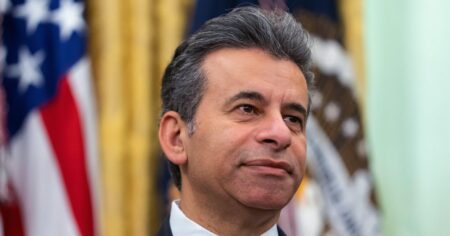
Following the conviction, top U.S. law enforcement officials issued strong statements emphasizing both the seriousness of the threat and the effectiveness of the government’s response. Attorney General Pam Bondi didn’t mince words: “This man landed on American soil hoping to kill President Trump — instead, he was met with the might of American law enforcement.” Her statement reflected not just satisfaction with the conviction but also sent a clear message to foreign adversaries considering similar operations on U.S. soil. FBI Director Kash Patel echoed this sentiment, stating, “Merchant tried to hire someone to kill a politician or a U.S. government official, but the FBI and our partners stopped that deadly plot.” Patel went further, noting that this wasn’t an isolated incident: “This was not the first attempt by Iran to harm our citizens on U.S. soil; the other efforts also failed.” These official statements served multiple purposes—celebrating a successful investigation, reassuring the American public about their government’s ability to detect and prevent terrorist plots, and warning potential adversaries that such schemes will not succeed. The conviction represents a significant victory for federal law enforcement and demonstrates the value of vigilant citizens working in cooperation with professional investigators.
Broader Implications: International Terrorism and American Security
The Merchant case raises profound questions about international terrorism, the lengths to which hostile foreign governments might go to strike at American interests, and the ongoing challenges facing U.S. security services. Iran has consistently denied involvement in plots against American officials, dismissing such allegations as “unsubstantiated and malicious.” Yet this trial presented evidence—including Merchant’s own testimony—linking the Revolutionary Guard to an assassination scheme on American soil. This creates a complex diplomatic and security situation where foreign governments can plausibly deny involvement even as individuals claim to be acting on their behalf. The case also highlights how international conflicts and tensions can directly threaten the safety of American political leaders and ordinary citizens. As geopolitical rivalry between the United States and Iran continues, with proxy conflicts and heated rhetoric on both sides, the risk of violence spilling onto American streets remains a genuine concern for security officials. For Merchant himself, the verdict means facing the possibility of spending the rest of his life in a U.S. federal prison—a dramatic fall from his previous life as a businessman traveling between Pakistan, Iran, and the United States for his garment trade. Whether he was a true believer in violent extremism, a coerced participant protecting his family, or something in between may never be fully known. What is certain is that the American justice system has spoken, a potentially deadly plot was prevented, and the message has been sent that the United States will vigorously prosecute anyone who attempts to bring political violence to its shores, regardless of their motivations or which foreign power might be pulling the strings behind the scenes.