


SpaceX Dragon Capsule Prepares for Historic Return: US Astronauts Heading Home to Florida Coast
A Routine Journey Home That’s Anything But Ordinary
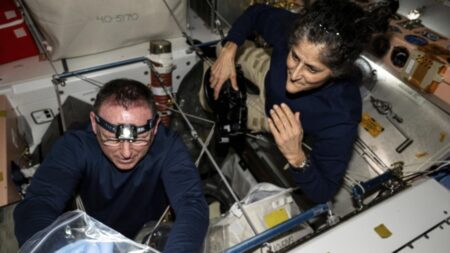
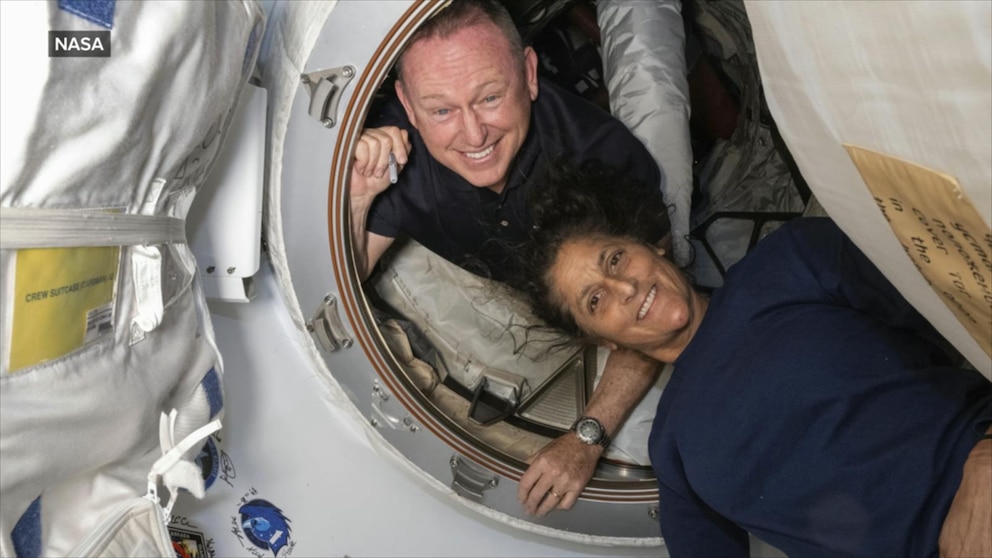
After spending months orbiting Earth aboard the International Space Station, a crew of American astronauts is preparing for one of the most critical phases of their mission—the journey home. The SpaceX Dragon capsule that carried them to space is now ready to bring them safely back to Earth, with a planned splashdown in the waters off the Florida coast. While this type of return has become more routine in recent years thanks to SpaceX’s reliable technology, each splashdown remains a testament to human ingenuity and the incredible advancements in commercial spaceflight. For the astronauts strapped inside the Dragon capsule, the return journey involves a carefully choreographed series of events that will see them transition from the silence of space to the warm waters of the Atlantic or Gulf of Mexico within a matter of hours. The anticipation builds not just for the crew members eager to reunite with their families and feel solid ground beneath their feet again, but also for the SpaceX teams monitoring every second of the descent and the recovery crews positioned at sea ready to welcome them home.
The Journey Down: From Orbital Speeds to Ocean Waters
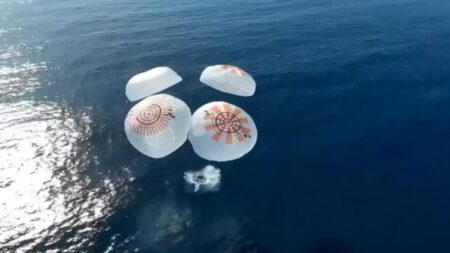
The descent from the International Space Station to Earth’s surface is a remarkable feat of engineering and physics. As the Dragon capsule separates from the ISS and begins its journey home, it must slow down from orbital speeds of approximately 17,500 miles per hour—fast enough to circle the entire planet in just 90 minutes. The process begins with the spacecraft firing its thrusters to slow down and drop out of orbit, initiating what’s known as the deorbit burn. From there, gravity takes over, pulling the capsule back toward Earth’s atmosphere. As the Dragon plunges through the increasingly thick layers of atmosphere, friction creates intense heat on the spacecraft’s heat shield, with temperatures reaching up to 3,500 degrees Fahrenheit. This is perhaps the most dangerous part of the journey, when the astronauts inside experience communication blackout and must trust in the engineering that protects them from the inferno just inches away. Once through the most intense heating, the capsule deploys a series of parachutes—first smaller drogue chutes to stabilize the descent, then massive main parachutes that slow the Dragon to a gentle enough speed for a safe ocean landing. The entire process, from separation to splashdown, takes only a few hours but represents some of the most precisely calculated moments in all of space travel.
SpaceX’s Role in Restoring American Spaceflight
The ability to watch American astronauts return to Earth in an American spacecraft, operated by an American company, represents a significant achievement in the nation’s space program. For nearly a decade after the Space Shuttle program ended in 2011, the United States relied entirely on Russian Soyuz spacecraft to transport astronauts to and from the International Space Station—a dependency that was both expensive and politically complicated. SpaceX, founded by entrepreneur Elon Musk with the audacious goal of making humanity a multi-planetary species, changed everything when it developed the Dragon capsule and demonstrated it could safely carry humans to space. Since NASA astronauts Bob Behnken and Doug Hurley made the first crewed Dragon flight in May 2020, SpaceX has conducted multiple missions to the ISS, establishing a reliable rhythm of launches and returns. The partnership between NASA and SpaceX represents a new model for space exploration, where government expertise and oversight combines with commercial innovation and efficiency. This collaboration has not only restored America’s ability to launch its own astronauts but has done so at a lower cost than previous programs, freeing up resources for NASA to focus on more ambitious goals like returning to the Moon and eventually reaching Mars. Each successful mission builds confidence in commercial spaceflight and paves the way for an era where access to space becomes more routine and affordable.
The Recovery Operation: A Complex Maritime Ballet
While the splashdown itself captures public attention, the recovery operation happening simultaneously represents an impressive coordination of resources and expertise. Long before the Dragon capsule begins its descent, SpaceX recovery vessels position themselves in the designated splashdown zone off the Florida coast, equipped with specialized equipment and highly trained crews ready to spring into action the moment the spacecraft touches down. The recovery ships track the descending capsule using radar and visual confirmation, adjusting their position to be as close as safely possible when it hits the water. Within minutes of splashdown, fast boats deploy from the main recovery vessel and race toward the floating capsule, where crews immediately begin securing the spacecraft and checking on the astronauts inside. The Dragon is designed to float upright in the water like a cork, keeping the crew comfortable while recovery operations proceed. Teams attach lifting equipment and carefully hoist the entire capsule onto the deck of the recovery ship, where medical personnel stand ready to assist the astronauts as they emerge from the hatch. After months in microgravity, the returning astronauts often need help adjusting to Earth’s gravity again—their muscles weakened, their balance temporarily disrupted, their bodies working to readjust to the weight they haven’t felt in months. The entire recovery operation, from splashdown to getting astronauts out of the capsule and into medical evaluation, typically takes about an hour, a brief window that requires precision timing and flawless execution.
Life After Months in Space: The Readjustment Challenge
For the astronauts completing their mission, splashdown marks not the end of their journey but the beginning of another challenging phase: readjusting to life on Earth. Living in microgravity for months causes significant changes to the human body—bones lose density, muscles atrophy, fluids shift toward the upper body, the cardiovascular system adapts to not fighting gravity, and even vision can be affected by changes in pressure. When astronauts first stand on Earth after returning, many describe feeling incredibly heavy, as if they’re wearing a suit made of lead. Simple tasks like walking require relearning as their vestibular systems, which control balance, recalibrate to having a consistent “up” and “down” again. The readjustment process can take weeks or even months, depending on how long the astronaut was in space. NASA’s medical teams carefully monitor returning astronauts, conducting extensive tests to understand how spaceflight affects the human body and to ensure each crew member recovers fully. Despite these challenges, most astronauts describe their time in space as profoundly transformative, worth every difficulty they face upon return. They speak of the breathtaking beauty of Earth viewed from above, the perspective-shifting experience of seeing our planet as a borderless whole, and the privilege of contributing to scientific research that benefits humanity. These returning space travelers bring back not just scientific data and completed experiments, but also stories and perspectives that remind us of both our planet’s fragility and humanity’s incredible potential when we work together toward common goals.
Looking Forward: The Future of Space Travel
Each successful Dragon mission represents another step toward a future where space travel becomes increasingly accessible and routine. SpaceX continues to refine its technology, learning from every flight and implementing improvements that make subsequent missions safer and more efficient. The company is already developing Starship, an even more ambitious spacecraft designed to carry larger crews on longer missions, potentially to the Moon and Mars. Meanwhile, other commercial space companies are developing their own vehicles, creating competition that drives innovation and reduces costs. NASA’s partnership model with commercial providers is proving successful enough that the agency is applying similar approaches to its lunar ambitions through the Artemis program, which aims to establish a sustainable human presence on the Moon as a stepping stone to Mars. The astronauts splashing down off Florida’s coast are part of this larger story—pioneers in an era when humanity is expanding its presence beyond Earth not as a short-term achievement but as an ongoing endeavor. As we watch the Dragon capsule descend through Earth’s atmosphere and settle into the ocean waters, we’re witnessing more than just a crew coming home; we’re seeing the maturing of technologies and systems that will carry future generations farther into the cosmos than ever before, making the science fiction dreams of yesterday into the routine reality of tomorrow.