


Telegram Partners with Lighter DEX to Bring Leveraged Trading to Millions of Users
A Game-Changing Integration for Crypto Trading
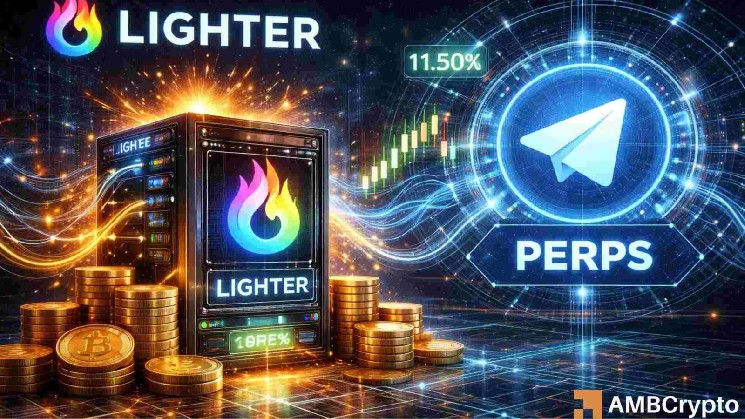
In an exciting development for the cryptocurrency world, Telegram has joined forces with Lighter, a decentralized exchange specializing in perpetual trading, to bring sophisticated trading capabilities directly into its messaging platform. Announced on April 2nd, this partnership allows Telegram’s massive user base to trade a diverse range of assets—including cryptocurrencies, stocks, precious metals, and oil—with leverage of up to 50 times their initial investment, all without leaving the familiar Telegram interface. This integration represents a significant step forward in making advanced financial trading more accessible to everyday users who may not have traditional trading experience. With Telegram’s built-in wallet already boasting over 150 million registered users and approximately 25 million active users engaging in peer-to-peer transfers and converting fiat currency to crypto, the messaging platform has effectively transformed into a major cryptocurrency trading hub. Considering that Telegram itself serves over 1 billion users globally, this partnership positions Lighter for potentially explosive growth in trading volumes and user adoption, marking what could be the most significant integration in the DEX’s history.
Understanding the Competitive Landscape
To appreciate the potential impact of this partnership, it’s helpful to look at how similar collaborations have played out in the decentralized finance space. Hyperliquid, one of Lighter’s main competitors in the perpetual trading arena, has successfully established partnerships with popular crypto wallets like Phantom, Rabby, and MetaMask to facilitate perpetual trading for their users. This strategic approach proved remarkably effective for Hyperliquid, as they implemented a revenue-sharing model that split trading fees with the integrated applications. This arrangement created a win-win situation: the wallet providers earned additional revenue from trades routed through their platforms, while Hyperliquid gained access to millions of potential traders and dramatically increased its trading volumes. The success of this model raises an intriguing question for market observers and $LIT token holders alike: can Lighter replicate or even surpass this success through its integration with Telegram? Given Telegram’s substantially larger user base compared to individual crypto wallets, and the platform’s already-demonstrated appetite for cryptocurrency features, the potential for Lighter to experience similar—or greater—traction seems promising, though the actual outcome will depend on user adoption rates and the overall market conditions.
The Booming Perpetual Trading Market
The timing of this partnership couldn’t be more strategic, as the cryptocurrency derivatives market, particularly perpetual contracts, has experienced tremendous growth over the past year. Perpetual contracts, often called “perps” in crypto trading circles, are a type of futures contract without an expiration date, allowing traders to maintain leveraged positions indefinitely. At the market’s peak last October, when cryptocurrency prices were soaring and investor enthusiasm reached fever pitch, the overall perpetual trading volume across all platforms hit an staggering $350 billion, with open interest—the total value of outstanding contracts—reaching $25 billion. Even after the significant market correction that followed, which saw Bitcoin and other major cryptocurrencies retreat from their highs and dampened overall market sentiment, perpetual trading volumes have remained robust, hovering around $150 billion. This resilience demonstrates the strong and sustained demand for leveraged trading products among cryptocurrency investors and traders. The perpetual trading sector has proven to be one of the more stable segments of the crypto market, continuing to generate substantial activity even during bearish periods when spot trading volumes typically decline significantly. This sustained interest in leveraged trading products suggests that Lighter’s integration with Telegram enters the market at an opportune moment when user demand remains high.
Lighter’s Recent Struggles and Declining Metrics
Despite the overall health of the perpetual trading market, Lighter has faced significant challenges in recent months that make this Telegram partnership particularly crucial for its future prospects. The platform’s trading activity peaked around late December when it launched its native $LIT token and concluded its farming period—a common strategy where protocols reward early users with token airdrops to incentivize participation. Unfortunately, once the airdrop concluded and these rewards dried up, many of the traders who had been actively using the platform primarily to qualify for free tokens quickly departed to pursue similar opportunities on other emerging protocols. This phenomenon, known in the industry as “airdrop hunting” or “farming,” is a double-edged sword for new protocols: it generates impressive initial metrics but often fails to create lasting user loyalty. The departure of these airdrop hunters had a dramatic impact on Lighter’s performance metrics. Weekly perpetual trading volumes plummeted from an impressive peak of $75 billion in November—when farming activity was at its height—to just $8 billion by April, representing a devastating 89% decline in trading activity. The platform’s revenue followed a similar trajectory, crashing from a weekly average of $4 million down to just $325,000, marking a 91% decrease. There was a brief respite in February when a temporary market rally boosted both activity and revenue, which in turn funded buybacks of the $LIT token, but this recovery proved short-lived as the broader cryptocurrency market remained subdued throughout the first quarter of 2025.
What This Partnership Means for $LIT Token
The announcement of the Telegram integration has already begun to impact the $LIT token’s price performance in the marketplace, with the token experiencing a notable 30% recovery rally in early April following the partnership announcement. For token holders and potential investors, the key question now becomes whether this price movement represents the beginning of a sustained recovery or merely a temporary spike based on initial excitement. The answer largely depends on whether the Telegram integration translates into meaningful increases in trading volume and platform revenue in the coming weeks and months. If the integration successfully attracts a significant portion of Telegram’s active crypto users to conduct their leveraged trading through Lighter, the resulting increase in trading fees could fund substantial $LIT token buybacks—a mechanism that reduces the circulating supply and can support higher prices. Technical analysis of the $LIT/USDT trading pair suggests that the token is currently testing resistance around the $1.00 level, a psychologically significant price point. If trading activity and revenue metrics show sustained improvement through April and beyond, confirming that the Telegram integration is delivering real results rather than just initial curiosity, the token could break through this resistance level and extend its recovery rally. However, if the partnership fails to generate the anticipated boost in user activity—perhaps because Telegram users prefer simpler trading options or the user interface doesn’t resonate with the platform’s audience—the token could face rejection at the $1.00 level and potentially retreat back to $0.78 or even lower levels.
Looking Ahead: Potential and Challenges
This partnership between Telegram and Lighter represents a fascinating test case for the broader integration of decentralized finance features into mainstream communication platforms. On one hand, the potential seems enormous: Telegram’s privacy-focused user base, global reach, and existing cryptocurrency infrastructure create ideal conditions for the adoption of more sophisticated trading features. The convenience factor of being able to trade leveraged positions on various asset classes without switching between multiple apps could prove compelling for both experienced traders looking for efficiency and newcomers curious about leveraged trading. On the other hand, significant challenges remain. The cryptocurrency market’s current subdued state means that overall trading interest is lower than during the bull market peaks of last year, which could limit initial adoption regardless of the partnership’s quality. Additionally, leveraged trading carries substantial risks, particularly for inexperienced users, and introducing 50x leverage to a mainstream messaging platform’s users raises questions about user education and protection. The success of this integration will ultimately depend on several factors: the user experience design, how effectively Telegram and Lighter educate users about the risks and mechanics of leveraged trading, the broader cryptocurrency market’s trajectory in the coming months, and whether the integration can build a loyal user base rather than attracting only short-term opportunists. For the decentralized finance industry as a whole, this partnership will be closely watched as a potential blueprint for how DeFi protocols can achieve mainstream adoption by embedding their services into platforms that users already know and trust. If successful, we may see many more messaging platforms, social networks, and other mainstream apps integrating sophisticated DeFi features in the months and years ahead.