
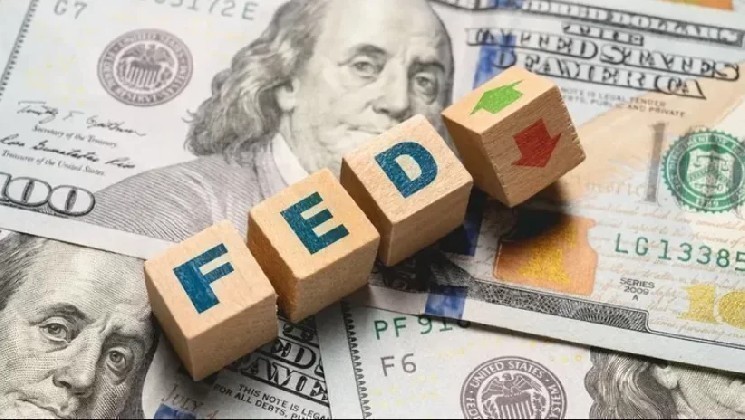

Federal Reserve Holds Steady: What Chair Powell’s Latest Remarks Mean for Your Wallet
In a decision that surprised virtually no one watching the financial markets, the United States Federal Reserve announced yesterday that it would keep interest rates exactly where they are. While this holding pattern was widely anticipated by economists and market analysts, what caught people’s attention was what came afterward—specifically, the nuanced comments from Federal Reserve Chairman Jerome Powell that suggested the central bank is keeping all its options open when it comes to future monetary policy. For millions of Americans trying to navigate decisions about mortgages, savings accounts, business loans, and retirement planning, understanding what the Fed might do next has never been more important. Powell’s carefully chosen words painted a picture of a central bank that’s watching economic data like a hawk and refusing to commit to a predetermined path, whether that means cutting rates to stimulate growth or raising them to fight potential inflation.
A Dual Possibility: The Fed’s Two-Pronged Strategy
What makes this latest Federal Reserve meeting particularly noteworthy isn’t what the Fed did, but rather what Chairman Powell said they’re considering for the future. In his post-decision remarks, Powell revealed something that got the attention of everyone from Wall Street traders to Main Street business owners: the Fed is genuinely considering both raising and lowering interest rates in the coming months, depending on how economic conditions evolve. This two-pronged approach represents a significant shift in tone from previous meetings where the direction seemed more predetermined. Powell acknowledged that during their closed-door discussions, Fed officials actually talked about the possibility of raising interest rates—meaning making borrowing more expensive to cool down the economy. However, he was quick to clarify that rate increases aren’t their primary expectation or base-case scenario right now. Instead, they’re simply one tool in the toolkit that could be deployed if economic conditions warrant it. This approach signals that the Fed is committed to being flexible and responsive rather than locked into an ideological position, which is both reassuring in terms of their attentiveness to real-time data and potentially unsettling for those who prefer more certainty about the economic road ahead.
Reading the Economic Tea Leaves: A Data-Dependent Fed
The Federal Reserve’s current stance can best be described as cautiously data-dependent, a phrase that gets thrown around a lot in economic circles but has real implications for everyday people. What this means in practical terms is that Fed officials aren’t making decisions based on hunches, political pressure, or predetermined timelines. Instead, they’re waiting to see what actually happens in the economy—looking at employment numbers, inflation rates, consumer spending patterns, wage growth, and dozens of other indicators—before deciding their next move. This approach keeps both interest rate increases and decreases on the table as genuine possibilities rather than theoretical options. For consumers and businesses trying to plan for the future, this creates a somewhat uncertain environment. Should you lock in that fixed-rate mortgage now, or wait to see if rates come down? Should your business take out that expansion loan, or hold off in case borrowing costs decrease? These aren’t easy questions when the Fed itself is saying it could go either way. However, this uncertainty also reflects the complex reality of the current economic moment, where different indicators are sending mixed signals. Some data points suggest the economy might be overheating and needs the cooling effect of higher rates, while others indicate that growth is moderating and might benefit from the stimulus of lower rates. By remaining flexible, the Fed is positioning itself to respond appropriately to whichever scenario ultimately unfolds.
Looking Ahead: The Fed’s Long-Term Rate Projections
Beyond the immediate decision to hold rates steady and the acknowledgment that rates could move in either direction in the near term, the Federal Reserve also provided some insight into its longer-term thinking. According to their latest projections, Fed officials are currently planning for interest rate cuts—meaning reductions that would make borrowing cheaper—once in 2026 and once again in 2027. These aren’t commitments set in stone, but rather the current consensus view among Fed members based on their economic forecasts and models. This long-term outlook suggests that while the Fed might need to keep rates elevated in the near term to ensure inflation stays under control, they don’t expect to maintain these higher rates indefinitely. The planned cuts in 2026 and 2027 indicate that officials anticipate economic conditions will eventually allow for a more accommodative monetary policy. For people with variable-rate debts, this could mean eventual relief on interest payments. For savers enjoying higher yields on deposits and bonds, it suggests that these elevated returns won’t last forever. It’s worth noting that these projections are among the most uncertain aspects of Fed guidance, as economic conditions two or three years out are notoriously difficult to predict. Unexpected events—whether geopolitical crises, technological breakthroughs, demographic shifts, or other factors—could easily change this trajectory. Nevertheless, these projections provide useful context for understanding how Fed officials currently view the economic landscape and where they expect things to be heading over the medium term.
Dissent in the Ranks: Stephen Miran’s Contrarian View
Adding an interesting wrinkle to this month’s Federal Reserve meeting was the fact that not all Fed officials agreed with the decision to hold rates steady. Stephen Miran, a member of the Federal Reserve, reportedly opposed the majority decision and instead advocated for cutting interest rates immediately. This dissenting voice is noteworthy because unanimous decisions at the Fed have become relatively common in recent years, so any split opinion tends to grab headlines and spark discussion about alternative policy approaches. Miran’s position suggests that at least some officials believe the economy could benefit from lower interest rates right now—perhaps because they see signs of economic weakening that concern them, or because they believe inflation is sufficiently under control that the Fed can afford to make borrowing cheaper without risking a resurgence of rising prices. Dissenting opinions within the Fed are actually a healthy sign of robust debate and diverse perspectives being considered in monetary policy decisions. They remind us that these choices aren’t straightforward or obvious, but rather involve weighing competing priorities and interpreting ambiguous data. Miran’s advocacy for rate cuts also provides a counterpoint to the concerns about potential rate increases that Powell mentioned in his remarks. Together, these different perspectives paint a picture of a central bank grappling with genuinely difficult decisions in an economic environment that doesn’t offer clear-cut answers. For those following Fed policy, paying attention to these dissenting voices can sometimes provide early signals about where policy might be heading, as today’s minority position occasionally becomes tomorrow’s consensus view.
Market Expectations and What’s Next: April and June Meetings
In the immediate aftermath of Chairman Powell’s remarks and the Fed’s interest rate decision, financial markets quickly recalibrated their expectations for what might happen at the next two Federal Open Market Committee meetings scheduled for April 29th and June 17th. According to data from CME FedWatch, which tracks market-based probabilities for Fed decisions derived from futures contracts, the likelihood of near-term rate changes has shifted substantially. For the April meeting, markets are now pricing in a 95.9% probability that interest rates will remain unchanged—meaning almost no one expects the Fed to move rates in either direction at that meeting. The probability of a 25 basis point increase (a quarter of a percentage point, which is the Fed’s typical increment for rate changes) stands at just 4.1%, while rate cuts aren’t even on the radar for April. Looking further ahead to June, the picture remains similar but with slightly more uncertainty: there’s a 90.9% chance rates stay where they are, a 5.2% probability of a quarter-point rate cut, and a 3.9% chance of a quarter-point increase. These probabilities tell us that markets have essentially concluded the Fed will remain in wait-and-see mode at least through mid-year, gathering more economic data before making any significant moves. For consumers and businesses, this suggests a period of relative stability in borrowing costs over the next few months, which can be helpful for planning purposes. However, it’s important to remember that these are market expectations based on current information, and they can shift rapidly if economic data surprises in either direction. The Fed’s next moves will ultimately depend on what actually happens in the real economy—whether inflation proves more stubborn or more subdued than expected, whether employment remains strong or shows signs of weakening, and whether overall economic growth continues at a healthy pace or begins to slow. As always, this analysis is provided for informational purposes and should not be considered investment advice—anyone making financial decisions should consult with qualified professionals who understand their specific situation and goals.