


Volo Protocol Recovers from $3.5M Hack: A Story of Swift Action and Community Trust
Understanding the Breach and Its Immediate Impact
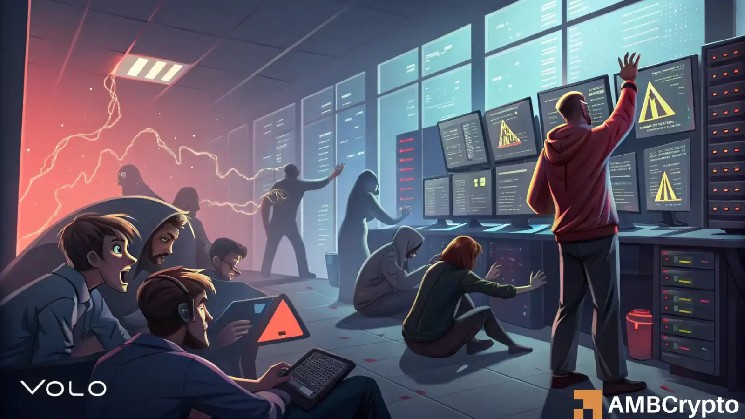
In the fast-paced world of cryptocurrency, security breaches can shake investor confidence to its core. However, the recent attack on Volo—a liquid staking protocol operating on the Sui blockchain—demonstrates how quick thinking and coordinated response can turn a potential disaster into a testament to resilience. On April 22nd, hackers managed to infiltrate Volo’s security systems and made off with approximately $3.5 million worth of digital assets. The stolen funds included Wrapped Bitcoin (WBTC), Matrixdock Gold (XAUm), and Circle’s USDC stablecoin, all taken from three separate vaults. This wasn’t just numbers on a screen—these were real investments from real people who trusted Volo with their hard-earned money. The attackers executed a sophisticated operation, converting roughly half of the XAUm and WBTC holdings into USDC before attempting to move everything off the Sui blockchain entirely. Their plan involved bridging these stolen assets to the Ethereum network and converting them into ETH, making the funds harder to trace and recover. Yet, in what would become a crucial turning point, some of the leftover USDC was identified and locked down in time, preventing the hackers from completing their full heist.
The Recovery Mission: How Volo Fought Back
What happened next reads almost like a financial thriller. The Volo team didn’t waste a single moment after discovering the breach. Their fourth recovery update, shared just days after the attack, revealed the extraordinary lengths they went to in order to track down and recover the stolen funds. Through detective work, technological expertise, and cooperation with various blockchain partners, Volo managed to successfully recover an impressive 90% of the stolen assets. This wasn’t luck—it was the result of methodical planning and execution under enormous pressure. The recovered funds were carefully converted back to stablecoins and bridged back to the Sui network, where they now sit safely under Volo’s control. One of the most dramatic recoveries involved 19.6 WBTC that were intercepted while the hackers attempted to move them through the LayerZero bridge. Think of it as catching someone mid-escape—Volo’s team spotted these funds in transit and managed to redirect them back to the Ethereum network under their control, from where they’ll be safely returned to Sui. Meanwhile, 100.6 XAUm tokens that had been frozen during the chaos were unlocked with assistance from the Sui Foundation and returned to Volo’s wallet. Since the attacker had already sold some XAUm before it could be frozen, Volo arranged for 115 XAUm tokens to be recreated to replace the lost ones, ensuring that users wouldn’t bear the brunt of the theft.
Taking Responsibility: Volo’s Promise to Its Community
In an era where companies often dodge responsibility and hide behind legal jargon, Volo’s response stands out as refreshingly honest and user-focused. The team didn’t just acknowledge the breach—they owned it completely. After careful calculation, Volo determined that the net loss from the attack amounted to roughly $200,000. Rather than passing this loss onto their users through reduced payouts or complicated reimbursement schemes, Volo made a straightforward commitment: they would cover the entire loss from their existing treasury balance. This wasn’t a small gesture—it was a significant financial commitment that demonstrated the team’s values and priorities. In their communications with the community, Volo emphasized that users would not face any losses moving forward. They’re not just offering words of comfort; they’re backing up their promises with concrete actions and financial resources. The team has also committed to releasing a comprehensive “back-to-business plan” that will outline how they’ll prevent such incidents in the future and restore normal operations. This level of transparency and accountability is exactly what the cryptocurrency space needs more of—companies that don’t just chase profits during good times but stand by their users when things go wrong.
The Power of Partnership: Sui Foundation’s Critical Role
One of the most important lessons from this incident is the value of strong partnerships in the blockchain ecosystem. Volo didn’t face this challenge alone—the Sui Foundation stepped up as a true partner, providing essential support that made the high recovery rate possible. When Volo needed help unfreezing the 100.6 XAUm tokens, Sui was there. When technical expertise was needed to track and redirect stolen funds across multiple blockchains, Sui contributed their knowledge and resources. This collaboration demonstrates something crucial about the future of decentralized finance: while individual protocols operate independently, the ecosystem works best when everyone supports each other during crises. The Sui Foundation’s assistance wasn’t just about protecting one protocol—it was about maintaining trust in the entire Sui blockchain ecosystem. If Volo had failed to recover the funds and users lost their investments, it would have cast doubt on all projects built on Sui. By helping Volo succeed, Sui protected its own reputation and the confidence of everyone building on or investing in their platform. This kind of collaborative response also made it more difficult for the attackers to succeed. By blocking the hacker’s wallets across major platforms and coordinating freezing actions worth over $2 million in total (including $500,000 frozen immediately upon discovery), Volo and its partners created a network of barriers that ultimately trapped most of the stolen funds.
Measuring the Damage: Short-Term Metrics and Market Response
Despite the severity of the attack, the financial impact on Volo’s operations was surprisingly contained, thanks to their rapid response. Looking at the Total Value Locked (TVL)—a key metric that measures how much capital is deposited in a DeFi protocol—Volo experienced only a modest decline. On April 22nd, the day of the attack, Volo’s TVL stood at $15.83 million. By April 26th, just four days later, it had dropped to $15.27 million. In percentage terms, this represents a decline of less than 4%, which is remarkably small considering that $3.5 million had been stolen. This resilience in TVL suggests that users largely maintained their confidence in Volo, likely because of the team’s transparent communication and swift action. Many investors understood that security breaches can happen to even well-protected protocols, and what really matters is how a team responds. The SUI token itself also weathered the storm relatively well, experiencing only a modest 0.35% decline to trade at $0.9466. This minimal price impact indicates that the broader market didn’t view this incident as a fundamental threat to the Sui blockchain or its ecosystem. Had investors lost confidence in Sui’s security or Volo’s ability to operate safely, we would have seen much more dramatic price declines and capital flight. Instead, the market essentially gave Volo and Sui a vote of confidence, recognizing that mistakes happen but quality teams learn from them and emerge stronger.
Looking Forward: Lessons Learned and Path to Recovery
As the dust settles on this incident, several important takeaways emerge for Volo, its users, and the broader cryptocurrency community. First and foremost, speed matters tremendously when responding to security breaches. Volo’s ability to freeze $500,000 worth of compromised assets immediately upon discovering the attack prevented the situation from becoming far worse. Their continued efforts over the following days, recovering 90% of stolen funds within just four days, set a new standard for incident response in the DeFi space. Second, transparency and accountability build trust in ways that marketing campaigns never could. By immediately acknowledging the breach, taking full responsibility, and committing to cover all losses from their treasury, Volo demonstrated the kind of integrity that keeps communities together during difficult times. Third, the importance of strong partnerships and ecosystem cooperation cannot be overstated—Volo’s relationship with the Sui Foundation proved invaluable during the recovery process. Moving forward, Volo has committed to not only making users whole but also implementing whatever security improvements are necessary to prevent similar attacks. While the specific details of their “back-to-business plan” haven’t been released yet, the community can expect enhanced security protocols, possibly additional insurance mechanisms, and likely some restructuring of how funds are stored and protected. For users and investors, this incident serves as both a warning and a reassurance—a warning that no protocol is completely immune to attacks, but a reassurance that quality teams with proper values will stand by their commitments even when it costs them significantly. The cryptocurrency space is still maturing, and incidents like this, while unfortunate, help identify weaknesses and drive improvements that make the entire ecosystem stronger and safer for everyone involved.