


The Rise of Prediction Markets: How Blockchain-Based Betting is Reshaping Wall Street
Prediction Markets Enter the Financial Mainstream
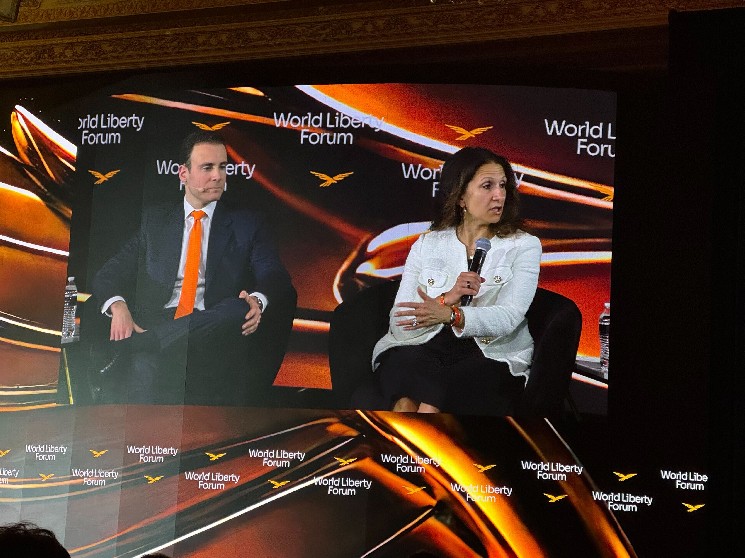
In a significant acknowledgment of how digital innovation is transforming finance, Lynn Martin, President of the New York Stock Exchange, revealed at a recent forum in Palm Beach, Florida, that prediction markets have begun influencing movements in traditional financial markets. Speaking at the World Liberty forum held at Mar-a-Lago, Martin pointed to a specific instance during the 2024 U.S. presidential election that illustrated this emerging trend. She described a moment when S&P 500 futures experienced an unexpected spike that initially puzzled market observers. The mystery was later solved when analysts realized the movement coincided with Polymarket—a cryptocurrency-based prediction platform—showing Donald Trump as the likely election winner before traditional polling sources had reached similar conclusions. This revelation marks a watershed moment in finance, suggesting that what happens on blockchain-based betting platforms is no longer confined to the crypto world but is actively shaping decisions on Wall Street and beyond. The traditional walls separating experimental digital markets from established financial institutions are clearly breaking down, creating a new landscape where information flows differently than ever before.
How Prediction Markets Differ from Traditional Forecasting
Understanding why prediction markets matter requires recognizing what makes them fundamentally different from traditional forecasting methods. Unlike conventional polls that survey selected groups of people about their opinions, or analyst predictions that rely on expert judgment, prediction markets operate on a completely different principle. They harness the “wisdom of crowds” by allowing participants to put real money behind their beliefs about future events. When people have actual financial stakes in their predictions, they tend to think more carefully and incorporate all available information into their decision-making. Platforms like Polymarket create real-time pricing mechanisms that continuously update as new information becomes available and as participants adjust their positions. This creates what Martin described as a “crowdsourced probability feed”—essentially, a constantly updating estimate of how likely different outcomes are, based on the collective judgment of everyone participating in the market. For traders in traditional markets who need to make split-second decisions worth millions or billions of dollars, this real-time information can be invaluable. Rather than waiting for polling companies to release results or for news organizations to call elections, traders can see probability estimates updating moment by moment. This speed and responsiveness gives prediction markets a significant advantage over slower-moving traditional forecasting methods, explaining why sophisticated Wall Street traders are increasingly paying attention to what these platforms are saying.
Wall Street’s Strategic Bet on Blockchain Forecasting
The New York Stock Exchange’s interest in prediction markets extends far beyond casual observation or academic curiosity. In October of the previous year, Intercontinental Exchange (ICE)—the company that owns and operates the NYSE—made a massive $2 billion strategic investment in Polymarket. This investment represents one of the clearest signals yet that the world’s largest and most established stock exchange operator sees genuine long-term value in blockchain-based forecasting tools. Two billion dollars is not experimental money or a small side bet; it’s the kind of investment that indicates deep institutional conviction about where markets are heading. ICE’s decision suggests that the company’s leadership believes prediction markets will become an increasingly important part of the financial ecosystem in the years ahead. The investment also provides Polymarket with substantial resources to expand its platform, improve its technology, and potentially develop new markets and features. For the broader financial industry, ICE’s move serves as a powerful endorsement of prediction markets’ legitimacy and potential. When the operator of the New York Stock Exchange puts billions behind a technology, other institutional players naturally take notice. This kind of institutional validation could accelerate the mainstream adoption of prediction markets and blur the lines even further between traditional finance and blockchain-based innovations.
Prediction Markets’ Broader Societal Implications
The significance of prediction markets extends well beyond their utility for traders seeking an information edge. Michael Selig, who became Chair of the Commodity Futures Trading Commission (CFTC) late last year, offered a broader perspective on how these platforms are affecting society. According to Selig, prediction markets have implications for national security and serve as an important check on traditional journalism. His comments suggest that government officials are recognizing these platforms as more than just betting venues—they’re becoming alternative sources of information that can sometimes prove more accurate or timely than conventional news outlets. When people can bet real money on whether certain events will occur, the resulting probability estimates can provide valuable intelligence on everything from election outcomes to geopolitical developments. This democratization of forecasting potentially challenges the traditional gatekeepers of information and analysis. Selig also noted prediction markets’ growing role in entertainment and sports, areas that have attracted significant attention from state-level regulators concerned about gambling expansion. The tension between viewing these markets as useful forecasting tools versus potentially problematic gambling platforms represents one of the central debates surrounding their future. As prediction markets touch more aspects of public life, these questions about their proper role and regulation will only become more pressing.
The Regulatory Battle: Federal versus State Authority
The expansion of prediction markets has ignited a significant turf war between federal and state regulators, with billions of dollars and fundamental questions about regulatory authority at stake. Chair Selig didn’t mince words when describing the current situation, stating that “the states have really led this campaign of open warfare against markets that are in the jurisdiction of the CFTC.” His combative language reflects the high stakes involved in determining who gets to regulate these emerging platforms. The CFTC’s position is straightforward: prediction markets fall under its jurisdiction because the agency has overseen similar markets for decades. From the federal regulator’s perspective, state gaming commissions are overstepping their authority by trying to shut down or regulate markets that properly belong under federal supervision. The conflict came to a head in a recent court case involving Kalshi, another prediction market provider. The CFTC filed an amicus brief supporting Kalshi’s position in the Ninth Circuit Court of Appeals, but hours later, the court rejected Kalshi’s request for a stay against Nevada’s efforts to close down its sports-related prediction markets. This legal defeat represents a setback for the prediction market industry and the federal regulators who support it. Selig’s response was defiant: “We’re going to fight this, we’re going to make sure our markets are free and fair and have integrity. We won’t have state gaming commissions telling us how to regulate our markets.” His strong words signal that this regulatory battle is far from over and will likely continue playing out in courts and legislatures for years to come.
The Future of Finance at the Blockchain Crossroads
The developments discussed at the World Liberty forum paint a picture of financial markets in transition, with traditional institutions increasingly embracing blockchain-based innovations while regulatory frameworks struggle to keep pace. The fact that the NYSE President openly acknowledges using prediction market data as a market-moving input represents a remarkable shift in how established financial institutions view these emerging platforms. Just a few years ago, most Wall Street executives viewed cryptocurrency and blockchain technology with skepticism or outright dismissal. Today, the world’s premier stock exchange is making billion-dollar investments in these technologies and publicly discussing their importance. This transformation reflects broader changes in how information flows through financial markets and society more generally. The combination of blockchain technology, tokenized incentives, and crowdsourced intelligence creates new mechanisms for aggregating knowledge and generating forecasts. As these tools prove their value—correctly predicting election outcomes before traditional polls, for example—they gain credibility and influence. However, significant challenges remain, particularly around regulation and the proper balance between innovation and consumer protection. The federal-state conflict over jurisdiction illustrates how existing regulatory structures weren’t designed for these hybrid platforms that blend elements of financial markets, gambling, and information services. How these tensions resolve will significantly shape the future of prediction markets and potentially set precedents for regulating other blockchain-based innovations. What’s clear is that prediction markets have moved from the experimental fringe to the mainstream conversation, with major financial institutions, federal regulators, and traditional markets all paying close attention to what these platforms signal about the future.