



Venture Capitalists Recalibrate Their Crypto Strategy Amid Market Downturn
A Strategic Shift Rather Than a Retreat
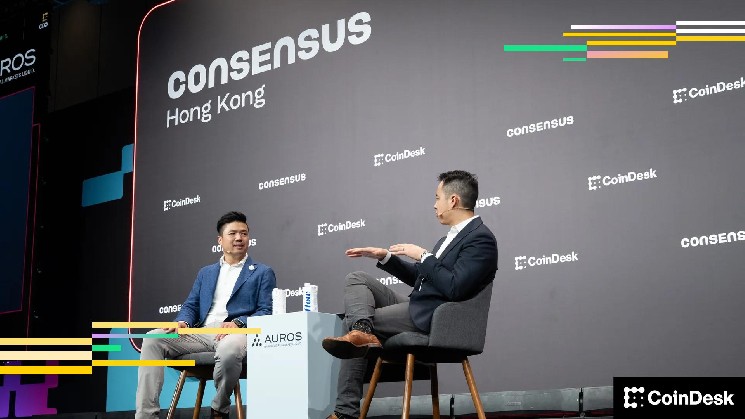
The atmosphere at Consensus Hong Kong revealed an interesting paradox in the world of cryptocurrency venture capital. Despite the extended market downturn that has left many investors licking their wounds, the mood among top-tier venture capitalists wasn’t one of defeat or withdrawal. Instead, these seasoned investors are taking a more measured approach, recalibrating their strategies rather than abandoning ship. This shift represents a maturation of the crypto investment landscape, where the wild west days of throwing money at anything with a blockchain are giving way to more thoughtful, strategic deployment of capital. The conversations happening in Hong Kong’s conference halls weren’t about exiting the market but about being smarter, more selective, and more focused on what’s actually delivering results in the real world.
The Barbell Strategy: Scaling Winners While Betting on the Future
Hasseeb Qureshi, managing partner at Dragonfly, offered perhaps the most compelling framework for understanding today’s crypto venture landscape with his “barbell” analogy. On one end of this investment barbell sit the proven winners – sectors that have demonstrated genuine product-market fit and are generating actual revenue. Qureshi specifically highlighted stablecoins, payments, and tokenization as the heavyweight champions in this category. These aren’t speculative moonshots; they’re functioning businesses solving real problems for real users. The strategy here is straightforward: identify what’s working and pour more fuel on that fire. After years of speculation and hype cycles, there’s something refreshing about venture capitalists focusing on businesses that people actually use and that generate measurable value.
On the opposite end of the barbell sits the high-risk, experimental frontier where crypto intersects with artificial intelligence. This is where things get interesting and, frankly, a bit messy. Qureshi acknowledged he’s dedicating significant time to exploring AI agents capable of executing transactions on blockchain networks. However, he was refreshingly candid about the current state of this technology, admitting that “if you give an AI agent some crypto, it’s probably going to lose it within a couple days.” This honest assessment captures both the promise and the peril of bleeding-edge innovation. The opportunity is genuine – imagine autonomous AI agents handling complex financial transactions seamlessly across blockchain networks. But the reality today is that these systems are vulnerable to attacks, design flaws, and the simple fact that the technology isn’t quite ready for prime time. Still, Qureshi and others are investing in this space because they understand that today’s clunky prototype could be tomorrow’s infrastructure backbone.
Learning from Past Mistakes and Near-Misses
The venture capitalists speaking at Consensus Hong Kong weren’t just looking forward; they were also reflecting on hard-earned lessons from the recent past. Qureshi’s evolution on NFTs provides a masterclass in the importance of intellectual humility in fast-moving markets. He initially dismissed non-fungible tokens as “definitely a bubble,” a reasonable position that many intelligent observers shared. However, within months, he reversed course and backed infrastructure plays like Blur, which became significant successes. This wasn’t flip-flopping; it was adapting to new information and recognizing when initial assumptions needed updating. The lesson here is that conviction is important, but so is the willingness to change your mind when the evidence demands it.
Perhaps even more instructive is Dragonfly’s relationship with Polymarket, the prediction market platform that has since become one of crypto’s breakout success stories. Dragonfly was actually the first to offer founder Shayne Coplan a term sheet, demonstrating early recognition of the platform’s potential. However, when a competing fund came in with a higher valuation, Dragonfly passed on the deal. Qureshi doesn’t mince words about this decision, calling it a “generational miss.” The story doesn’t end there, though. Dragonfly eventually joined a later funding round in 2024, before the U.S. election, and is now a major shareholder. While they had to pay more for the privilege, their thematic conviction in prediction markets was ultimately validated. The takeaway is nuanced: sometimes your timing is off, sometimes you get priced out of deals you believe in, but if your thesis is sound, opportunities may come around again. The key is maintaining conviction in your themes even when individual deals don’t work out as planned.
The Case for Patient Capital and Long-Term Thinking
Mo Shaikh from Maximum Frequency Ventures brought a perspective that feels almost revolutionary in an industry often obsessed with quick returns and rapid exit strategies. His argument is simple but profound: venture success in crypto requires genuinely long time horizons. Shaikh’s best investment thesis wasn’t built around catching the next market cycle or timing a token launch; it was a 15-year bet that blockchain technology could fundamentally re-architect how we think about financial risk systems. This is the kind of thinking that built industries like semiconductors and biotechnology, where patient capital funding long-term research and development eventually created massive value.
Shaikh’s advice to both founders and fellow investors was direct: “Have a 15-year timeline.” This runs counter to much of the short-term thinking that has dominated crypto venture capital, where investors often think in terms of 18-month cycles tied to market sentiment and token price movements. The problem with short-term thinking is that it leads to poor decision-making, chasing trends rather than building sustainable businesses, and abandoning projects before they have time to mature. Real technological transformation takes time. The internet didn’t reshape commerce overnight; it took decades of infrastructure building, failed experiments, and gradual adoption. Blockchain technology, if it’s going to fulfill its transformative potential, likely follows a similar trajectory. Shaikh’s perspective is a call for the crypto industry to grow up, to think like builders of lasting infrastructure rather than traders looking for the next pump.
Following the Money: Institutional Capital and Flight to Quality
The data that Paul Veradittakit from Pantera Capital shared at Consensus Hong Kong tells a clear story about where the crypto venture market is heading. Crypto venture capital rose 14% year-over-year, which sounds positive until you look at the other number: deal count fell 42%. These two statistics together paint a picture of what Veradittakit called a “flight to quality.” Investors aren’t putting less money into crypto; they’re just being far more selective about where it goes. Instead of sprinkling small checks across dozens of speculative projects, VCs are writing larger checks to fewer companies, specifically targeting “accomplished entrepreneurs” and “tangible use cases.”
Pantera’s evolution mirrors the broader maturation of crypto venture investing. Veradittakit has been fundraising in crypto for over a decade, starting with $25 million funds dominated by family offices – essentially wealthy individuals taking flyers on an emerging technology. Today, Pantera manages a $6 billion platform, and institutions are increasingly the dominant investors. This shift brings more capital but also more scrutiny, more diligence, and more focus on fundamentals rather than narrative. Veradittakit’s advice to founders operating in this environment was characteristically blunt: “Focus on product, market fit… If there is a token, it’ll naturally come.” In other words, don’t lead with tokenomics and white papers; lead with a product that people actually want to use, a problem you’re actually solving, and evidence that you’re building something of lasting value. The token, if appropriate, can come later once you’ve demonstrated genuine traction.
The New Venture Playbook: Fundamentals Over Fantasy
As the crypto market navigates this extended downturn, a new consensus is emerging among venture capitalists about what separates sustainable success from fleeting hype. The message coming out of Consensus Hong Kong is refreshingly grounded: scale what’s working, experiment selectively on what might work in the future, and above all, don’t confuse compelling narratives with solid fundamentals. This represents a significant evolution from earlier crypto boom cycles, where a good story and some technical jargon could unlock millions in funding.
Today’s crypto venture environment demands more. Investors want to see revenue, user growth, product-market fit, and realistic paths to sustainability. They’re willing to fund ambitious, long-term visions, but those visions need to be grounded in some kind of demonstrable progress. The barbell approach – betting big on proven categories while taking calculated risks on emerging technologies – offers a framework for navigating this environment. The willingness to learn from mistakes, to maintain conviction while remaining adaptable, and to think in decades rather than quarters all point toward a more mature industry. For founders, the path forward is clearer than it’s been in years: build something people actually need, demonstrate that it works, and the capital will follow. For the crypto industry as a whole, this recalibration may be exactly what’s needed to move from speculation to substance, from hype to genuine innovation that changes how the world works. The venture capitalists gathered in Hong Kong weren’t retreating from crypto; they were helping to define what the next, more sustainable chapter looks like.