


Trump Administration Considers Unprecedented Bailout of Spirit Airlines
A Bold Move to Save Jobs and Aircraft
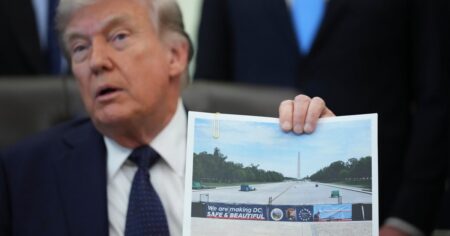
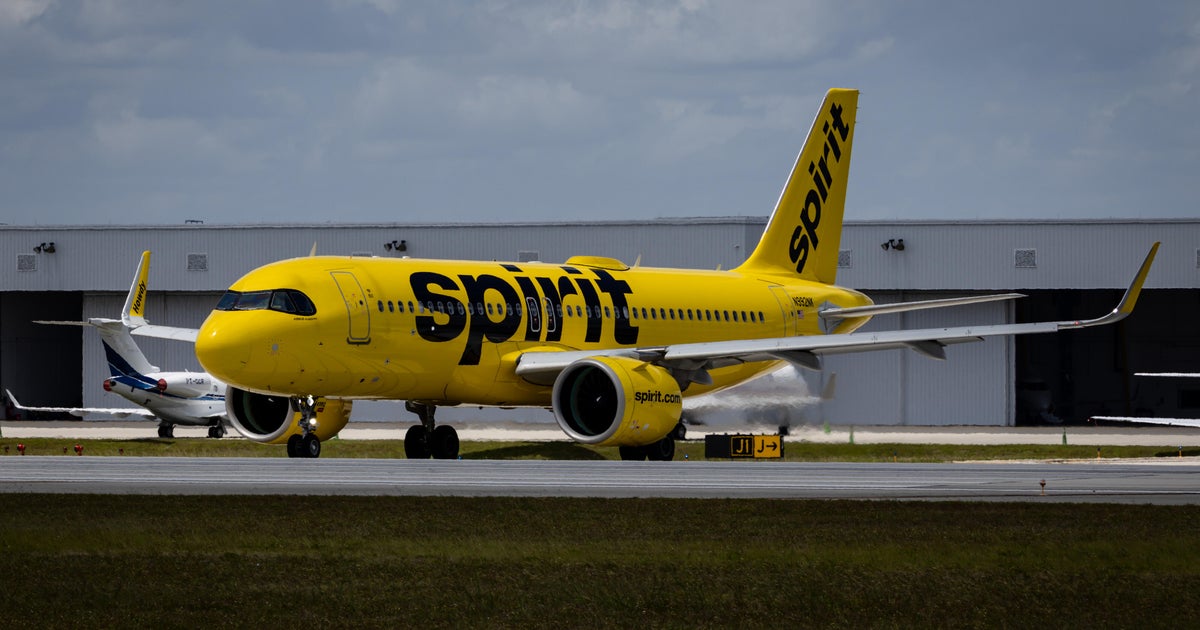
In a surprising development that has stirred controversy across the political spectrum, President Trump announced Thursday that his administration is seriously considering a taxpayer-funded takeover of Spirit Airlines, the struggling budget carrier known for its bright yellow planes and ultra-low fares. Speaking candidly from the Oval Office during an unrelated event, the president outlined an unconventional plan: the government would purchase the financially troubled airline, stabilize its operations, and eventually sell it back to the private sector for profit once oil prices decline. “They have some good aircraft and good assets, and when the prices of oil goes down, we’ll sell it for a profit,” Trump explained, emphasizing his desire to preserve American jobs. The president’s comments came as Spirit’s legal representatives informed a U.S. Bankruptcy Court that the airline was in advanced negotiations with the federal government on a financing deal that could allow the company to emerge from its second Chapter 11 bankruptcy protection in less than two years. Trump made it clear that his motivation extends beyond simple business calculations, stating, “I’d love to be able to save those jobs. I’d love to be able to save an airline,” though he added the caveat that any deal would need to make financial sense for taxpayers.
The Backstory: How Spirit Reached This Critical Point
Spirit Airlines’ current predicament is the result of years of financial struggle compounded by external factors beyond the company’s control. The Fort Lauderdale-based carrier, which employs approximately 15,000 people nationwide—with 6,000 of those jobs concentrated in Florida—has been losing money for an extended period. The airline first filed for Chapter 11 bankruptcy protection in November 2024, a move that was supposed to provide breathing room for restructuring. However, the company was forced to file for bankruptcy protection again in August 2025, signaling that its financial troubles were far deeper than initially anticipated. The Trump administration has been quick to point fingers at the previous administration’s policies, particularly highlighting a 2023 decision by the Biden Justice Department to sue and successfully block JetBlue Airways’ proposed $3.8 billion acquisition of Spirit. A federal judge in Dallas ruled against that merger, determining it would reduce competition and drive up ticket prices for budget-conscious travelers. Now, with the ongoing conflict in Iran pushing jet fuel costs to painful levels for all airlines, Spirit’s creditors have begun openly questioning whether the company can survive at all, raising the very real possibility that the airline might be forced to liquidate its assets and cease operations entirely.
The Proposed Deal and Its Unusual Nature
According to sources familiar with the negotiations and reports from CBS News, the Trump administration is discussing a financing package that could include a loan of up to $500 million to Spirit Airlines. In exchange for this substantial financial lifeline, the federal government would receive warrants that could allow it to take a potentially significant ownership stake in the carrier. During a U.S. Bankruptcy Court hearing in New York, Marshall Huebner, a lawyer from Davis Polk representing Spirit, indicated that government financing would make reorganization possible and help the airline become more competitive in the challenging aviation market. Details of the potential arrangement have been shared with Spirit’s three primary creditor groups, though the exact size and specific terms of the financing aid have not been made public. What makes this proposed intervention particularly noteworthy is its singularity—while the federal government has certainly stepped in to help the airline industry as a whole during major crises like the aftermath of September 11th and the COVID-19 pandemic, providing targeted support to prop up a single carrier is highly unusual and largely unprecedented in recent American history. President Trump emphasized that Spirit possesses valuable assets beyond just its aircraft, specifically mentioning the airline’s “very good slots”—the scheduled times allocated for takeoffs and landings at capacity-constrained airports, which are extremely valuable commodities in the aviation industry.
Mixed Reactions from Politicians and Stakeholders
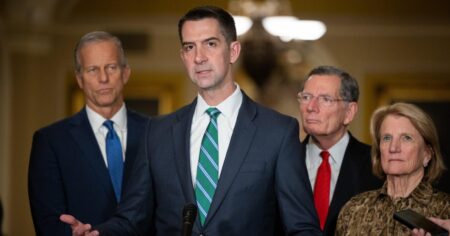
The proposed bailout has generated a firestorm of criticism from lawmakers on both sides of the political aisle, though not everyone opposes the idea. Republican Senator Ted Cruz of Texas took to social media platform X on Wednesday to call the Spirit deal a “terrible idea,” reflecting skepticism that government intervention would succeed where private investors have failed. His colleague, Senator Tom Cotton of Arkansas, echoed these concerns with pointed skepticism: “If Spirit’s creditors or other potential investors don’t think they can run it profitably coming out of its second bankruptcy in under two years, I doubt the US Government can either. Not the best use of taxpayer dollars.” These Republican voices joining with Democrats in questioning the bailout highlights just how controversial the proposal has become. Transportation Secretary Sean Duffy acknowledged the difficult calculation facing the administration, telling CBS News, “The question will be, can we do anything to save Spirit and make it viable, or would we be putting good money into a company that inevitably is gonna be liquidated?” However, not everyone is opposed to government intervention. The union representing Spirit’s pilots has voiced “strong support” for a rescue deal, with Captain Ryan P. Muller, chair of the Spirit Airlines ALPA Master Executive Council, arguing that “Spirit is the reason so many Americans can afford to visit family, travel for work, or take a vacation. When Spirit enters a market, fares go down.” Spirit’s President and CEO Dave Davis also welcomed the president’s interest, stating the company was “grateful for President Trump’s support” and looked forward to working with the administration “on a solution that protects thousands of jobs, preserves and enhances competition and helps ensure Americans continue to have access to affordable fares.”
Spirit’s Assets and Previous Acquisition Attempts
Understanding what makes Spirit potentially worth saving requires looking at what the airline actually owns and operates. As of the end of last year, Spirit’s fleet consisted of 48 owned aircraft and another 83 leased planes, all belonging to the Airbus A320 family—a popular and efficient aircraft type that’s relatively easy to integrate into other airlines’ operations or to operate independently. The airline also possessed 18 spare engines that it owned outright and had 16 additional engines under lease. The relative youth and uniformity of Spirit’s fleet has made it an attractive acquisition target for competitors, as these modern aircraft are fuel-efficient and in demand. However, as part of its bankruptcy restructuring process, Spirit announced plans last month to significantly reduce its total fleet to between 76 and 80 planes by the third quarter of this year, a substantial downsizing from its previous operations. Despite the apparent value of these assets, previous buyout attempts have failed to materialize into completed deals. Before and during Spirit’s first bankruptcy, budget airline rivals including JetBlue and Frontier Airlines explored acquisitions, but none of these discussions resulted in a transaction that satisfied all parties involved. The blocked JetBlue merger, in particular, represents a lost opportunity that the Trump administration now points to as a critical mistake that contributed to Spirit’s current desperate situation.
Looking Ahead: An Uncertain Future with High Stakes
As this unusual situation continues to develop, the stakes couldn’t be higher for multiple constituencies. For Spirit’s 15,000 employees, particularly the 6,000 based in Florida—a state with significant political importance—the difference between a government rescue and liquidation is literally the difference between continued employment and joining the unemployment rolls. For American travelers, especially budget-conscious families, Spirit’s potential disappearance would mean one less option for affordable air travel, potentially driving up prices across the industry. President Trump indicated he has “a smart person” in mind who could potentially run Spirit if the government takeover proceeds, though he didn’t reveal who that individual might be. The administration clearly believes that with proper management and lower fuel costs, Spirit could return to profitability and eventually be sold back to private investors, theoretically allowing taxpayers to recoup their investment and possibly even profit from the transaction. However, critics remain deeply skeptical that government ownership and operation of a commercial airline makes sense, particularly for a carrier that has struggled financially even in better economic conditions. As negotiations continue and details of any potential deal remain largely behind closed doors, the aviation industry, lawmakers, and the traveling public are watching closely to see whether this unprecedented experiment in government intervention will move forward, and if it does, whether it will ultimately prove to be a rescue success story or an expensive lesson in the limits of what government can effectively accomplish in the competitive commercial aviation market.