


Why Trump’s Top Crypto Adviser Is Calling for Peace with Iran
A Surprising Voice Against Escalation
In an unexpected turn of events that sent ripples through both political and technological circles, David Sacks—the White House’s artificial intelligence and cryptocurrency adviser—made headlines with his frank assessment of the ongoing U.S.-Iran conflict. Speaking on the March 14 episode of the All-In Podcast, a show he regularly co-hosts, Sacks didn’t mince words when he urged America to “declare victory and get out” of what he characterized as a war with Iran. This public statement marked a significant moment: it was the first time a senior figure within the Trump administration openly broke ranks on the conflict since hostilities erupted on February 28. While some might view this as merely a political opinion, Sacks’ position carries particular weight given his unique role at the intersection of technology policy, digital assets, and national strategy. His message was clear and direct—this was the moment to step back from the brink, not to push forward into further escalation.
What makes Sacks’ stance particularly noteworthy isn’t just the fact that he’s dissenting from administration policy, but the practical, business-focused reasoning behind his position. This isn’t about abstract political philosophy or traditional anti-war ideology. Sacks sees the conflict through a very specific lens: it poses a direct and immediate threat to the very technological and cryptocurrency ecosystem he was appointed to nurture and expand. His role in the administration isn’t ceremonial—he’s tasked with building the legal and regulatory framework that will govern America’s future in artificial intelligence and digital currencies. The war with Iran, from his perspective, isn’t just a foreign policy challenge; it’s an existential threat to the mission he was hired to accomplish. When a venture capitalist who manages billions in tech investments and serves as a presidential adviser on digital innovation calls for de-escalation, it’s worth understanding the calculation behind that call.
The Political Landscape and MAGA’s Divided Response
Sacks’ comments landed at a particularly sensitive moment in American politics, exposing fault lines within the coalition that brought Trump back to power. Many of Trump’s most devoted supporters—the core of the MAGA movement—backed him precisely because he promised to end America’s involvement in endless foreign conflicts. The appeal of “America First” wasn’t just about economics or immigration; it was fundamentally about bringing troops home and avoiding new military entanglements abroad. So when Trump declared just days before Sacks spoke that the United States could fight Iran “forever,” the reaction from his base was swift and negative. That statement didn’t sound like the Trump who campaigned on ending wars—it sounded like the establishment foreign policy many Trump voters had explicitly rejected.
But Sacks isn’t your typical anti-war activist. He’s not coming from a place of pacifism or progressive foreign policy critique. As the founder of Craft Ventures, he manages a $3.3 billion venture capital fund focused on cutting-edge technology companies. His early investment portfolio reads like a who’s who of American tech power: Palantir, the data analytics giant closely tied to defense and intelligence work, and SpaceX, Elon Musk’s aerospace company that’s revolutionizing space access. Trump didn’t appoint him to wave peace signs; he appointed him to construct the regulatory architecture that would cement American dominance in artificial intelligence and establish clear, workable rules for cryptocurrency markets and adoption. These aren’t side projects—they represent what many consider the most important economic and strategic frontiers of the 21st century. The war with Iran wasn’t some distant concern for Sacks; it had become a direct obstacle to accomplishing everything he was brought into government to achieve.
Iran Takes Direct Aim at Silicon Valley’s Infrastructure
The situation became dramatically more personal and concrete on March 11, when Iran’s Islamic Revolutionary Guard Corps published something unprecedented: a detailed list of approximately 30 American technology facilities it explicitly designated as “legitimate targets” in the conflict. This wasn’t vague rhetoric or general threats—it was a specific targeting list that read like an index of America’s tech economy. Amazon, Google, Microsoft, Nvidia, IBM, Oracle, and Palantir were all named. The facilities in question weren’t located in the continental United States, but were spread across Israel, Dubai, Abu Dhabi, and other locations throughout the Gulf region, where American tech companies have built substantial infrastructure to serve markets across the Middle East, Asia, and Europe. Iran called this strategic shift “infrastructure war,” and they weren’t bluffing about their intentions or capabilities.
The threats proved credible almost immediately. During the first week of the conflict, Iranian forces successfully struck Amazon Web Services data centers located in the United Arab Emirates and Bahrain. These weren’t minor incidents—the attacks caused significant disruptions to cloud services throughout the entire region, affecting countless businesses and users who depend on AWS infrastructure for everything from basic web hosting to sophisticated business applications. For David Sacks, whose official responsibility is ensuring American dominance in technology and digital assets, this represented something more than an unfortunate development in a foreign conflict. It was a direct attack on the constituency he represents and the infrastructure he’s meant to protect and expand. When your job is building America’s AI and crypto future, and a foreign adversary is literally bombing the data centers that underpin that future, the war has indeed “turned personal,” as observers noted.
Market Volatility and Crypto’s Unique Role as a Conflict Barometer
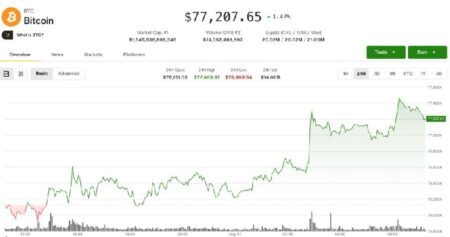
Sacks connected his call for de-escalation directly to market expectations and economic reality, and the data strongly supports his analysis. When the war began, Bitcoin—often considered a barometer of risk appetite in digital markets—plummeted toward $60,000, reflecting widespread uncertainty and fear among investors. Since then, it has staged a recovery to the $70,000-$71,000 range, though it remains well below its previous highs and subject to sharp swings based on war developments. Similarly, oil prices told the story of conflict escalation and potential de-escalation, briefly spiking above $118 per barrel before settling into a still-elevated range of $90-$100, far above the pre-conflict baseline. These aren’t just numbers on a screen—they represent real costs for businesses and consumers, inflation pressures, and economic uncertainty that ripples through every sector.
What’s particularly fascinating about this conflict is how cryptocurrency markets have functioned as real-time, 24/7 barometers of the war’s trajectory. Traditional financial markets close for weekends and holidays, leaving gaps in price discovery during critical moments. Crypto markets never sleep, and they became the only liquid venue for traders trying to speculate on or hedge against energy and geopolitical developments when traditional markets were closed. On Hyperliquid, a decentralized trading platform, oil-linked perpetual futures contracts saw volume explode to approximately $1.7 billion per day—a staggering figure that represents roughly 250 times the pre-war trading levels. This wasn’t just speculation; it was the market attempting to price risk in real time, and crypto provided the infrastructure to do it. The total cryptocurrency market capitalization hovers near $2.4 trillion, with Bitcoin spot ETFs recording about $1.3 billion in net inflows during March alone. Critically, every signal of potential de-escalation has triggered significant rallies across crypto markets, demonstrating just how much war uncertainty has been suppressing valuations.
Internal Administration Tensions and the Fight Over Trump’s Direction
Sacks’ position within the administration’s internal dynamics adds another crucial layer to understanding his public stance. He’s closely aligned with two other powerful figures: Elon Musk, the world’s richest person and a major Trump adviser and donor, and Vice President JD Vance, who represents the younger, more populist wing of the Republican Party. Trump himself acknowledged that Vance was “maybe less enthusiastic” about the initial strikes on Iran, suggesting that the Vice President harbored doubts about the military action from the beginning. On the podcast, Sacks went further, warning explicitly that a “faction of people, largely in the Republican Party” was actively pushing for continued escalation and even regime change in Iran—a goal that would require years of military commitment and potentially enormous casualties and costs.
This factional divide matters enormously for the cryptocurrency and technology agenda that Sacks was appointed to advance. His policy portfolio isn’t small or peripheral—it includes major legislative initiatives like the GENIUS Act, comprehensive crypto market-structure legislation that would provide regulatory clarity for digital assets, and efforts to facilitate mainstream bank adoption of cryptocurrency services. None of these ambitious goals can be achieved in an atmosphere of political chaos, coalition fracture, and sustained risk-off market sentiment. The MAGA coalition that elected Trump is already showing signs of strain over the Iran conflict, with traditional non-interventionists clashing with hawkish establishment Republicans. A prolonged war that deepens these divisions while keeping financial markets in turmoil would effectively destroy the political cohesion and stable environment necessary to pass complex, forward-looking technology legislation. From Sacks’ perspective, the crypto czar’s anti-war stance isn’t a deviation from his official responsibilities—it’s actually a defense of them. He can’t build the digital asset framework and AI policy leadership America needs if the political coalition is fracturing and markets are in perpetual crisis mode over an expanding Middle East war.
The Bigger Picture: Technology, Geopolitics, and America’s Future
The David Sacks situation reveals something important about how 21st-century conflicts intersect with economic and technological realities in ways previous generations never experienced. Traditional foreign policy debates often treated military actions and domestic economic priorities as largely separate domains—you could have hawkish foreign policy and business-friendly domestic policy without inherent contradiction. But when a hostile nation can credibly threaten to bomb the data centers that power American cloud computing, when cryptocurrency markets provide real-time pricing of geopolitical risk around the clock, and when the venture capital funding technology startups is directly imperiled by military escalation, those old boundaries dissolve. Sacks embodies this new reality: he’s simultaneously a senior government official, a major venture capitalist, an early investor in defense technology, and the architect of America’s crypto policy. For someone in that position, the Iran war isn’t an abstract question of grand strategy—it’s a direct threat to everything he’s working to build.
Whether Sacks’ call for de-escalation will influence Trump’s ultimate decision-making remains to be seen. The president faces competing pressures from different factions within his administration and party, some pushing for continued military action and others urging restraint. What’s undeniable is that Sacks has given voice to concerns that extend well beyond traditional anti-war constituencies. The technology sector, the cryptocurrency community, investors worried about market stability, and MAGA base voters who supported Trump’s promises to end foreign wars all have reasons to hope for de-escalation. The fact that the White House’s own crypto and AI czar is publicly arguing that the war threatens the very innovation ecosystem America needs for future economic leadership adds a practical, economic dimension to what might otherwise be purely political or moral arguments about military intervention. As markets continue to react to every development in the conflict and Iran continues to target American technology infrastructure, the pressure for a resolution will only intensify. Sacks’ intervention suggests that inside the administration, at least some voices are arguing that America’s technological future is too important to risk in an expanding Middle East conflict.