


XRP at a Crossroads: Understanding the Calm Before the Potential Storm
The Quiet Phase That Has Traders on High Alert
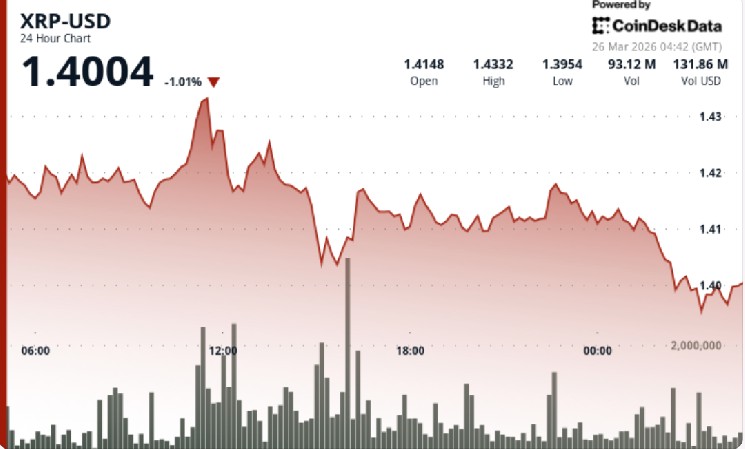
If you’ve been watching XRP lately, you might have noticed something unusual: it’s barely moving. For a cryptocurrency that’s known for its explosive rallies and gut-wrenching drops, this recent period of calm feels almost unsettling. Right now, XRP is hovering just above the $1.40 mark, stuck in what traders call a “tight range”—and if history has taught us anything about cryptocurrency markets, it’s that these quiet periods rarely last long. Think of it like the stillness before a thunderstorm; the air feels heavy, the wind dies down, and everyone instinctively knows something significant is about to happen. For XRP holders and traders, this moment represents both opportunity and risk in equal measure.
The token recently attempted to push higher, testing the waters around $1.43, but sellers weren’t having it. They stepped in aggressively, pushing the price back down with notable conviction and higher trading volume than we’d seen in the preceding days. This rejection wasn’t just a minor setback—it was a clear statement that resistance at those levels remains firm for now. What makes this situation particularly intriguing is that XRP’s volatility has collapsed to levels not seen since January, creating a technical setup that seasoned traders recognize as a precursor to significant moves. Meanwhile, beneath the surface of this seemingly boring price action, important developments continue to unfold. Regulatory frameworks around cryptocurrencies are becoming clearer, and institutional players are showing increasing interest in XRP specifically, even as the day-to-day price remains frustratingly range-bound for those looking for action.
Breaking Down What’s Actually Happening With the Price
Let’s get into the specifics of what XRP has been doing lately, because the details matter when you’re trying to anticipate where things might go next. Over recent trading sessions, XRP has been moving within an incredibly narrow band of roughly three cents—from about $1.40 to $1.43. For context, that’s less than a 2% range, which is remarkably tight for a cryptocurrency. This kind of price compression is like a coiled spring; the tighter it gets wound, the more forcefully it eventually releases.
The recent attempt to break above $1.43 is particularly telling. When price approached that level, sellers appeared in force, creating what technical analysts call a “rejection.” This wasn’t a gentle turn downward—it happened with conviction and increased volume, suggesting that there are significant players positioned to sell at those prices, at least for now. After that rejection, XRP retreated back toward the $1.40-$1.405 zone, which has now become a critical support level that’s being tested repeatedly. It’s like a floor that keeps getting walked on—eventually, you start to wonder if it might give way.
During late trading sessions, we’ve seen some weakness emerge with selling pressure pushing XRP briefly below even this short-term support zone before buyers managed to stabilize things. This back-and-forth creates tension in the market. Bulls (those betting on higher prices) are defending their line in the sand at $1.40, while bears (those betting on lower prices) are successfully preventing any meaningful push higher. Neither side has won yet, which is precisely what makes the current moment so interesting—and potentially profitable for those who correctly anticipate which direction the eventual breakout will take.
Reading the Technical Tea Leaves
For those who follow technical analysis—the practice of predicting future price movements based on chart patterns and trading data—the current XRP setup is textbook stuff. What we’re seeing is called a “compression phase,” and it’s one of the more reliable patterns in trading. Here’s why it matters: when a cryptocurrency’s price range gets narrower and narrower while volatility drops to unusually low levels, it’s creating a situation where pressure builds up on both sides. Eventually, something has to give.
The short-term structure for XRP is showing some concerning signs if you’re bullish. The token has made multiple attempts to reclaim the $1.41 level and push higher, but each time, sellers have stepped in to shut down the rally. This pattern of failed breakout attempts suggests that, at least in the immediate term, the path of least resistance might be downward. The bears seem to be in control when it comes to any upward moves, capping rallies before they can gain momentum.
However—and this is important—buyers haven’t given up. They continue to defend the $1.40 area with determination, absorbing sell orders and preventing any decisive break lower. This creates what traders call a “standoff,” where neither bulls nor bears can claim victory. The price stays stuck in a narrow range, but beneath the surface, orders are accumulating on both sides. Buy orders stack up below current prices (bids), while sell orders pile up above (asks). This order book pressure is what creates the eventual explosive move when one side finally overwhelms the other.
The technical reality is that we’re in a waiting game now. The next significant move in XRP is likely to be sharp and decisive, but it could go either direction. That’s what makes compression phases both exciting and dangerous—they offer the potential for substantial profits if you time the breakout correctly, but they can also trap traders on the wrong side of a sudden move if you guess wrong about the direction.
The Key Levels Every XRP Trader Should Be Watching
If you’re actively trading XRP or just trying to understand where your investment might be headed, there are specific price levels that matter more than others right now. These aren’t arbitrary numbers—they’re zones where significant buying or selling interest has shown up repeatedly, making them likely pivot points for whatever comes next.
First and most importantly, watch the $1.40 level. This has become the line in the sand for XRP bulls. If this support holds—meaning buyers continue to step in and prevent price from spending meaningful time below this level—then we could see XRP bounce back toward $1.43 in the short term. If that bounce happens with good volume and momentum, the next target would likely be around $1.45, which represents the next major resistance zone based on previous price action. A move to $1.45 might not sound dramatic, but from current levels that would represent about a 3.5% gain, and in crypto trading, that kind of move can happen in hours once it gets started.
On the flip side, if $1.40 fails to hold—meaning we see a decisive break below this level with strong selling volume—then things could get uncomfortable for XRP holders pretty quickly. The next significant support zone sits around $1.35, which is roughly 3.5% below current levels. A drop to that level would likely trigger stop-loss orders (automatic sell orders that traders place to limit their losses), which could accelerate the move downward and potentially lead to an even sharper decline before buyers re-emerge.
The critical factor to watch isn’t just which level breaks, but how it breaks. Volume is the key signal here. If we see $1.40 break on light volume with little conviction, it might be a “false break” that quickly reverses. But if either the $1.40 support or the $1.43 resistance breaks with significantly increased trading volume—showing strong participation from traders—then that break is much more likely to stick and set the direction for XRP’s next trend. Strong volume confirms conviction; it shows that real money is behind the move, not just a few traders pushing price around.
Why This Matters Beyond Just Day-to-Day Trading
While short-term traders focus on these immediate price levels and technical patterns, it’s worth zooming out to understand the bigger picture of what’s happening with XRP. This isn’t just another cryptocurrency experiencing normal volatility—there are specific fundamental factors that make XRP’s current position particularly noteworthy.
The regulatory environment surrounding XRP and its parent company Ripple has been a defining factor for years, particularly the Securities and Exchange Commission lawsuit that cast a shadow over the token. As that situation continues to evolve and as broader regulatory frameworks for cryptocurrencies become clearer, XRP stands to benefit significantly. Regulatory clarity removes uncertainty, and uncertainty is something markets hate. When institutional investors—think hedge funds, asset managers, and even traditional banks—consider entering the crypto space, they need clear rules about what they can and cannot do. As those rules become more defined, XRP becomes more attractive as an investment option.
Speaking of institutional interest, there’s been a notable increase in serious money looking at XRP, even during this quiet period for the price. Large financial players don’t typically chase pumps or panic during dumps; they accumulate positions slowly during exactly these kinds of boring consolidation phases. While retail traders might be frustrated by the lack of dramatic price action, institutions often prefer it—they can build positions without moving the market against themselves. This background accumulation may not show up in exciting daily price moves, but it sets the foundation for more substantial moves later.
The compression we’re seeing now, combined with these fundamental developments, creates an interesting paradox: the most boring price action might actually be setting up the most interesting opportunities. When regulatory news breaks, when institutional positions are finally revealed, or when technical levels finally give way, the moves tend to be larger precisely because they’ve been building for so long.
Navigating the Uncertainty: What Comes Next for XRP Holders
So where does all this leave someone who owns XRP or is considering buying? The honest answer is that we’re at a genuine inflection point where the next move could realistically go either way, and anyone claiming to know for certain which direction XRP will break is either lying or fooling themselves. What we can do, however, is prepare for both scenarios and understand what signals to watch for.
If you’re already holding XRP, this consolidation phase is testing your patience, but it’s not necessarily a bad thing. Healthy markets need these periods of rest and consolidation after big moves—they allow new buyers to enter, weak hands to exit, and market structure to stabilize. The key is having a plan for both scenarios. Decide in advance: at what level below current prices would you want to cut losses or add to your position? At what level above current prices would you take some profits or add more? Having these levels predetermined prevents emotional decision-making when the breakout finally comes.
For those considering entering a position in XRP, the current environment offers both opportunity and challenge. On one hand, buying during quiet consolidation often proves smarter than chasing breakouts after they’ve already happened. On the other hand, buying before the direction is clear means you might experience some immediate drawdown if the break goes against you initially. A strategy many traders employ in these situations is to split their intended position—perhaps buying a portion now and keeping some capital ready to add more if their preferred scenario (higher or lower prices) plays out.
The most important thing for any XRP holder or potential buyer to remember is that volatility will return. The current compressed range and historically low volatility create mathematical certainty that bigger moves are coming—we just don’t know exactly when or in which direction they’ll begin. When that expansion happens, it’s likely to be swift, potentially catching people off guard if they’re not paying attention. This is why experienced traders are watching XRP so closely right now, despite—or really, because of—how boring the daily price action has become. The quiet periods are often where the best opportunities are born, even if they’re not where the excitement lives. For XRP, the coming days or weeks will likely answer the question of whether this consolidation has been building energy for a continuation of the longer-term uptrend or a correction downward. Either way, the calm won’t last forever.