


NASA’s Artemis II Mission: Humanity’s Return to Deep Space
Favorable Weather Conditions Set the Stage for Historic Launch
As the clock counts down to one of the most ambitious space missions in decades, weather forecasters are delivering encouraging news for NASA’s Artemis II launch. Meteorologists predict an 80% chance of favorable conditions during the launch window, with only minor concerns about clouds, wind, and potential showers. The two-hour launch window is expected to feature light winds, mostly clear skies, and pleasant mid-70-degree temperatures – nearly ideal conditions for such a critical mission.
However, launching a mission of this magnitude requires more than just “nice weather.” NASA has established extremely specific weather criteria that must be met before the rocket can lift off. The temperature must remain above 41.4 degrees Fahrenheit and cannot exceed 94.5 degrees for more than 30 minutes. Wind restrictions are equally stringent: speeds cannot surpass 33 miles per hour at 132.5 feet altitude, or 45 miles per hour at 457.5 feet. Lightning poses such a serious threat that launch must be delayed for at least 30 minutes after any strikes within a 10-mile radius. The cloud requirements are particularly detailed – thunderstorm clouds must be more than 3 miles away, thick clouds over 4,500 feet must be at least 5 miles distant, and cumulus clouds cannot be closer than 10 miles. Additionally, there can be no precipitation falling and no smoke plumes in the vicinity. These meticulous requirements underscore the precision and caution that define modern space exploration.
Fueling the Most Powerful Rocket in Operation
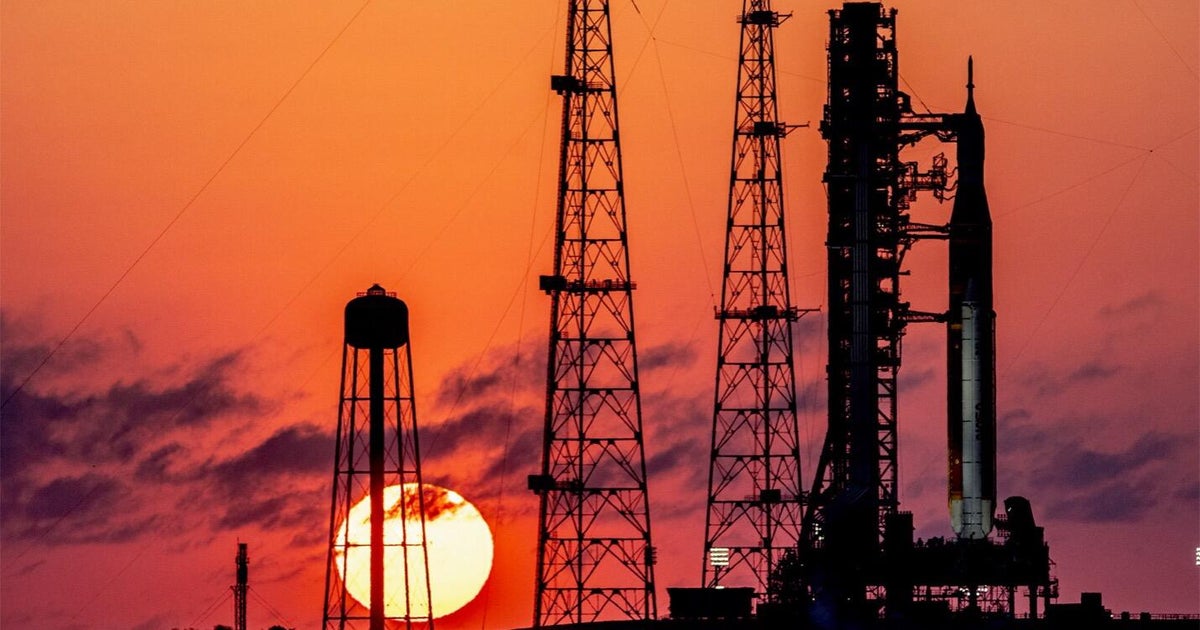
In what represents the first major decision point of launch day, the NASA launch team has given the “go” signal to begin tanking the Space Launch System (SLS) rocket – the most powerful booster currently in operation. This critical fueling process begins at 8:29 a.m. EDT and involves loading approximately 756,000 gallons of cryogenic liquid propellant into the massive vehicle. The scale of this operation is staggering and represents one of the most dangerous phases of the pre-launch sequence.
The rocket’s core stage requires an enormous amount of fuel: 537,000 gallons of liquid hydrogen chilled to an almost incomprehensible -423 degrees Fahrenheit, along with 196,000 gallons of liquid oxygen cooled to -297 degrees Fahrenheit. The upper stage, known as the Interim Cryogenic Propulsion Stage (ICPS), adds another 17,000 gallons of chilled liquid hydrogen and 5,000 gallons of chilled liquid oxygen to the total. Working with these super-cooled propellants requires extraordinary care and expertise, as they are not only extremely cold but also highly volatile. The fueling process must proceed flawlessly, with numerous checks and safety protocols in place to protect both the vehicle and the launch team. This complex operation demonstrates the immense engineering challenges involved in sending humans beyond Earth orbit for the first time in over half a century.
An Exceptionally Challenging Mission to Push Human Boundaries
NASA Administrator Jared Isaacman has been refreshingly candid about the challenges facing Artemis II, calling it “extremely challenging” and emphasizing that “this is a test flight.” In an interview with CBS News conducted the day before launch, Isaacman explained that this mission represents “the opening act in a series of missions that will send astronauts to and from the moon with great frequency as we return to stay.” NASA’s ambitious plans extend far beyond this single flight, with additional missions planned for next year, at least one lunar landing scheduled for 2028, and long-term goals that include construction of a permanent moon base.
The significance of what these four astronauts are about to attempt cannot be overstated. As Isaacman noted, “These astronauts are going to go farther from Earth than any humans have ever been before, potentially faster than any humans have ever been before.” This mission will test every system, procedure, and safety protocol that NASA has developed for deep space human exploration. While the Apollo missions of the 1960s and 70s successfully sent astronauts to the moon, those flights occurred more than five decades ago using technology that is now outdated. Artemis II represents a new era of space exploration, utilizing modern systems, materials, and understanding. The data gathered from this test flight will be invaluable for planning future missions, including crewed lunar landings and eventually missions to Mars. The stakes are incredibly high, but so is NASA’s confidence in their preparation and the capabilities of their extraordinary crew.
A Crew of Exceptional Achievers Ready for History
The four astronauts selected for Artemis II represent the best of the best, standing out even among NASA’s elite astronaut corps. Mission Commander Reid Wiseman, 50, brings impressive credentials including degrees in computer and systems engineering and a master’s in systems engineering. After becoming a naval aviator in 1999, he joined NASA in 2009 and flew his first space mission in 2014, logging 165 days aboard the International Space Station while completing two spacewalks. His leadership experience and technical expertise make him ideally suited to command this historic mission.
Pilot Victor Glover, 49, is a U.S. Navy captain whose educational background includes an engineering degree and three master’s degrees in military aviation, systems engineering, and management. His impressive flight experience includes more than 400 carrier landings and 24 combat missions. He piloted a SpaceX Crew Dragon to the International Space Station during 2020-21, spending 168 days in orbit and completing four spacewalks. Mission Specialist Christina Koch, 47, worked as an electrical engineer at NASA’s Goddard Space Flight Center, conducted research in Antarctica, and helped develop scientific instruments for space probes. Since becoming an astronaut in 2013, she has achieved remarkable accomplishments, including logging 328 days aboard the International Space Station in 2019-20 – the longest single spaceflight by a woman – while completing six spacewalks. The fourth crew member, Mission Specialist Jeremy Hansen, 50, is the only spaceflight rookie on the team but brings unique qualifications as a Canadian Space Agency astronaut who will become the first Canadian to travel beyond near-Earth orbit. He learned to fly as a teenager, earned a degree in space science from Royal Military College, and served as a fighter pilot before joining the Canadian Space Agency in 2009. Together, these four individuals have spent the past three years training intensively for every aspect of this mission, and they represent not just their respective countries but all of humanity in this bold venture into deep space.
The Mission Profile: A Journey Around the Moon
Artemis II will take four astronauts to the moon, but with an important distinction – they will not land on the lunar surface or enter orbit around it. Instead, the crew will perform a lunar flyby, looping behind the moon to gain an unprecedented view of its far side. During this journey, they are expected to set a new record for the farthest distance humans have ever traveled from Earth: an astounding 252,000 miles. This trajectory has been carefully calculated to test all systems while maintaining maximum safety for the crew.
The mission timeline begins with the crew spending their first 24 hours after launch in an elliptical orbit around Earth, allowing for system checks and ensuring everything is functioning properly before committing to the journey to the moon. Then comes one of the most critical moments of the entire mission: the “trans-lunar injection” or TLI burn. This precisely timed engine firing will boost the spacecraft’s velocity by approximately 900 miles per hour – just enough to break free from Earth’s gravitational hold and begin the four-day coast to the moon. The spacecraft will follow a “free return” trajectory, a path that uses the moon’s gravity to naturally bend the ship’s course back toward Earth without requiring additional major engine burns. This trajectory has been chosen for its inherent safety – even if the spacecraft’s engines failed after the TLI burn, the crew would still return to Earth. After swinging around the far side of the moon and completing their historic journey, the astronauts will return for splashdown in the Pacific Ocean on April 10, bringing to a close this groundbreaking test flight.
Overcoming Delays and Counting Down to Launch
The road to this launch has been anything but smooth. Artemis II was originally scheduled to lift off in early February, but the mission experienced multiple delays as NASA worked to resolve various technical issues. The first significant setback came when hydrogen fuel leaks were discovered during a dress-rehearsal countdown. Working with super-cooled liquid hydrogen is notoriously difficult, and even small leaks can pose serious safety risks. Engineers had to identify the source of the leaks, develop solutions, and verify that the fixes would hold under actual launch conditions.
Additional problems emerged with the upper stage propellant pressurization system, requiring further investigation and repairs. NASA has now confirmed that both issues have been completely resolved, finally clearing the path to launch. The official countdown clocks began ticking more than 48 hours before liftoff, starting at 4:44 p.m. EDT on Monday afternoon. For those eager to witness this historic event, CBS News will provide extensive coverage. CBS News 24/7 will begin live streaming coverage at 4 p.m. EDT, with a CBS News Special Report anchored by Tony Dokoupil airing on CBS television stations starting at 6 p.m. EDT. The launch window opens at 6:24 p.m. EDT on Wednesday, April 1, 2026, from Kennedy Space Center in Florida. Viewers can watch live through the CBS News app or website, making this momentous occasion accessible to people around the world. After years of planning, months of delays, and countless hours of preparation, humanity stands on the brink of returning to deep space exploration, taking the first crucial step toward establishing a permanent human presence beyond Earth orbit.