



The Federal Reserve’s Critical April Interest Rate Decision: What Markets Need to Know
The Anticipation Builds as the Fed Prepares Its April Announcement
Financial markets around the world are holding their breath as the US Federal Reserve prepares to announce its highly anticipated interest rate decision for April 2026. This moment represents a crucial juncture not only for traditional financial markets but also for the increasingly mainstream cryptocurrency sector, which has become notably sensitive to Federal Reserve policy shifts. The announcement is scheduled for April 29, 2026, at 9:00 PM Turkish time, with Federal Reserve Chairman Jerome Powell set to address the public thirty minutes later at 9:30 PM. This decision comes after an interesting pattern in the Fed’s monetary policy approach—following three consecutive interest rate cuts that began in September of last year, the central bank has maintained a steady hand throughout 2026, making no adjustments to rates during this period. Market observers and financial analysts are nearly unanimous in their expectations that the Federal Reserve will maintain its current policy interest rate range at 3.50–3.75 percent, continuing what many describe as a cautious, wait-and-see approach to monetary policy in an increasingly complex economic environment.
Understanding the Current Economic Landscape and Market Expectations
The backdrop against which this interest rate decision is being made is anything but simple. The ongoing US-Iran conflict has cast a significant shadow over the proceedings, introducing geopolitical uncertainty into an already delicate economic equation. According to comprehensive market surveys, 100% of market participants anticipate that interest rates will remain unchanged within their current range—a remarkable level of consensus that speaks to both the clarity of the Fed’s recent communications and the broader understanding of current economic conditions. The Federal Reserve has been remarkably consistent in its messaging, emphasizing that it needs to see stronger, more sustained evidence that inflation is permanently moving toward its 2% target before considering any interest rate reductions. This cautious stance reflects the central bank’s determination not to repeat historical mistakes where premature policy easing led to resurgent inflation. The situation is further complicated by rising energy costs stemming from Middle Eastern conflicts, which analysts warn could potentially trigger new inflationary pressures just as the Fed was beginning to see progress on bringing prices under control.
Two Scenarios: The Paths Forward for Federal Reserve Policy
Economic experts and market analysts have identified two primary scenarios that could shape the Federal Reserve’s decision-making process not just for this meeting but for the remainder of 2026. The first scenario involves a situation where inflation’s journey back to the target 2% level loses momentum or stalls entirely. In this case, the Federal Reserve would almost certainly maintain interest rates at their current levels, refusing to provide monetary accommodation until clear evidence emerges that price pressures are sustainably contained. This approach would prioritize inflation control over short-term economic growth considerations, reflecting the lessons learned from the inflation surge that began in 2021. The second scenario presents a different challenge—one where US employment data shows significant cooling, suggesting that the labor market may be weakening more rapidly than anticipated. In this situation, the Federal Reserve might find itself facing the difficult decision of initiating its first interest rate reduction of the year to support employment, even if inflation hasn’t fully returned to target levels. This would represent a delicate balancing act between the Fed’s dual mandate of price stability and maximum employment, forcing policymakers to weigh which risk—persistent inflation or rising unemployment—poses the greater threat to long-term economic health.
The Oil Price Factor and Geopolitical Complications
The role of energy prices in this interest rate decision cannot be overstated, and Chicago Federal Reserve President Austan Goolsbee has been particularly vocal about this dimension of the policy challenge. Goolsbee has explicitly stated that if elevated oil prices resulting from the Iran conflict persist for an extended period, thereby delaying progress toward the 2% inflation target, interest rate cuts could be pushed back well beyond 2026. This statement underscores how geopolitical events can fundamentally alter the trajectory of monetary policy, creating constraints that the Federal Reserve must navigate carefully. Oil prices have historically been a significant driver of overall inflation, as energy costs ripple through virtually every sector of the economy—from transportation and manufacturing to food production and services. Goolsbee offered a more optimistic scenario as well, noting that “if we resolve the oil price shocks in the Middle East, and see inflation decline and heading back towards the 2 percent level, then interest rate cuts will become an option on the table.” This conditional framing highlights the data-dependent nature of Federal Reserve decision-making and the importance of external factors beyond the central bank’s direct control. For cryptocurrency markets and traditional financial markets alike, the message is clear: the path of interest rates depends not just on domestic economic indicators but also on international developments that could either support or undermine the Fed’s inflation-fighting efforts.
Chairman Powell’s Final Meeting and What His Statements Might Reveal
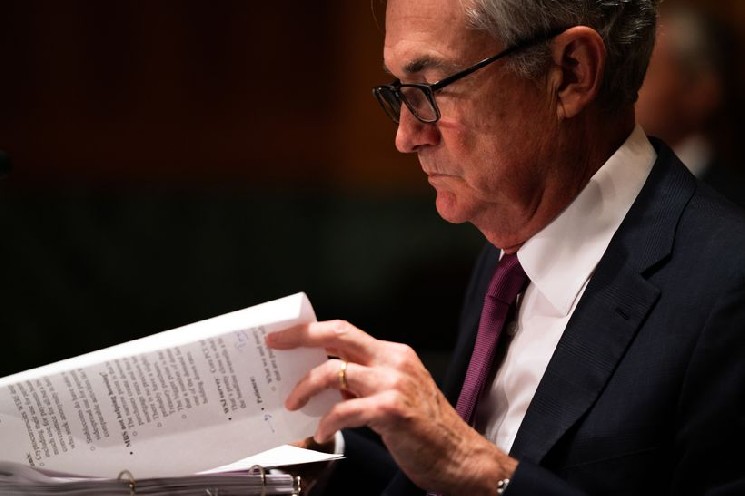
This particular Federal Reserve meeting carries additional significance because it represents Chairman Jerome Powell’s final monetary policy meeting in his current capacity, where he will deliver what many are calling his official farewell message. Powell has led the Federal Reserve through one of the most challenging periods in its history, including the economic disruptions of the pandemic, the subsequent inflation surge, and the complex process of unwinding emergency monetary support without triggering a recession. His remarks following the interest rate decision are expected to provide critical signals about the future direction of monetary policy, offering insights that markets will parse for hints about the timing and magnitude of future rate adjustments. Powell’s communication style has evolved considerably during his tenure, becoming more transparent and forward-looking in an effort to manage market expectations and reduce volatility. Market participants will be listening carefully not just for what Powell says about current conditions but for any guidance he provides about the threshold conditions that would trigger rate cuts in the coming months. His assessment of inflation trends, labor market dynamics, and the potential impact of geopolitical developments will all contribute to market positioning and expectations for the remainder of 2026 and beyond.
Looking Ahead: The Fed’s Remaining 2026 Decision Points and Market Implications
Following this April meeting, the Federal Reserve has five more scheduled interest rate decisions in 2026—in June, July, September, October, and December. Each of these meetings represents another opportunity for the Fed to adjust its policy stance in response to evolving economic conditions. For investors in both traditional assets and cryptocurrencies, understanding the Fed’s policy trajectory remains crucial, as interest rate decisions have far-reaching implications for asset valuations, risk appetite, and capital flows across global markets. Lower interest rates generally support risk assets, including cryptocurrencies, by reducing the opportunity cost of holding non-yielding assets and increasing liquidity in financial markets. Conversely, higher or sustained elevated rates tend to favor safer, yield-bearing investments like government bonds and can pressure speculative assets. The current expectation of unchanged rates for April suggests that the Fed remains in a holding pattern, carefully monitoring incoming data before committing to a new policy direction. As we move through the remainder of 2026, the key variables to watch include monthly inflation reports, employment statistics, GDP growth figures, and of course, developments in global geopolitical hotspots that could affect energy prices and broader economic confidence. While this analysis provides context and perspective on the Federal Reserve’s decision-making process, it’s important to remember that it does not constitute investment advice, and anyone making financial decisions should conduct thorough research and consider consulting with qualified financial professionals.