


U.S. Ambassador to Ukraine Julie Davis Steps Down After Turbulent Year
A Diplomatic Departure Amid Challenging Times
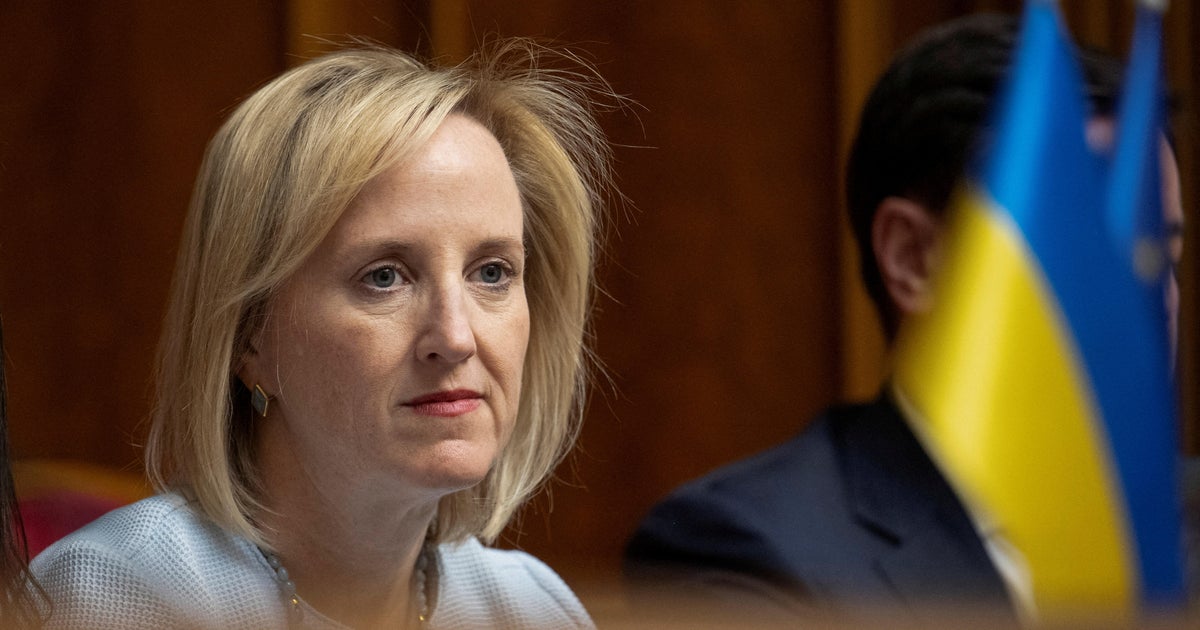
After nearly a year navigating one of the most complex and volatile periods in U.S.-Ukraine relations, Acting U.S. Ambassador to Ukraine Julie Davis has announced she will leave her post in June 2026. The news, confirmed by U.S. officials speaking with CBS News, marks the end of a challenging tenure that saw Davis managing American interests in Kyiv during a time of dramatic policy shifts under President Trump’s administration. While initial reports from the Financial Times suggested her departure stemmed from disagreements with the president, both State Department officials and sources close to Davis have firmly pushed back against this narrative, insisting her decision is rooted in professional considerations rather than political discord. The departure of such a seasoned diplomat raises questions about continuity in American diplomatic efforts in Ukraine at a critical juncture in the ongoing conflict with Russia.
The Official Story: A Career Diplomat’s Retirement
State Department spokesperson Tommy Pigott was quick to clarify the circumstances surrounding Davis’s resignation, calling reports of conflicts with President Trump “false.” According to the official statement, Davis is retiring after an impressive 30-year career as a foreign service officer, a tenure that speaks to her dedication and commitment to American diplomatic interests around the world. Pigott emphasized that Davis would continue to represent and advance President Trump’s policies faithfully until her official departure from Kyiv in June, underscoring that there was no break in her professional commitment to the administration’s agenda. A senior U.S. official with direct knowledge of Davis’s thinking provided additional context, explaining that her decision came down to a lack of clear professional advancement opportunities within the State Department that aligned with her career ambitions. This characterization paints a picture of a respected diplomat making a pragmatic decision about her future rather than staging a protest resignation over policy differences—a distinction that matters greatly in the often politically charged world of diplomatic appointments and departures.
An Unconventional Assignment During Wartime
Julie Davis’s path to the role of acting ambassador in Kyiv was itself unusual and reflective of the turbulent nature of U.S.-Ukraine relations during this period. She assumed the position of interim chargé d’affaires at the U.S. Embassy in Kyiv on May 5, 2025, stepping into a role that had been vacated by former Ambassador Bridget Brink under contentious circumstances. Brink, a Democrat who has since launched a congressional campaign in Michigan’s 7th District, made her reasons for leaving abundantly clear in a public op-ed, stating she “could no longer in good faith carry out the administration’s policy” and felt compelled by duty to resign. This public declaration of principle set a dramatic backdrop for Davis’s arrival. What made Davis’s assignment even more remarkable was that she never relinquished her position as U.S. ambassador to Cyprus, a post she had held since 2023. This meant Davis was essentially juggling two ambassadorial roles simultaneously—maintaining her official accreditation in Cyprus while managing the far more demanding and high-stakes interim posting in Ukraine during an active war. This arrangement speaks both to the difficulty the administration may have faced in finding someone willing to take the Kyiv position and to Davis’s own dedication and capability as a diplomat.
Navigating Shifting Sands: Davis’s Challenging Tenure
The period during which Julie Davis served as acting ambassador was characterized by significant uncertainty and rapidly changing American policy toward Ukraine. Rather than working through traditional State Department channels and career diplomats, the Trump administration frequently relied on presidential envoys Steve Witkoff and Jared Kushner to lead diplomatic efforts related to the Ukraine-Russia conflict. This approach effectively sidelined the traditional role of the ambassador, placing Davis in the awkward position of representing U.S. interests while key decisions and negotiations were being handled by figures outside the conventional diplomatic structure. One particularly telling incident occurred in November when Davis was preparing to host Secretary of the Army Dan Driscoll at the ambassador’s residence during his first visit to Kyiv. Just as he arrived, the Trump administration pushed Ukraine to accept a peace proposal that had been developed through meetings between Witkoff and Russian negotiators, bypassing the embassy entirely in the formulation of this significant policy initiative. Though that particular proposal ultimately collapsed when Moscow rejected the terms, the incident illustrated the unusual and often marginalized position in which Davis found herself. Despite these challenges, Witkoff and Kushner continued to dominate American diplomatic efforts to end the war, leaving traditional diplomats like Davis to manage the fallout and maintain day-to-day relations.
Brief Diplomatic Progress and Subsequent Stalemate
Despite the unconventional approach and the challenges it presented, there were moments during Davis’s tenure when meaningful diplomatic progress appeared possible. In February, American officials successfully mediated two trilateral summits bringing together Ukrainian and Russian negotiators for direct talks. Ukrainian officials who participated in these sessions told CBS News that they were the most productive diplomatic engagements of the entire war, suggesting that the unconventional approach may have yielded some benefits in breaking through previous impasses. These meetings represented a rare bright spot in an otherwise frustrating diplomatic landscape, offering hope that a negotiated settlement might be within reach. However, this momentum proved short-lived. Diplomatic efforts stalled significantly when the United States became embroiled in an ongoing conflict with Iran, which diverted attention and resources away from the Ukraine situation. The last substantive meeting between American and Ukrainian negotiators took place on March 22, and as of Davis’s announced departure, no further sessions had been scheduled. This stalemate left Davis presiding over an embassy in a wartime capital with diminishing diplomatic activity and unclear direction from Washington—a frustrating position for any career diplomat, particularly one as experienced and accomplished as Davis.
Legacy and Looking Forward
Julie Davis’s impending departure comes at a moment of significant uncertainty for U.S.-Ukraine relations and for the future of American diplomatic engagement in the region. Her credentials are beyond question—Daniel Fried, the former U.S. Ambassador to Poland who has known Davis for many years, offered a glowing assessment of her character and capabilities: “Julie Davis is a pro: devoted to U.S. interests and values, to the Free World, and to Ukraine as part of the Free World.” This endorsement from a respected diplomatic figure underscores the caliber of professional now leaving the Kyiv post. As Davis prepares for her June departure after three decades of foreign service, her resignation highlights broader questions about the state of career diplomacy under the current administration and the challenges facing professionals who have dedicated their lives to representing American interests abroad. Whether her successor will face a more stable policy environment or continue to navigate the same turbulent waters remains to be seen. What is clear is that Davis managed an extraordinarily difficult assignment with professionalism during a period when traditional diplomatic norms were frequently set aside in favor of more personalized, envoy-driven approaches to international relations. Her departure marks the end of a chapter in U.S.-Ukraine relations that was defined by policy uncertainty, unconventional diplomatic methods, and the ongoing challenge of supporting a partner nation during wartime while pursuing the administration’s goal of ending the conflict through negotiation.