


ChatGPT and Crime: The Troubling Intersection of AI and Violence
A Tragedy Unfolds in Florida
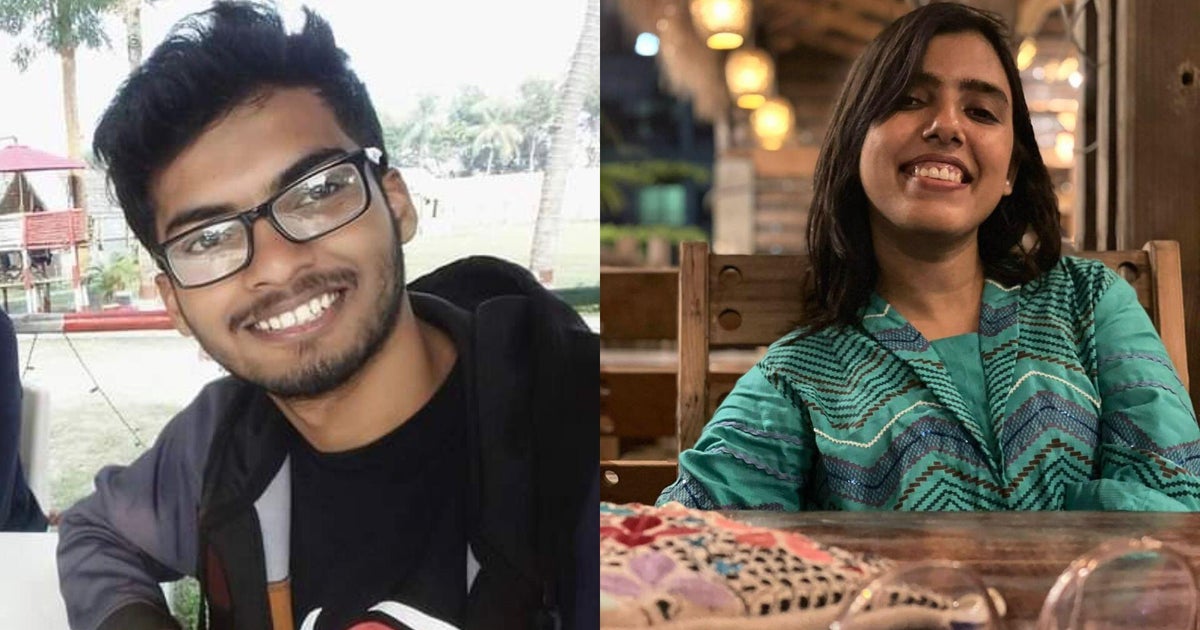
The University of South Florida community is reeling from an unspeakable tragedy that has shocked the nation and raised serious questions about the role of artificial intelligence in violent crimes. Nahida Bristy and Zamil Limon, both promising 27-year-old doctoral students with bright futures ahead of them, have become victims in a case that highlights the dark side of technological advancement. Their roommate, 26-year-old Hisham Abugharbieh, stands accused of their murders in what investigators describe as a premeditated crime that was allegedly planned with the assistance of ChatGPT, the popular AI chatbot. Limon’s body was discovered on the Howard Frankland Bridge in St. Petersburg, while human remains believed to be Bristy’s were found shortly after, though official identification is still pending. According to court documents, Abugharbieh spent days before the murders consulting ChatGPT about various aspects of his alleged crime, asking questions like how to dispose of a body, whether someone could be “put in a black garbage bag and thrown in dumpster,” and inquiring about car VIN numbers and gun ownership laws. When the AI responded that his questions sounded dangerous, he allegedly pressed further, asking “How would they find out.” On April 15, just one day before the students vanished, his phone pinged near the location where Limon’s body would later be found, and his search history showed he had asked ChatGPT whether cars are checked at a nearby state park. Abugharbieh was arrested over the weekend and charged with two counts of premeditated murder, and he’s currently being held without bond.
Florida Takes Action Against AI Company
The tragedy has prompted swift and decisive action from Florida’s attorney general, James Uthmeier, who announced that his office has launched a criminal investigation into OpenAI, the company behind ChatGPT. This investigation was triggered after his office reviewed conversation logs between the AI chatbot and another Florida student involved in a separate violent incident—the April 2025 shooting at Florida State University that left two people dead and several others injured. In a powerful statement during an April 21 news conference, Uthmeier declared, “My prosecutors have looked at this and they’ve told me if it was a person on the other end of that screen, we would be charging them with murder.” He argued that the AI tool provided “significant advice” to the FSU shooter, Phoenix Ikner, effectively acting as an accomplice to the crime. OpenAI has pushed back firmly against these accusations, stating that while they identified an account believed to be associated with Ikner and shared it with law enforcement, “ChatGPT did not encourage or promote illegal or harmful activity.” The company maintains that the chatbot simply provided responses to questions using information that’s publicly available on the internet, essentially arguing that it’s no different from someone doing their own online research. In their official statement, OpenAI asserted that “Last year’s mass shooting at Florida State University was a tragedy, but ChatGPT is not responsible for this terrible crime.” The investigation raises fundamental questions about corporate responsibility in the age of artificial intelligence and whether tech companies can be held legally accountable when their products are used in the commission of crimes.
The Debate Over Technology and Responsibility
As Florida pursues its investigation into OpenAI, experts are weighing in on the complex ethical and legal questions at the heart of this controversy. Dr. Jill Schiefelbein, an AI strategist and professor at the University of South Florida’s Muma College of Business, offers a balanced perspective that cuts through the political rhetoric. She argues that blaming the technology itself is misguided, comparing it to blaming a vehicle for an accident caused by a human driver or blaming a firearm for a shooting. “It’s how these tools are used, whether it’s a firearm, whether it’s a vehicle, whether it’s a tool that helps you retrieve information, it’s the user intent behind it that’s the issue,” she explained to CBS News. However, Dr. Schiefelbein is quick to clarify that acknowledging human responsibility doesn’t mean technology companies should be given a free pass. She believes the investigation could actually lead to productive solutions, such as establishing reasonable timeframes for technology companies to report users who violate their terms and conditions. “Does that mean I believe that there shouldn’t be stricter guardrails in place? Absolutely not,” she emphasized. Her viewpoint reflects a growing consensus among many experts that while AI tools themselves aren’t inherently dangerous, the companies that create them have a responsibility to implement robust safety measures, monitor for misuse, and respond appropriately when their platforms are being used to plan harmful activities. The question isn’t necessarily whether ChatGPT caused these crimes, but rather whether OpenAI and similar companies are doing enough to prevent their tools from becoming accomplices to violence.
A Pattern of Tragedy Emerges
The University of South Florida case and the Florida State University shooting aren’t isolated incidents—they’re part of a disturbing pattern of violent crimes involving ChatGPT that has emerged in recent months. Perhaps the most devastating example occurred in British Columbia, where 18-year-old Jesse Van Rootselaar allegedly killed eight people in a rampage that shocked an entire community. On February 10, Van Rootselaar opened fire at Tumbler Ridge Secondary School, killing a teacher and five students before taking her own life. Before the school shooting, she had already murdered her mother and 11-year-old half-brother at their home. What makes this case particularly troubling is that Van Rootselaar had previously exhibited concerning behavior on ChatGPT that was serious enough to get her account flagged and eventually banned. According to OpenAI, the account was identified in June 2025 by their automated abuse detection tools and human investigators who specifically look for potential misuses of ChatGPT for violent activities. The company banned the account for violating its usage policies, but they made a decision not to alert law enforcement at that time. OpenAI has since explained that they had determined the account “did not pose an imminent and credible risk of serious physical harm to others” and therefore didn’t meet their internal threshold for referral to authorities. This decision has been second-guessed extensively since the shooting, with many questioning whether the company’s threshold is set too high and whether a different decision might have prevented the tragedy.
OpenAI’s Response and Promises
In the wake of the British Columbia tragedy, OpenAI CEO Sam Altman took the unusual step of issuing a public apology to the devastated community. In a letter dated April 23 and shared on social media by British Columbia Premier David Eby, Altman wrote with what appeared to be genuine emotion: “The pain your community has endured is unimaginable. I have been thinking of you often over the past few months.” He acknowledged the company’s failure to prevent the tragedy and expressed his commitment to ensuring nothing similar happens again. “I want to express my deepest condolences to the entire community,” he wrote. “No one should ever have to endure a tragedy like this.” Altman pledged that OpenAI would remain focused on preventative efforts “to help ensure something like this never happens again,” though he didn’t provide specific details about what changes the company would implement. The response from OpenAI has been notably different across these various cases—firmly rejecting responsibility for the Florida State University shooting while apologizing for the British Columbia incident. This inconsistency has raised questions about the company’s internal decision-making processes and what criteria they use to determine when to take responsibility versus when to deflect it. A spokesperson for OpenAI addressed the University of South Florida case by saying, “This is a terrible crime, and our thoughts are with everyone affected. We’re looking into these reports and will do whatever we can to support law enforcement in their investigation.” The company appears to be walking a tightrope between acknowledging the tragedies associated with their product and protecting themselves from legal liability.
The Road Ahead: Technology, Safety, and Society
These tragic cases have forced society to confront difficult questions about the relationship between technological innovation and public safety. As artificial intelligence becomes increasingly sophisticated and accessible, the potential for misuse grows alongside its beneficial applications. The fundamental dilemma is this: AI tools like ChatGPT can access and synthesize vast amounts of information instantly, making them incredibly useful for legitimate purposes like research, education, and problem-solving. However, this same capability means they can just as easily provide detailed information to someone planning a crime. Unlike a human confidant who might recognize warning signs and alert authorities, an AI chatbot processes requests without judgment or context about the user’s intentions. The question facing lawmakers, technology companies, and society at large is how to preserve the benefits of AI while implementing safeguards that prevent its misuse. Some potential solutions being discussed include more aggressive content filtering, mandatory reporting of concerning conversations to law enforcement, lower thresholds for account suspension, and possibly even requiring user verification for certain types of queries. However, each of these measures comes with trade-offs related to privacy, free speech, and the practical limitations of monitoring billions of interactions. As Florida’s investigation proceeds and more cases come to light, the pressure on companies like OpenAI to implement stronger protections will likely intensify. The families of Nahida Bristy, Zamil Limon, and the other victims deserve answers about whether these tragedies could have been prevented. Their deaths have become rallying points for those calling for greater accountability in the AI industry, ensuring that the conversation about artificial intelligence safety continues with the urgency it deserves.