



Bitcoin’s Critical Moment: Expert Opinions Diverge as Markets Enter Uncertain Territory
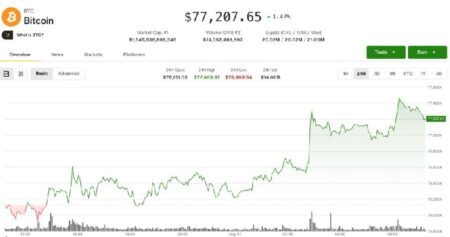
The cryptocurrency landscape is currently experiencing a period of heightened volatility and intense speculation as Bitcoin approaches a crucial price threshold of $74,000. This resistance level has become a focal point for traders, investors, and analysts worldwide, representing not just a technical milestone but potentially a psychological barrier that could determine the digital currency’s trajectory in the months ahead. Against the backdrop of turbulent traditional markets, questions are emerging about whether we’re witnessing a fundamental shift in how investors view cryptocurrency—specifically, whether Bitcoin is transitioning from a speculative asset to a legitimate safe-haven alternative to traditional stores of value like gold or government bonds. This debate intensified recently when three prominent market strategists appeared on Scott Melker’s popular podcast “The Wolf Of All Streets,” where they presented radically different visions for Bitcoin’s future. Their perspectives, ranging from cautiously optimistic to decidedly bearish, reflect the broader uncertainty permeating financial markets today and highlight the complex factors influencing cryptocurrency valuations in an era of economic instability, geopolitical tension, and evolving regulatory frameworks.
The Case for Bitcoin: Uncertainty and the Search for Alternatives
Dave Weisberger, the former CEO of CoinRoutes and a respected voice in cryptocurrency trading infrastructure, offered perhaps the most thought-provoking analysis of the current market dynamics. Weisberger characterizes today’s economic environment as representing “the pinnacle of uncertainty”—a situation where traditional economic models and predictable market behaviors have been upended by a combination of unprecedented monetary policy, spiraling government debt, and structural changes to the global financial system. His central thesis rests on a straightforward but powerful premise: governments across the developed world, particularly the United States, have painted themselves into a corner where continuous money printing has become not just a policy choice but an economic necessity. With national debts reaching astronomical levels and political systems seemingly incapable of making difficult fiscal decisions, Weisberger argues that raising debt ceilings and expanding the money supply through various forms of quantitative easing have become the path of least resistance for policymakers. This continuous monetary expansion, which effectively represents a gradual devaluation of fiat currencies, creates a pressing dilemma for investors: where should they park their capital to preserve wealth in an environment where traditional currencies are systematically losing purchasing power? According to Weisberger, this question is driving a fundamental reassessment of Bitcoin’s role in investment portfolios. He points to a critical shift in institutional perception—the decreasing probability that Bitcoin will completely fail or fade into irrelevance. As the cryptocurrency has survived multiple market cycles, regulatory challenges, and technological tests over more than a decade, confidence in its long-term viability has grown steadily. Perhaps most significantly, Weisberger highlights the entry of financial behemoths like BlackRock into the cryptocurrency space as evidence of Bitcoin’s maturing status. The world’s largest asset manager’s decision to offer Bitcoin investment products to its clients represents more than just another business venture; it signals a legitimization of cryptocurrency as an asset class worthy of serious consideration by conservative institutional investors. This institutional embrace, Weisberger suggests, is gradually transforming Bitcoin’s image from a highly speculative “risky asset” associated with volatility and uncertainty into something resembling a legitimate portfolio diversification tool—perhaps even the digital equivalent of gold for the 21st century.
The Generational Wealth Transfer and Risk-Taking Behavior
James Lavish, serving as Chief Investment Officer and Macro Strategist, brings a complementary but distinct perspective to the conversation, one that emphasizes the human and demographic factors driving cryptocurrency adoption. Lavish interprets the current market volatility not as random fluctuation or irrational exuberance, but as what he calls a “survival instinct” manifesting across a generation of investors who see traditional pathways to wealth building as fundamentally broken. His analysis focuses particularly on younger investors—millennials and Gen Z—who face economic realities dramatically different from those experienced by their parents and grandparents. For these younger cohorts, the traditional formula for building wealth and achieving middle-class stability—get a stable job, save diligently in a diversified portfolio of stocks and bonds, buy a home—has become increasingly unattainable. Housing prices have skyrocketed relative to wages, student debt burdens have multiplied, and the returns offered by conventional “safe” investments like savings accounts or government bonds have been suppressed to near zero for extended periods. In this environment, Lavish argues, traditional investment instruments have proven woefully inadequate for the task of not just preserving wealth against inflation, but actually building sufficient capital to achieve major life goals like homeownership or comfortable retirement. The younger generation isn’t content to simply “keep up” with inflation—they need to “catch up,” to make up ground lost to soaring asset prices and stagnant wages. This urgency, Lavish contends, is pushing investors toward what he calls “the far end of the risk curve”—assets that offer the potential for substantial returns but come with corresponding volatility and uncertainty. Cryptocurrencies, particularly Bitcoin, represent the most accessible and liquid of these high-risk, high-reward investment opportunities. Unlike private equity, venture capital, or other alternative investments that require substantial minimum investments or accredited investor status, cryptocurrencies can be purchased in fractional amounts by anyone with an internet connection. Beyond the current state of the market, Lavish offers a forward-looking prediction that should interest both current cryptocurrency holders and those considering entering the space: he anticipates that the next 6 to 18 months will see a proliferation of new Bitcoin-based financial instruments, including sophisticated derivatives and structured products. These developments, he argues, will further fuel demand for Bitcoin by allowing institutional investors to gain exposure through familiar financial structures, while also enabling more complex trading and hedging strategies that could improve market liquidity and stability.
The Contrarian Voice: A Bear Market in Disguise
Standing in stark contrast to the relatively optimistic perspectives offered by Weisberger and Lavish, Bloomberg’s Senior Commodities Strategist Mike McGlone presented a sobering counterargument that challenges the prevailing narrative of Bitcoin’s inevitable ascent. McGlone’s position is unambiguous and provocative: despite recent price gains, cryptocurrencies remain trapped in a fundamental bear market, and current optimism represents not the beginning of a new bull run but rather a temporary “bear market rally”—a brief period of price recovery within a longer-term downtrend. His skepticism isn’t based solely on technical analysis or chart patterns but on a broader assessment of market structure and investor behavior. McGlone argues that the “excesses” that characterized the cryptocurrency boom of previous years have not yet been adequately purged from the system. These excesses manifest most clearly, he suggests, in the continued existence and trading activity of what he views as purely speculative tokens with minimal utility—he specifically names Dogecoin and Shiba Inu, meme-inspired cryptocurrencies that gained enormous valuations despite lacking the technological innovation or use cases that theoretically justify Bitcoin or Ethereum’s prominence. Until these speculative froth elements are “completely eliminated” from the market through a more thorough correction, McGlone believes the cryptocurrency sector cannot establish a healthy foundation for sustainable growth. His technical analysis centers on the critical $74,000 level that Bitcoin is currently approaching—a resistance point that has taken on outsized significance in determining the cryptocurrency’s near-term direction. Unless Bitcoin can break through this level and, more importantly, establish sustained support above it (meaning it can fall back to that level without dropping significantly further), McGlone remains unconvinced that the current upward movement represents anything more than a temporary respite. For investors heeding McGlone’s warnings, the strategic implication is clear: this is not the time for aggressive risk-taking in cryptocurrency markets. Instead, he advocates for defensive positioning, recommending traditional safe-haven assets like U.S. Treasury bonds—securities that, despite offering modest returns, provide capital preservation and predictable income streams during periods of market turbulence.
Understanding the Divergence: Why Experts Disagree
The dramatic differences in perspective among these three respected market analysts highlight a fundamental challenge facing anyone trying to navigate cryptocurrency markets: the asset class remains new enough and unique enough that traditional analytical frameworks often fail to provide clear answers. Unlike stocks, where decades of data and established valuation methods exist, or bonds, where mathematical relationships between yields, prices, and economic conditions are well-understood, cryptocurrencies occupy a strange middle ground that defies easy categorization. Are they currencies? Commodities? Technology platforms? Speculative assets? The answer seems to be “all of the above,” which makes consistent analysis extremely difficult. Weisberger’s optimism rests heavily on macroeconomic trends and institutional adoption—factors that suggest Bitcoin is maturing into a recognized asset class. Lavish’s bullishness stems from demographic and behavioral observations about how a generation of investors is responding to perceived economic unfairness and limited opportunities. McGlone’s pessimism, meanwhile, draws from classical market cycle analysis and a conviction that speculative excess must be punished before healthy growth can resume. Each of these perspectives is logically coherent and supported by real evidence, yet they lead to radically different conclusions. This divergence itself tells us something important: we’re at an inflection point where Bitcoin’s future trajectory remains genuinely uncertain, susceptible to being shaped by policy decisions, technological developments, regulatory actions, and shifting investor sentiment in ways that are difficult to predict with confidence.
Investment Implications and Risk Considerations
For individual investors trying to make sense of these competing narratives, several important principles emerge. First, the very existence of such drastically different expert opinions should serve as a reminder of the inherent uncertainty and risk in cryptocurrency markets—this is not an asset class where outcomes are predictable or where consensus exists among knowledgeable observers. Second, position sizing becomes critically important: given the volatility and uncertainty, cryptocurrency holdings should generally represent only a portion of a diversified portfolio that an investor can afford to lose without compromising their financial security or life goals. Third, time horizon matters enormously—the bull and bear cases for Bitcoin often operate on different timeframes, with long-term structural arguments for adoption potentially coexisting with near-term bearish technical setups. Fourth, investors should be clear about whether they’re investing in Bitcoin specifically based on its unique properties as a potential store of value and medium of exchange, or whether they’re speculating more broadly on cryptocurrency markets including more experimental or meme-driven tokens—McGlone’s warnings about “excesses” apply much more forcefully to the latter category than the former. Finally, the dramatic differences in expert opinion should encourage intellectual humility and careful personal research rather than blind deference to any single authority, no matter how credible their credentials.
Looking Ahead: Key Factors to Watch
As Bitcoin approaches the critical $74,000 level that McGlone identified as pivotal, several factors deserve close attention from anyone with exposure to or interest in cryptocurrency markets. Institutional adoption continues to evolve, with major financial institutions expanding their cryptocurrency offerings—watching whether this trend accelerates, plateaus, or reverses will provide important signals about Bitcoin’s trajectory toward mainstream acceptance. Regulatory developments remain perhaps the most unpredictable wild card, with governments worldwide still formulating approaches to cryptocurrency oversight that balance innovation encouragement with consumer protection and financial stability concerns. Macroeconomic conditions, particularly inflation rates, central bank policies, and government debt trajectories, will significantly influence the narrative about whether Bitcoin serves as an inflation hedge and alternative to depreciating fiat currencies. Technical market structure, including the development of the derivatives and structured products that Lavish predicts, could improve market efficiency and liquidity while potentially reducing volatility over time. Finally, competition and technological evolution within the cryptocurrency space itself—including developments in Ethereum, emerging blockchain platforms, and central bank digital currencies—will shape Bitcoin’s relative position within the broader digital asset ecosystem. The coming months will test whether Bitcoin can break through current resistance levels and establish itself more firmly as the institutional-grade digital asset that optimists envision, or whether skeptics like McGlone will be vindicated in their caution. As always with financial markets, the only certainty is uncertainty, making careful risk management and realistic expectations essential for anyone participating in this evolving space. This discussion represents analysis and opinion rather than investment advice, and anyone considering cryptocurrency investments should conduct thorough personal research and consult with qualified financial advisors appropriate to their individual circumstances.