


Blake Lively and Justin Baldoni Fail to Reach Settlement: Legal Battle Heads to Trial
A Day in Court Ends Without Resolution
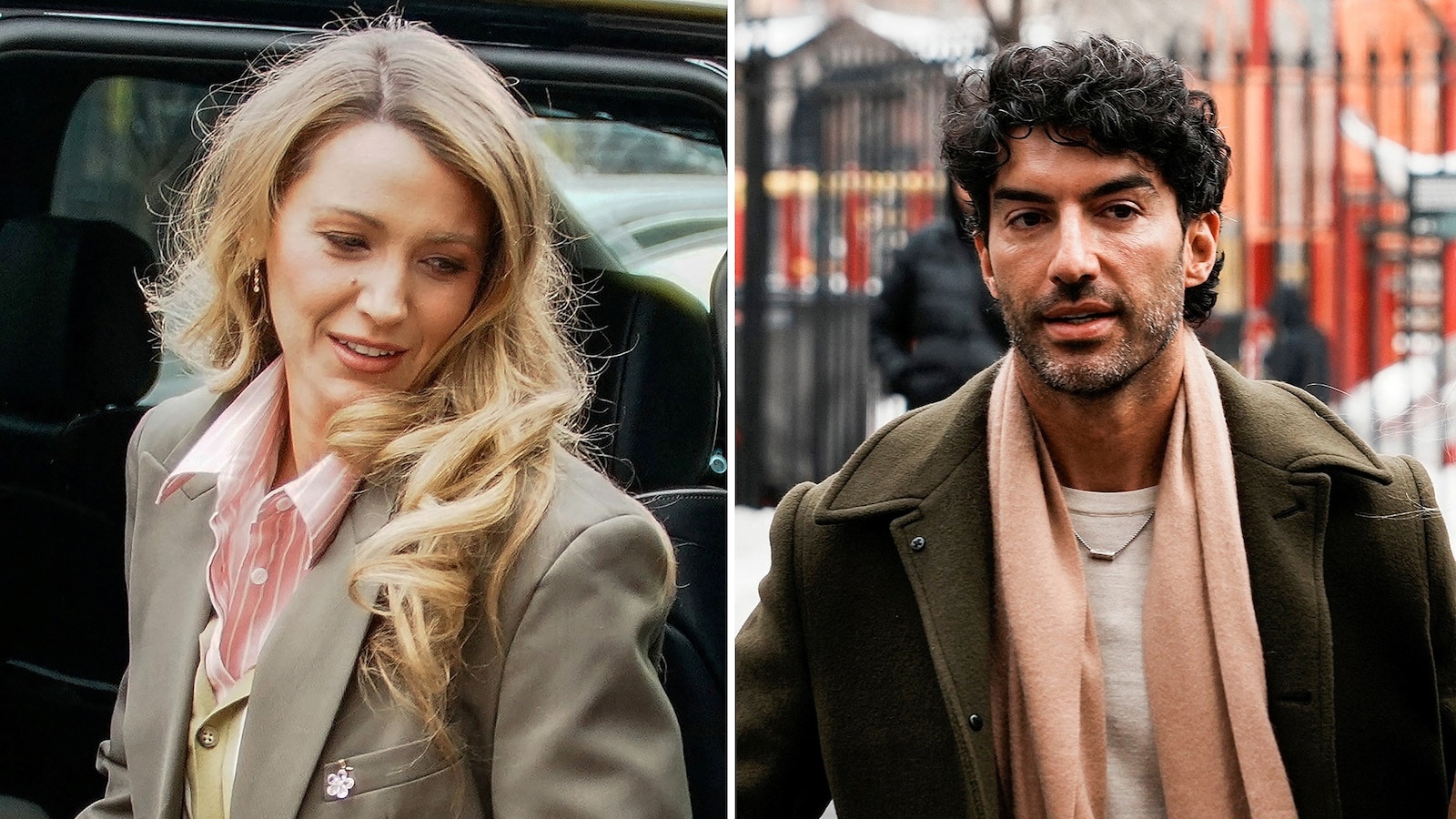
On a tense Wednesday in New York City, Hollywood stars Blake Lively and Justin Baldoni spent six grueling hours within the walls of a federal courthouse, attempting to find common ground in their increasingly bitter legal dispute. The former co-stars of the film “It Ends With Us” arrived with their respective legal teams for a court-ordered settlement conference—essentially a final opportunity to resolve their differences outside of a public trial. Despite the lengthy proceedings, the day ended without any agreement between the parties. The two actors remained in separate courtrooms throughout most of the session while a judge shuttled between rooms, speaking privately with each side in hopes of brokering a resolution. This settlement conference represented the last real chance to avoid what promises to be a highly publicized trial scheduled to begin on May 18, in a legal saga that has already consumed more than a year of headlines, legal filings, and public scrutiny.
As the afternoon waned and the proceedings concluded, both Lively and Baldoni left the courthouse without offering any public statements to the gathered reporters. Lively remained silent as she departed, while Baldoni, accompanied by his wife Emily, similarly declined to comment. However, Baldoni’s attorney, Bryan Freedman, made clear where things stand when pressed by ABC News about future settlement discussions. His response was direct and unambiguous: he expects the case will proceed to trial, adding that he’s actually “looking forward to it.” That statement alone signals that both sides appear prepared for a protracted courtroom battle rather than a quiet resolution behind closed doors.
The Origins of a Hollywood Dispute
The roots of this legal conflict trace back to December 2024, when Blake Lively first filed a formal complaint against Justin Baldoni with the California Civil Rights Department. In that initial complaint, Lively made serious allegations of sexual harassment that she claims occurred on the set of “It Ends With Us,” the romantic drama in which both actors starred. But Lively’s accusations extended beyond workplace harassment. She also alleged that Baldoni, along with his production company Wayfarer Studios, engaged in what she described as a deliberate “social manipulation” campaign specifically designed to “destroy” her reputation. According to Lively’s version of events, this wasn’t simply a case of on-set misconduct—it was a coordinated effort to damage her professionally and personally in retaliation for speaking up about her experiences.
The situation escalated significantly when both parties subsequently filed lawsuits against each other in New York. Lively’s New York lawsuit expanded upon the claims made in her California complaint, introducing new allegations that Baldoni and Wayfarer Studios had engaged in what she termed “unlawful, retaliatory astroturfing” to systematically ruin her reputation. The term “astroturfing” typically refers to orchestrated campaigns designed to appear as grassroots movements or organic public opinion, when in reality they’re carefully manufactured. Lively’s lawsuit seeks a staggering $500 million in damages, reflecting the severity of the allegations and the scale of harm she claims to have suffered. Baldoni’s legal team has firmly denied all of these accusations, setting the stage for what will undoubtedly be a contentious courtroom showdown if the case proceeds to trial as now expected.
Baldoni’s Counteroffensive and Its Dismissal
Justin Baldoni didn’t respond to Lively’s legal action by simply defending himself—he went on the offensive with a countersuit of his own. Shortly after Lively filed her lawsuit, Baldoni launched a $400 million legal counterclaim that broadened the dispute considerably. His lawsuit named not only Blake Lively but also her husband, fellow Hollywood star Ryan Reynolds, and the couple’s publicist. In this countersuit, Baldoni alleged extortion and defamation, claiming that Lively had essentially “robbed” him of creative control over “It Ends With Us” and had systematically worked to destroy his reputation in the entertainment industry. The inclusion of Reynolds in the lawsuit added another layer of Hollywood star power to an already high-profile case and suggested that Baldoni believed the campaign against him extended beyond just his co-star to include her famous spouse.
Lively’s legal team responded forcefully to Baldoni’s countersuit, characterizing it as “another chapter in the abuser playbook.” This language was particularly pointed, suggesting that Baldoni’s legal strategy of filing a massive countersuit against his accuser was itself a form of retaliation designed to intimidate and silence her. Such tactics, Lively’s attorneys implied, are common strategies used by those accused of abuse to turn the tables on their accusers, shift public narrative, and create a chilling effect that might discourage victims from coming forward. The back-and-forth accusations painted a picture of two sides with fundamentally incompatible versions of events, each portraying the other as the aggressor in both the original on-set incidents and the subsequent legal and public relations battles.
However, Baldoni’s countersuit ultimately met an unsuccessful fate in the court system. Last June, a federal judge in New York made the significant decision to dismiss Baldoni’s lawsuit against Lively, Reynolds, and their publicist. This dismissal represented a major legal victory for Lively’s side and a setback for Baldoni’s legal strategy. The court gave Baldoni an opportunity to refile an amended complaint that might address whatever deficiencies led to the dismissal, but he chose not to do so. The counterclaim was formally and finally ended in October when no amended complaint materialized, effectively leaving only Lively’s original lawsuit standing as the case moves toward trial. This legal development has shaped the current landscape of the dispute, with Baldoni now in the position of defendant rather than also being a plaintiff with his own active claims.
The High Stakes of a Public Trial
As the May 18 trial date approaches, both sides face the prospect of their dispute being aired in a very public forum. Celebrity legal battles often attract intense media scrutiny, but this case carries particularly high stakes given the nature of the allegations involved. Sexual harassment claims, accusations of coordinated reputation attacks, and counter-allegations of extortion and creative sabotage all combine to create a narrative that touches on some of Hollywood’s most sensitive ongoing conversations about power, gender dynamics, and accountability in the entertainment industry. For Lively, the trial represents an opportunity to present evidence supporting her claims of harassment and retaliation, potentially validating her decision to come forward and seek legal remedies. For Baldoni, it’s a chance to clear his name of what he maintains are false accusations that have already damaged his career and reputation.
The financial stakes are also enormous. Lively’s lawsuit seeks $500 million in damages—a figure that reflects not just compensation for alleged harms but also punitive damages intended to punish and deter the conduct she’s alleged. While such large damage claims are common in high-profile cases, actually winning such an award would require convincing a jury that the harm done was both severe and directly caused by the defendants’ actions. The trial will likely involve detailed testimony about what happened on the set of “It Ends With Us,” expert witnesses discussing reputation damage and public relations campaigns, and possibly testimony from other cast and crew members who witnessed the working relationship between the two stars. Digital communications, including texts, emails, and social media strategies, will probably feature prominently as both sides attempt to prove their version of events.
What Comes Next as Settlement Talks Collapse
With settlement negotiations apparently exhausted and Baldoni’s attorney expressing confidence about proceeding to trial, the legal teams on both sides will now shift into full trial preparation mode. This means depositions of witnesses, discovery battles over what evidence can be introduced, motions to exclude certain testimony or documents, and the complex choreography of building a compelling courtroom narrative. Both Lively and Baldoni will likely need to testify, subjecting them to cross-examination that could prove uncomfortable regardless of the ultimate verdict. The court of public opinion has already been active throughout this dispute, with fans, commentators, and industry observers taking sides based on the allegations and counter-allegations that have emerged. A trial will only intensify that scrutiny, with daily coverage of testimony and evidence that will be analyzed and debated across media platforms.
The collapse of settlement talks, while disappointing for those hoping for a quick resolution, isn’t entirely surprising given the positions staked out by both sides. Lively has framed her case as part of a broader fight against workplace harassment and retaliation, making it potentially difficult to settle quietly without appearing to back down from those principles. Baldoni, having already seen his countersuit dismissed and facing serious allegations, may calculate that his best path to reputation restoration is through a trial victory rather than a settlement that might be interpreted as an admission of wrongdoing. As May 18 approaches, both sides are preparing for a legal battle that will likely captivate Hollywood and beyond, offering a high-profile test of how courts handle complex allegations of harassment, retaliation, and competing claims of victimization in the modern entertainment industry. Whatever the outcome, this case has already become one of the most closely watched celebrity legal disputes in recent years, and the trial promises to be equally compelling and consequential for everyone involved.