

The Release of Jeffrey Epstein’s Apparent Suicide Note: What We Know
A Hidden Document Comes to Light
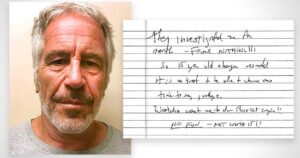
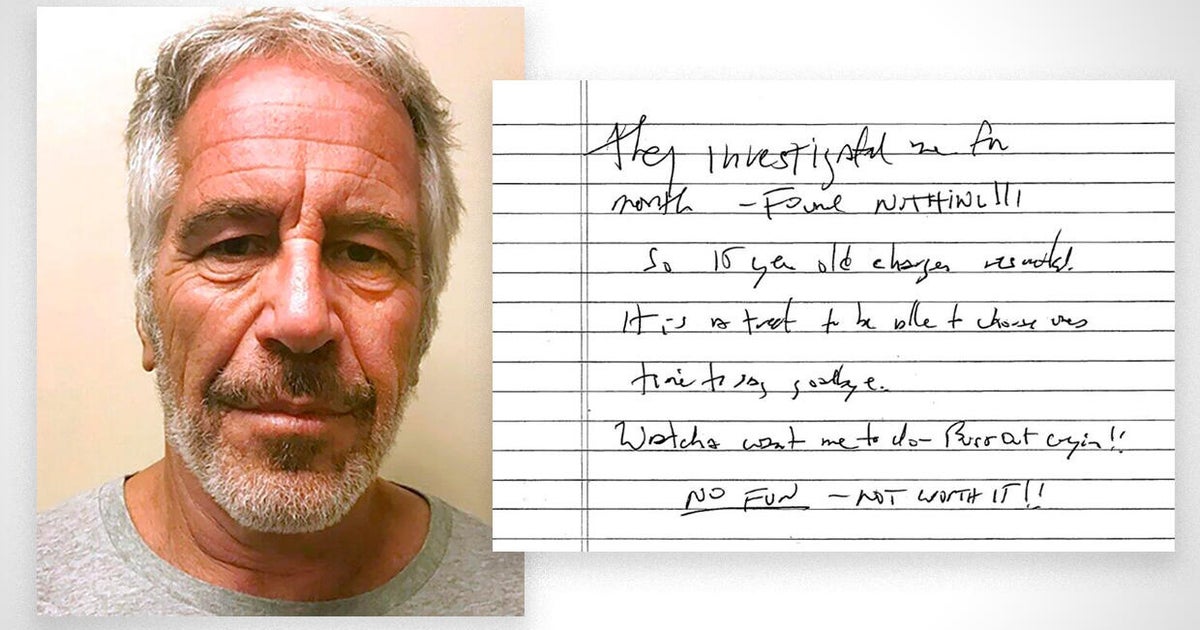
After years of secrecy surrounding the mysterious death of convicted sex offender Jeffrey Epstein, a potentially significant piece of evidence has finally been made public. On Wednesday, a U.S. district judge ordered the release of what appears to be a suicide note written by Epstein in 2019, just weeks before his death in a Manhattan jail cell. The document, which had been tucked away in court files for nearly four years, was released following a formal request by The New York Times, marking another chapter in one of the most controversial and widely scrutinized deaths in recent American history. The note itself is brief but haunting, scrawled in handwriting that appears hurried and distressed, containing fragments of thoughts that seem to reflect both defiance and despair.
The document was originally submitted to the court in May 2021, not as part of the investigation into Epstein’s death, but rather as evidence in the criminal case against Nicholas Tartaglione, a former police officer who shared a cell with Epstein during his final weeks at the Metropolitan Correctional Center in New York. Tartaglione, who himself faces serious criminal charges including murder, has long maintained that Epstein penned this note following a suicide attempt in late July 2019—an incident that occurred less than a month before Epstein’s body was discovered on August 10, 2019. What makes this revelation particularly intriguing is that the note was never mentioned in any official Bureau of Prisons records, raising questions about what else might have been overlooked or deliberately omitted from the official narrative surrounding Epstein’s final days.
The Contents of the Note and Questions of Authenticity
The handwritten note, though brief, contains several telling phrases that seem to paint a picture of Epstein’s state of mind in his final weeks. The most prominent line reads: “They investigated me for month — found nothing!!! So 15 year old charges resulted.” This appears to reference the federal sex trafficking charges that had been brought against him in July 2019, which were indeed based on alleged crimes dating back approximately fifteen years. The note also includes the chilling phrases “time to say goodbye” and “No fun — not worth it!!” These fragments suggest someone contemplating ending their life, though the authenticity and exact timing of when the note was written remain matters of debate and investigation.
It’s important to note that CBS News has stated they have not independently verified the authenticity of this note, and they have reached out to both the FBI and the Justice Department for comment on this newly released document. The lack of official verification raises legitimate questions: Was this note actually written by Epstein? If so, when exactly was it written? Why wasn’t it included in any official Bureau of Prisons documentation? And perhaps most importantly, if this note existed and indicated suicidal ideation, what steps were taken—or should have been taken—to prevent what ultimately happened? These questions add yet another layer of complexity to a case that has been plagued by unanswered questions, conspiracy theories, and allegations of institutional failure from the very beginning.
The Cellmate’s Story and Conflicting Accounts
Nicholas Tartaglione’s role in this story is both significant and controversial. According to his own account, given during a podcast interview, Tartaglione claims he discovered the note tucked inside a book the morning after Epstein’s death. He says he immediately turned it over to his lawyers, who subsequently included it as part of his legal appeal. Tartaglione has consistently maintained that Epstein wrote this note following what he describes as a suicide attempt on July 23, 2019—an incident that occurred just 18 days before Epstein’s death. However, the official narrative surrounding that July 23 incident is far from clear-cut and has been the subject of considerable debate.
CBS News previously reported that on that date, Epstein claimed he had been attacked by Tartaglione in their shared cell. This version of events would paint Tartaglione as an aggressor and raise serious questions about the safety protocols in place at the facility. However, former Attorney General Bill Barr offered a dramatically different interpretation when he testified before the House Oversight Committee. According to Barr, investigators viewed the July 23 incident not as an attack but as “an attempted suicide.” This fundamental disagreement about what actually happened on that day highlights the confusion and lack of transparency that has characterized nearly every aspect of the Epstein case. Was it a fight between cellmates that Epstein falsely reported, or was it a genuine suicide attempt that was later reframed? The truth of what happened on July 23 may be crucial to understanding Epstein’s state of mind and the adequacy of the monitoring he received in his final weeks.
The Timeline of Epstein’s Legal Troubles and Death
To understand the context of this apparent suicide note, it’s essential to review the timeline of Jeffrey Epstein’s legal troubles. Epstein’s problems with law enforcement weren’t new in 2019; they dated back more than a decade. In 2008, Epstein entered into what many considered a sweetheart plea deal in Florida, pleading guilty to state charges of soliciting prostitution. This deal allowed him to avoid federal prosecution on what could have been much more serious charges involving the sexual abuse of minors. Under the terms of that agreement, Epstein served just 13 months in county jail—not even a state or federal prison—and was required to register as a sex offender. The leniency of this deal, which was arranged by federal prosecutor Alexander Acosta (who would later serve as Secretary of Labor under President Trump), became a source of public outrage when details emerged years later.
However, Epstein’s legal troubles came roaring back in July 2019 when a New York federal grand jury indicted him on child sex trafficking charges. These new charges were based on allegations that between 2002 and 2005, Epstein had sexually abused dozens of underage girls at his homes in Manhattan and Palm Beach, Florida, and had paid some victims to recruit other girls for him to abuse. Unlike in 2008, there would be no easy escape this time. Epstein was denied bail and held at the Metropolitan Correctional Center in Manhattan, a federal detention facility with a reputation for housing high-profile inmates. Just over a month after his arrest, on August 10, 2019, Epstein was found unresponsive in his cell. Despite efforts to revive him, he was pronounced dead, and the New York City medical examiner ruled his death a suicide by hanging. The circumstances of his death—occurring in a high-security facility while he was supposedly on suicide watch, with surveillance cameras reportedly malfunctioning and guards allegedly sleeping or falsifying records—sparked immediate skepticism and countless conspiracy theories that persist to this day.
The Powerful Connections That Won’t Go Away
One reason the Epstein case continues to generate intense public interest is the extensive network of powerful and famous individuals who associated with him over the years. Epstein cultivated relationships with politicians, business leaders, academics, and celebrities, many of whom have faced questions about the nature and extent of their connections to him. The recent release by the Justice Department of millions of documents related to the Epstein investigation has only intensified scrutiny of these relationships. These documents have revealed or confirmed links between Epstein and numerous prominent figures, though it’s important to note that having a connection to Epstein doesn’t necessarily imply knowledge of or participation in his crimes.
Nevertheless, the breadth and depth of Epstein’s network raises uncomfortable questions about what people knew, when they knew it, and why someone with a prior conviction for sex offenses continued to be welcomed in elite circles. Some of Epstein’s associates have offered explanations for their connections—ranging from business relationships to philanthropic endeavors to simply being acquaintances in overlapping social circles. Others have remained silent or issued denials. The investigation into Epstein’s activities and potential co-conspirators continues, with his former girlfriend and accomplice, Ghislaine Maxwell, having been convicted in 2021 of sex trafficking charges and currently serving a 20-year prison sentence. The question of who else might have been involved in or enabled Epstein’s crimes remains a subject of ongoing investigation and public speculation.
Unanswered Questions and the Search for Truth
The release of this apparent suicide note, more than four years after Epstein’s death, serves as a reminder of how many questions remain unanswered in this case. Why was this note not part of the official Bureau of Prisons records? If Epstein was indeed suicidal—as this note, if authentic, would suggest—why were adequate precautions apparently not taken to prevent his death? How could someone so high-profile, with so much potentially damaging information about powerful people, die in federal custody under such suspicious circumstances? The official ruling of suicide has been challenged by Epstein’s family and viewed with skepticism by large segments of the public, though no credible evidence of foul play has been publicly presented.
Beyond the circumstances of his death, larger questions about institutional failure and accountability remain. How did Epstein receive such a lenient plea deal in 2008? Why did it take so long for federal authorities to bring new charges against him? Were there victims who weren’t believed or whose complaints weren’t adequately investigated? And crucially, who else was involved in the systematic abuse of young girls that Epstein orchestrated? As investigators continue to examine the millions of documents related to the case, and as this newly released note adds another piece to the puzzle, the public continues to demand answers. Whether those answers will ever fully emerge remains to be seen, but the release of this note ensures that questions about Jeffrey Epstein’s life, crimes, and death will continue to be asked for years to come. The truth, whatever it may be, matters not just for historical accuracy, but for the victims who deserve justice and for a system that needs to account for its failures.