
The Devil Wears Prada 2: When the Assistant Becomes the Boss
A Full-Circle Moment for Andy Sachs
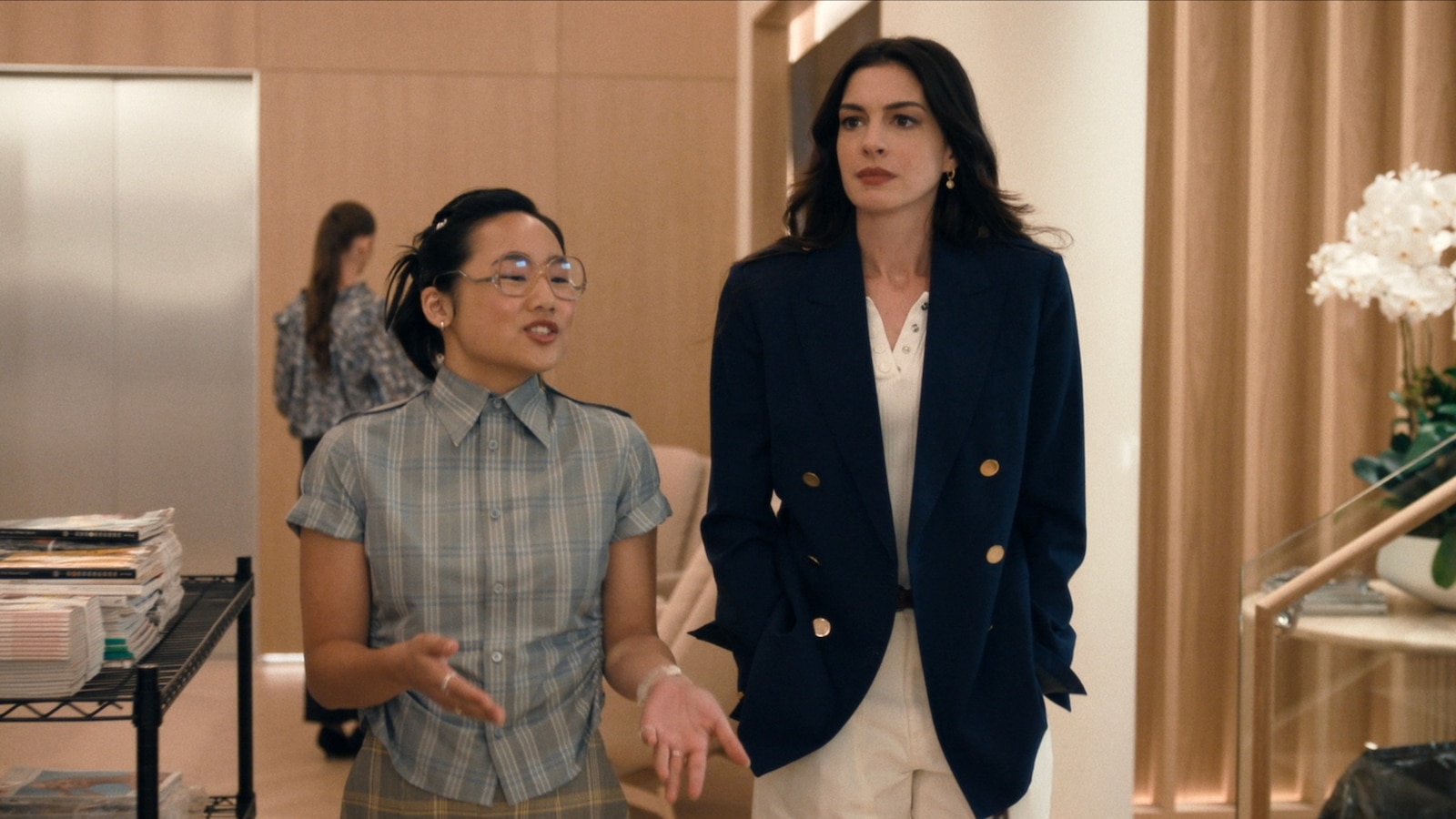
The tables have turned in the most delightfully ironic way imaginable. Anne Hathaway’s beloved character, Andy Sachs, who once trembled in her sensible shoes as Miranda Priestly’s overwhelmed assistant, now finds herself on the other side of the desk. In an exclusive sneak peek that premiered on “Good Morning America” this Wednesday, fans got their first glimpse of what promises to be a compelling role reversal in “The Devil Wears Prada 2.” The clip shows Andy stepping off an elevator alongside the ever-stylish Nigel, played once again by Stanley Tucci, only to meet her own assistant for the very first time. It’s a moment that perfectly captures how far Andy has come since we first met her nearly two decades ago, and it’s bound to resonate with anyone who has climbed the professional ladder and suddenly found themselves responsible for mentoring the next generation. The clip sets the tone for what appears to be a thoughtful exploration of career evolution, mentorship, and the cyclical nature of workplace hierarchies in the cutthroat world of fashion publishing.
Meet Jin Chao: The New Generation of Ambitious Assistants
Helen Shen brings to life Jin Chao, a character who appears to be a fascinating blend of naïveté, ambition, and brutal honesty that will surely remind viewers of Andy’s own journey. However, Chao’s introduction couldn’t be more different from Andy’s nervous first encounter with Miranda. Where Andy was timid and uncertain, Chao is refreshingly direct and almost comically transparent about how she landed her position. She wastes absolutely no time in explaining to her new boss that she was an intern just that morning, and that when a desk position opened up in Andy’s department, she essentially got it by default. The reason? Nobody actually wanted to work in Andy’s department because, as Chao bluntly puts it, “it’s not actually fashion.” This moment of uncomfortable honesty is both hilarious and revealing, suggesting that Andy’s department might deal with the business or digital side of Runway magazine rather than the glamorous editorial content that attracts most aspiring fashion professionals. It’s a brilliant way to show how Andy has carved out her own niche in the industry, one that might be more substantive than superficial, even if it’s not considered the most prestigious path by ambitious interns.
The Awkward Dance of First Impressions
The exchange between Andy and Chao perfectly captures the sometimes uncomfortable reality of workplace relationships, especially when hierarchies are being established for the first time. When Andy responds with a simple “Very” to Chao’s enthusiastic description of how she got the job, there’s an awkward pause that any professional will recognize. Chao immediately picks up on the lukewarm response and directly asks, “You don’t want me?” This kind of direct confrontation would have been unthinkable in Miranda Priestly’s world, where assistants were expected to anticipate needs without speaking and certainly never questioned their boss’s feelings. Andy quickly tries to backpedal, insisting she didn’t say that, but Chao doesn’t let it go. Instead, she continues with a nervous listing of her credentials: a Yale education, an impressive 3.86 GPA, and a perfect ACT score of 36. It’s a moment that reveals Chao’s insecurity beneath her bold exterior, and it also shows how much the workplace has changed. Today’s young professionals are more likely to advocate for themselves and directly address uncomfortable situations rather than suffering in silence. Andy, to her credit, reassures Chao that she seems great and that she’s happy to have her, though the exchange ends with a somewhat stilted “Great. Okay, great” that suggests both women are still finding their footing in this new professional relationship.
The Return of Fashion’s Finest
While the Chao-Andy dynamic promises to be a fresh and entertaining element of the sequel, fans are equally excited about the return of the original cast members who made the first film such an enduring cultural phenomenon. Meryl Streep returns as the formidable Miranda Priestly, a character who has become synonymous with powerful, demanding bosses everywhere. Emily Blunt also reprises her role, presumably as Emily Charlton, whose own journey from anxious assistant to fashion insider was one of the most compelling subplots of the original film. Stanley Tucci returns as Nigel, the creative director who served as Andy’s mentor and one of the few genuinely kind presences in the high-pressure Runway environment. The chemistry among these actors was one of the key ingredients in the first film’s success, and their return suggests that the sequel will maintain the sharp dialogue, complex relationships, and emotional depth that made audiences fall in love with these characters in the first place. The fact that the original director, David Frankel, and screenwriter, Aline Brosh McKenna, are also back gives fans even more reason to believe that this sequel will honor the spirit of the original while exploring new territory.
A Magazine in Crisis and Andy’s New Chapter
The trailer released earlier this month provides some additional context for Andy’s return to the world she once fled. Apparently, Runway magazine is facing a significant scandal, and Andy has rejoined the publication to help navigate this crisis. This plot point raises intriguing questions about what Andy has been doing in the years since she walked away from Miranda and the fashion world. Has she been working in journalism elsewhere? Did she build expertise in crisis management or digital transformation? The fact that she has her own department that’s “not actually fashion” suggests she might be handling the magazine’s digital presence, business operations, or perhaps investigative journalism that deals with substantive issues rather than just trends and designer profiles. Whatever her role, it’s clear that Andy has established herself as someone with valuable skills and experience, someone important enough to have her own assistant and to be brought back specifically to address a major organizational challenge. This narrative choice allows the film to explore how the media landscape has changed since 2006, when the first film was released, and how traditional fashion magazines have had to adapt to the digital age, changing advertising models, and shifting cultural values.
What This Sequel Means for Fashion and Film
“The Devil Wears Prada” has enjoyed remarkable staying power since its 2006 release, remaining relevant through countless memes, Halloween costumes, and cultural references. Meryl Streep’s icy “That’s all” has become shorthand for dismissive authority, while the film’s exploration of workplace abuse, ambition, personal compromise, and female competition continues to spark discussions. A sequel arriving nearly two decades later is a significant risk, as follow-ups to beloved films often disappoint fans who have spent years building up their expectations. However, the choice to focus on Andy’s evolution from assistant to boss is smart, as it allows the film to explore new themes while maintaining continuity with the original. Questions about mentorship, generational differences in workplace culture, the changing media landscape, and how success changes us are all rich territory for exploration. The film also has an opportunity to address how conversations about workplace toxicity have evolved in the years since the #MeToo movement and increased awareness about mental health, work-life balance, and ethical leadership. Will Andy replicate Miranda’s harsh management style, or will she forge a different path? How will she balance ambition with humanity? These questions are at the heart of what makes this sequel potentially meaningful rather than merely nostalgic. “The Devil Wears Prada 2” opens in theaters on May 1, giving audiences a chance to return to the world of Runway magazine and discover what happens when the assistant becomes the boss. Given the talent involved both in front of and behind the camera, there’s good reason to hope this sequel will be more than just a cash grab, but rather a thoughtful continuation of Andy’s story and a reflection on how both the fashion industry and workplace culture have transformed in the nearly twenty years since we first met her.