


Understanding the Market Reaction to Kevin Warsh’s Potential Fed Appointment
Initial Market Turbulence and Investor Concerns
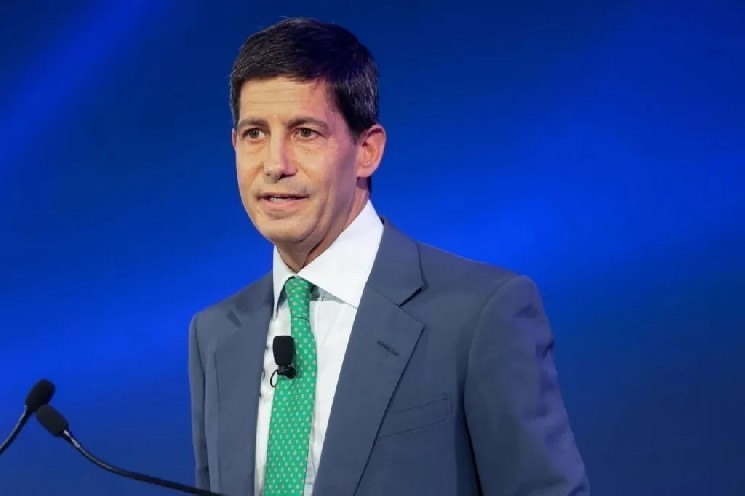
When news broke that President Donald Trump had selected Kevin Warsh as his choice to replace Jerome Powell as Federal Reserve Chairman, financial markets didn’t exactly celebrate. Instead, traders and investors hit the panic button, sending waves of volatility across various asset classes. The initial reaction was driven by a perception that many market participants had already formed about Warsh – that he was the most aggressive inflation fighter among the four candidates being considered for the top job at America’s central bank. This “hawkish” reputation suggested to investors that Warsh might favor keeping interest rates higher for longer, which is typically bad news for investments that thrive in low-rate environments. Risky assets, from stocks to cryptocurrencies, felt the immediate sting of this interpretation. Bitcoin, the flagship cryptocurrency that often serves as a barometer for risk appetite in digital asset markets, tumbled to around $81,000 as investors rushed to reduce their exposure to volatile investments. The selling pressure reflected a broader concern that a Warsh-led Federal Reserve might prioritize fighting inflation over supporting economic growth, potentially making borrowing more expensive and tightening financial conditions across the economy.
Stan Druckenmiller Challenges the Narrative
Enter Stan Druckenmiller, one of the most respected voices in the investment world and a billionaire hedge fund manager whose track record speaks for itself. Druckenmiller, who made his fortune working alongside legendary investor George Soros at the Quantum Fund before establishing his own highly successful Duquesne Capital Management, has a perspective on Kevin Warsh that few others can claim. His relationship with Warsh isn’t just professional acquaintance – Warsh has been a partner at Druckenmiller’s family office, Duquesne, since 2011, giving Druckenmiller over a decade of close observation of how Warsh thinks about economics, markets, and policy. When Druckenmiller spoke up, markets listened. He directly challenged the prevailing narrative that had driven the initial sell-off, arguing that labeling Warsh as “always a hawk” simply wasn’t accurate. According to Druckenmiller, who has watched Warsh operate in various market conditions and economic cycles, Warsh doesn’t fit into a simple ideological box. “I’ve seen him move in both directions,” Druckenmiller explained, suggesting that Warsh’s approach to monetary policy is far more nuanced and flexible than the markets initially assumed. This characterization painted a picture of someone who doesn’t rigidly adhere to one school of economic thought but rather adapts their policy stance based on incoming data and evolving economic conditions – exactly the kind of pragmatic leadership that can navigate the complex economic landscape America faces today.
A Ringing Endorsement from a Market Legend
Druckenmiller didn’t stop at merely correcting the misperception about Warsh’s policy flexibility. He went considerably further, offering what amounts to one of the strongest endorsements anyone could receive for such a critical position in the global financial system. “I can’t think of a single person on the planet better equipped for this job,” Druckenmiller declared, a statement that carries enormous weight given his own legendary status in the investment community. This isn’t the kind of casual praise someone throws around lightly, especially when it comes to the position of Federal Reserve Chairman – arguably one of the most powerful economic policy roles in the world. The Fed Chair’s decisions influence everything from mortgage rates that American families pay to the value of the dollar on global markets, from employment levels across the country to inflation rates that affect everyone’s purchasing power. For Druckenmiller to make such an unequivocal statement suggests he genuinely believes Warsh possesses a rare combination of qualities: deep understanding of how markets actually function, theoretical knowledge of monetary economics, practical experience in policy-making, and the temperament to make difficult decisions under pressure. This endorsement likely gave many investors pause, causing them to reconsider their initial reaction and potentially helping to stabilize markets after the initial volatility. After all, if someone with Druckenmiller’s decades of experience navigating financial markets believes Warsh is the best person for the job, that perspective deserves serious consideration.
The Druckenmiller Connection: A Network of Influence
What makes Druckenmiller’s perspective particularly interesting is the web of relationships he has cultivated over his long career, and how these connections intersect with the current economic policy landscape. Beyond his relationship with Warsh, Druckenmiller also has deep ties to Scott Bessent, who currently serves as Treasury Secretary in the Trump administration. The connection goes back more than three decades to when Druckenmiller hired Bessent at the Quantum Fund, the vehicle through which Druckenmiller and George Soros executed some of the most famous trades in financial history. A profile published by the Financial Times approximately a year ago noted that both Bessent and Warsh reflect Druckenmiller’s own philosophy regarding markets and economic policy – a philosophy forged through real-world experience navigating booms, busts, and everything in between. This shared intellectual framework and approach to understanding economic dynamics isn’t just a coincidence; it represents a particular school of thought that emphasizes practical market knowledge, flexibility in response to changing conditions, and a deep respect for how policy decisions ripple through the real economy. The fact that these two key positions – Treasury Secretary and potentially Fed Chairman – might be held by individuals who share this common background and approach could signal a more coordinated and coherent economic policy framework than is sometimes the case when these powerful positions are occupied by people with different philosophies or who struggle to work together effectively.
The Promise of Policy Coordination
Druckenmiller himself highlighted what he sees as one of the most exciting aspects of this potential leadership configuration. “I am very excited about the partnership between Warsh and Bessent,” he stated, adding that “it’s ideal to have harmony between the Treasury Secretary and the Fed Chairman.” This observation touches on something that economists and market watchers have long understood but the general public might not fully appreciate: the relationship between the Treasury Department and the Federal Reserve matters enormously for policy effectiveness. When these two institutions work in harmony, with leaders who communicate well and share compatible views on economic priorities, policy can be more effective and markets can operate with greater confidence about the direction of economic management. Conversely, when Treasury and the Fed are at odds – pursuing conflicting objectives or working with incompatible assumptions about the economy – it can create confusion, reduce policy effectiveness, and increase market volatility. The prospect of Warsh and Bessent working together, with their shared background and mutual connection to Druckenmiller’s approach to markets and policy, suggests the potential for an unusually well-coordinated economic policy team. This coordination could prove valuable as the country navigates various economic challenges, from managing inflation without triggering recession, to addressing long-term fiscal sustainability, to maintaining America’s competitive position in an increasingly complex global economy.
Market Uncertainty Continues Despite Reassurances
Despite Druckenmiller’s reassurances and endorsement, financial markets haven’t completely settled down regarding the implications of a Warsh chairmanship at the Federal Reserve. Investors and traders continue to process what this leadership change might mean for interest rate policy in the coming months and years. The concern that persists in some quarters is that regardless of Warsh’s flexibility and data-driven approach, his appointment could still signal a monetary policy stance that leans toward tighter financial conditions – meaning higher interest rates for longer than markets had previously expected. This ongoing uncertainty reflects the reality that changing leadership at the Fed is always a significant event that markets must digest and interpret. Different leaders bring different perspectives, different priorities, and different communication styles, all of which can influence how monetary policy is conducted and how markets respond. As traders and investors continue to adjust their positions and recalibrate their expectations, we’re likely to see continued volatility until Warsh actually assumes the role (if confirmed) and begins to demonstrate through actions and communications exactly how he plans to approach the job. The coming weeks and months will be critical for markets to develop a clearer picture of what a Warsh-led Federal Reserve might actually look like in practice, beyond the initial assumptions and reactions that drove the first wave of market movement following the announcement of his selection.