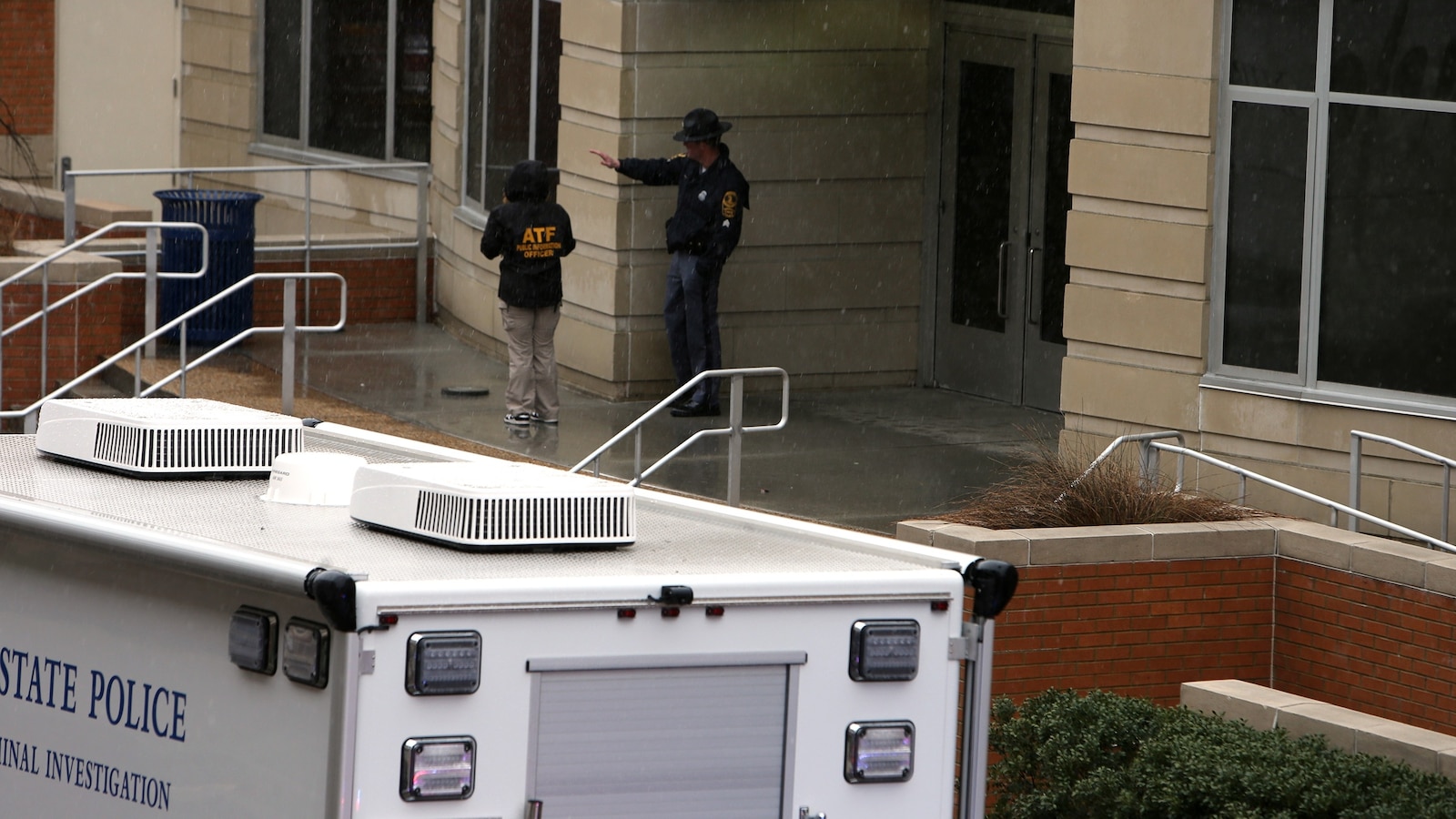

Tragic Shooting at Old Dominion University: What We Know About the Attack and Illegal Gun Sale
Virginia Man Arrested for Illegal Firearm Sale Connected to Campus Terror Attack
In a developing story that has shaken the Old Dominion University community, federal authorities have taken into custody Kenya Chapman, a Virginia resident accused of illegally selling a firearm to Mohamed Jalloh, the former National Guardsman who carried out a deadly attack on campus this past Thursday. According to newly unsealed court documents, Chapman faces serious charges including making false statements and unlawful firearms dealing offenses. The weapon in question—a Glock 44 .22 caliber handgun—was sold to Jalloh despite his legal prohibition from purchasing or possessing firearms due to a prior federal conviction. Chapman made his first appearance in federal court on Friday afternoon, where a judge ordered him to remain in custody until his next scheduled hearing on March 17. As of now, Chapman has not entered a plea to the charges against him, and his court-appointed public defender has declined to make any public statements about the case.
The illegal sale of this firearm enabled a tragedy that unfolded Thursday morning when Jalloh opened fire on an ROTC class at Old Dominion University in Norfolk, Virginia. What makes this case particularly troubling is Jalloh’s criminal background: he was convicted in 2016 of attempting to provide material support to ISIS, a federal felony that resulted in an 11-year prison sentence and permanently stripped him of his right to own firearms. The fact that he was able to obtain a weapon despite these legal restrictions has raised serious questions about enforcement gaps and the underground market for illegal firearms. Federal investigators are now working to understand exactly how Chapman came to sell Jalloh this weapon and whether he knew about Jalloh’s prohibited status when the transaction occurred.
The Attack: Terror Strikes an ROTC Classroom
The violence erupted Thursday morning in Constant Hall on ODU’s Norfolk campus, where ROTC students had gathered for their regular class session. According to FBI Special Agent Dominique Evans from the Norfolk field office, moments before Jalloh began shooting, multiple students reported hearing him shout “Allah Akbar.” What happened next was a scene of chaos and heroism combined—as gunfire rang out, students didn’t simply run or hide; they fought back. In the struggle that followed, students managed to subdue Jalloh, ultimately killing him before he could harm more people. Sources speaking to ABC News revealed that one of the students fatally stabbed Jalloh during the confrontation. When the terrible ordeal ended, an instructor lay dead and two students had been wounded. The FBI has officially classified their investigation into this shooting as an act of terrorism, given Jalloh’s statements during the attack and his documented history with extremist ideology.
Students across campus described the terrifying experience as the reality of an active shooter situation unfolded around them. Chris Lathon, a senior who was in Constant Hall but not in the classroom where the shooting occurred, recalled the panic: “Some people were hiding in rooms, people were going on top of the parking garage, hiding under the cars.” The fear was palpable throughout the campus as students tried to find safety wherever they could. Bryce Patterson, a junior at ODU, expressed the shock that so many students felt in the aftermath: “I’ve never expected something like this to happen in a campus where I was going. Yeah, just a little bit shocked. It’s just like, I don’t know, I have no words.” For these students and countless others at ODU, Thursday marked a day when the unthinkable became reality, shattering their sense of security in a place they considered their academic home.
The Shooter’s Troubled Past and Recent Prison Release
The newly unsealed criminal complaint has provided a clearer picture of Mohamed Jalloh’s background and the events leading up to Thursday’s attack. Jalloh, who had served in the Army National Guard, was sentenced to 11 years in federal prison back in 2017 following his guilty plea to charges of attempting to provide material support to ISIS. However, he didn’t serve his full sentence. According to Bureau of Prisons records and a spokesperson’s statement, Jalloh was released in December 2024—considerably earlier than his original sentence would have dictated—because he completed a substance abuse treatment program. This early release meant that Jalloh had been back in society for just over a year before he carried out Thursday’s attack. At the time of the shooting, Jalloh was enrolled in online classes at Old Dominion University and was supposedly living with his sister at a residence in Sterling, Virginia, according to information he had provided to his court-assigned probation officer.
The complaint reveals that Jalloh’s probation officer had last visited with him on November 17 of the previous year, roughly four months before the attack. Investigators have since obtained CCTV footage showing Jalloh arriving on the ODU campus Thursday morning at approximately 9:40 a.m., parking his car before proceeding to Constant Hall where he would soon open fire. The details of his original 2016 case paint a disturbing picture of someone who was actively engaged with terrorist ideology. When he pleaded guilty eight years ago, Jalloh admitted to federal authorities that he had been in communication with an actual ISIS member located overseas. This ISIS operative introduced Jalloh to someone in the United States who Jalloh believed was a fellow extremist but who was actually an FBI confidential informant working undercover.
A Plot That Never Materialized—Until Now
According to court records from his guilty plea, the overseas ISIS member who had recruited Jalloh believed he was actively plotting an attack and thought Jalloh would help the FBI informant carry it out. During one of Jalloh’s meetings with this undercover FBI informant, the conversation turned to timing for a potential operation. Jalloh’s response was chilling in its specificity: he commented that it would be better to plan an attack during the month of Ramadan, the holiest month in the Islamic calendar. This statement demonstrated not just his willingness to participate in terrorism but his tactical thinking about when such an attack might have greater symbolic impact. At his sentencing hearing in 2017, federal prosecutors had recommended that Jalloh receive a 20-year prison sentence, reflecting their assessment of the serious threat he posed. However, the judge ultimately sentenced him to 11 years, a decision that—combined with his early release for completing a substance abuse program—meant Jalloh returned to society much sooner than prosecutors had hoped.
The question that now haunts investigators, university officials, and the victims’ families is whether more could have been done to prevent Thursday’s tragedy. Was Jalloh’s supervision adequate after his release? Should someone with his background have been allowed to enroll at a university, even for online classes? How was he able to acquire a firearm despite the legal prohibitions against him doing so? These questions point to potential gaps in the systems designed to monitor former extremists and prevent them from accessing weapons. The fact that Jalloh was able to connect with Chapman to purchase a firearm illegally suggests that determined individuals can still find ways around the legal restrictions meant to protect public safety.
Looking Forward: Campus Safety and Preventing Illegal Gun Sales
This tragedy at Old Dominion University highlights several intersecting issues that demand attention from policymakers, law enforcement, and educational institutions. First, there’s the matter of monitoring individuals convicted of terrorism-related offenses after their release from prison. While Jalloh was assigned a probation officer and apparently had regular check-ins, something in that system failed to detect warning signs or prevent him from planning and executing his attack. Second, the illegal gun market continues to operate despite laws designed to prevent prohibited individuals from obtaining firearms. Kenya Chapman’s alleged sale of a weapon to Jalloh demonstrates how easily these restrictions can be circumvented when someone is willing to break the law by acting as an unlawful dealer.
The heroic actions of the ODU students who subdued and stopped Jalloh undoubtedly saved lives, but they shouldn’t have been put in that position in the first place. As the FBI continues its terrorism investigation and federal prosecutors build their case against Chapman, the ODU community is left to mourn their losses and begin the difficult process of healing. For students like Chris Lathon and Bryce Patterson, the campus will never feel quite the same. This incident serves as a sobering reminder that the threat of terrorism—whether inspired by foreign organizations or homegrown extremism—remains real, and that the systems we rely on to identify and stop potential attackers before they strike are imperfect. Moving forward, this case will likely prompt reviews of early release programs for terrorism offenders, supervision protocols for those on probation, and enforcement strategies targeting illegal firearms dealers who supply weapons to prohibited persons. For now, though, a community grieves while seeking answers to an impossible question: how could this have happened?