
Palestinian Activist’s Year-Long Detention: A Third Bond Granted, but Freedom Remains Uncertain
The Ongoing Detention of Leqaa Kordia
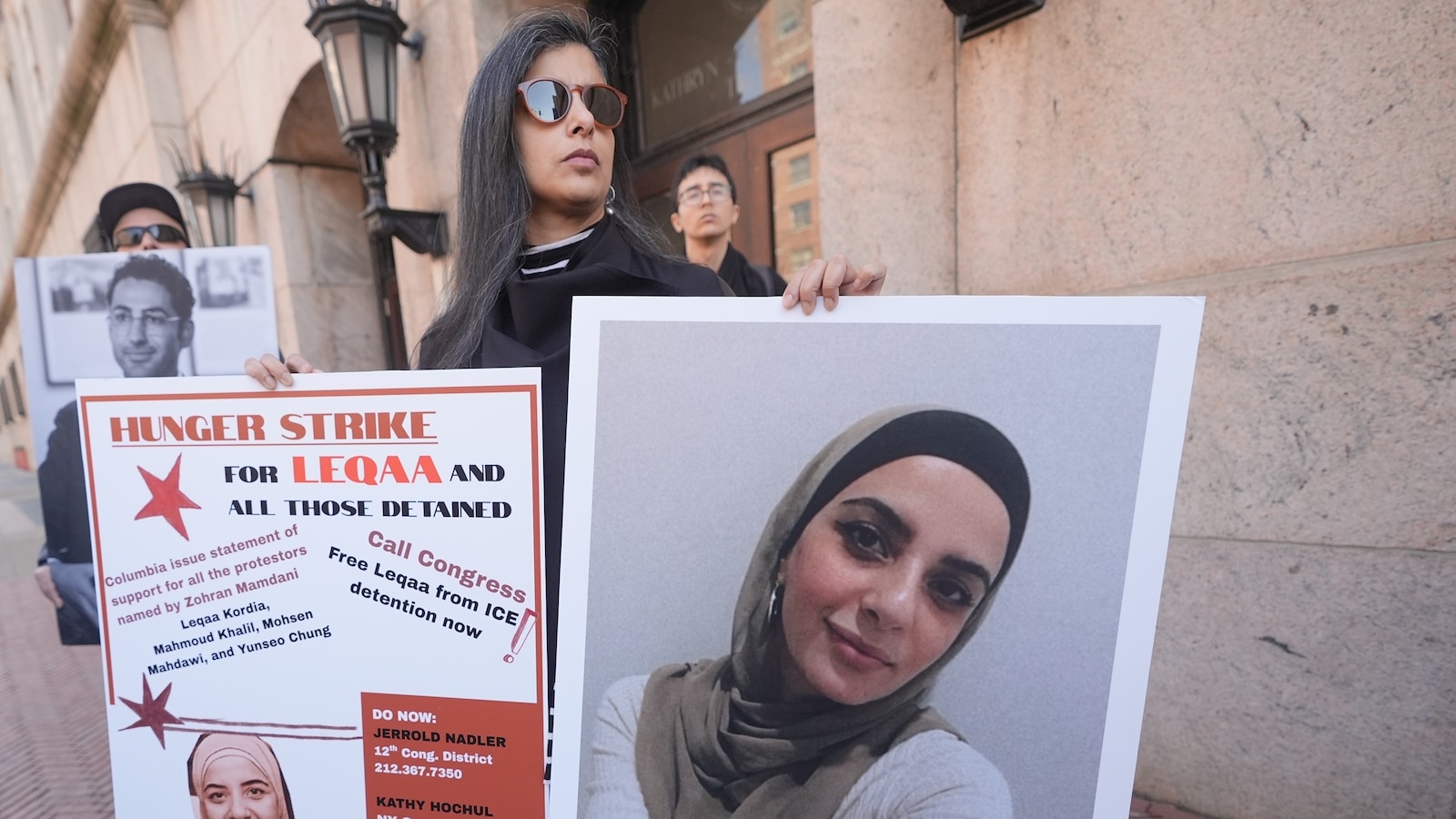
On the somber anniversary marking one full year since her arrest, 33-year-old Palestinian woman Leqaa Kordia received a glimmer of hope when an immigration judge ordered her release from ICE detention for the third time. However, despite this legal victory, it remains unclear whether she will actually walk free. Kordia’s ordeal began on March 13, 2025, when she was arrested during what was supposed to be a routine meeting with immigration officers. The Department of Homeland Security alleged that she had overstayed her visa, which they claimed had expired on January 26, 2022. Her arrest didn’t happen in isolation—it was part of a broader sweep targeting individuals who had participated in pro-Palestinian demonstrations, including other activists like Mahmoud Khalil and Mohsen Mahdawi. This coordinated effort raised serious questions about whether immigration enforcement was being weaponized against political activists exercising their First Amendment rights. The timing and selective nature of these arrests have sparked outrage among civil liberties advocates, who see a disturbing pattern of the government using immigration status as a tool to silence dissenting voices on matters of foreign policy and human rights.
A History of Activism and Dismissed Charges
Kordia’s involvement in pro-Palestinian activism predates her immigration detention by nearly a year. On April 30, 2024, she was arrested during a demonstration outside Columbia University, where students and community members had gathered to protest the ongoing conflict in Gaza. However, all charges stemming from that arrest were promptly dismissed, indicating that prosecutors found no viable case against her. This dismissal is significant because it demonstrates that her participation in the protest was within her legal rights and didn’t constitute any criminal behavior. Despite this, the Department of Homeland Security has made additional allegations against Kordia that go beyond visa violations. DHS officials have claimed that she provided financial support to people living in countries they consider hostile to the United States. Kordia’s legal team has strongly contested these allegations, explaining that the payments in question were simply money sent to help relatives who had been displaced by the devastating war in Gaza—a humanitarian gesture that countless diaspora communities make to help family members survive in conflict zones. The government’s characterization of these family support payments as potentially sinister financial transfers highlights how normal acts of familial care can be reframed in threatening terms when applied to individuals from certain backgrounds.
Strong Community Support and Judicial Skepticism
The bond hearing held on Friday, March 13, 2026—exactly one year after Kordia’s initial arrest—drew significant community support. Students, professors, and advocates from Columbia University and beyond gathered both at the university and virtually to show solidarity with Kordia and other community members they believe have been unlawfully detained. The courtroom itself was filled with supporters, a show of solidarity that deeply moved Kordia. In a statement released by her attorneys following the hearing, she expressed profound gratitude: “I’m deeply grateful for all the people who attended today’s bond hearing on the one-year mark of my detention. To see so many people during the hearing today made me feel loved and supported, and it made me confident that freedom is near.” Her words reflected not only personal appreciation but also a continued commitment to activism, as she added, “Until then, I’ll continue speaking up for the basic rights and freedom of all people, from Texas to Palestine.” Judge Tara Naselow-Nahas, presiding over the hearing in Dallas, Texas, expressed notable frustration with the government’s approach to the case. Having now overseen three bond hearings for Kordia, the judge stated, “So this is our third bond hearing. I have heard testimony, I have seen thousands of pages of evidence now being presented by the respondent, very little evidence presented by the government in any of this. I still believe that respondent poses next to no flight risk.” This time, Judge Naselow-Nahas set Kordia’s bond at $100,000—significantly higher than the previous $20,000 bond—yet still found that Kordia should be released.
Government’s Persistent Opposition and Legal Maneuvering
Despite three separate judicial determinations that Kordia should be released on bond, the government has repeatedly blocked her freedom through legal mechanisms. After both previous bond orders, the government invoked an automatic stay, which allows them to appeal the judge’s decision while keeping Kordia detained during the appeal process. This procedural tool has effectively extended her detention far beyond what the presiding judge deemed appropriate. These repeated stays have resulted in Kordia being detained longer than any other pro-Palestinian demonstrator targeted by the Trump administration’s immigration enforcement efforts. During Friday’s hearing, Justice Department attorney Anastasia Norcross made the government’s position starkly clear, stating that “no amount of bond” would be sufficient to ensure Kordia’s presence at future proceedings. This blanket assertion—that regardless of how high the bond is set or what conditions are imposed, Kordia simply cannot be trusted to appear for immigration proceedings—struck many observers as an extreme position unsupported by the evidence. When pressed by questioning, Norcross notably could not or would not confirm whether the government would once again invoke the automatic stay to block Kordia’s release. This non-answer suggests that despite three judicial orders for release, Kordia’s freedom remains far from assured, leaving her and her supporters in an agonizing state of uncertainty.
Deteriorating Health Conditions Behind Bars
The human cost of Kordia’s prolonged detention has extended beyond the psychological toll of separation from family and community. Her attorneys have raised serious concerns about her physical health while in ICE custody. In February 2026, Kordia suffered a seizure that was severe enough to require hospitalization for three days. According to court documents, during her hospital stay, she was shackled at both her wrists and ankles—a practice that medical professionals and human rights advocates have criticized as both medically dangerous and unnecessarily dehumanizing for someone receiving emergency medical care. The seizure and subsequent treatment highlight the inadequacy of medical care in immigration detention facilities, which have long been criticized for failing to provide appropriate healthcare to detainees. Kordia’s legal team has argued that her continued detention poses ongoing risks to her health and well-being. The stress of indefinite detention, combined with inadequate medical monitoring and the trauma of being restrained while receiving emergency care, creates conditions that many medical experts would consider harmful. Despite these health concerns being presented to the court, and despite the judge’s repeated findings that Kordia poses minimal flight risk, the government has continued to oppose her release. An ABC News request for comment sent to the Department of Homeland Security regarding Kordia’s case and health situation did not receive an immediate response, leaving questions about the government’s justification for her continued detention unanswered.
Broader Implications for Civil Liberties and Immigration Enforcement
Leqaa Kordia’s case represents more than one woman’s fight for freedom—it has become a symbol of the intersection between immigration enforcement, political speech, and civil liberties in contemporary America. The fact that her arrest, along with those of other pro-Palestinian activists, followed their participation in lawful demonstrations raises troubling questions about whether immigration law is being selectively enforced as a means of punishing or silencing political dissent. This concern is amplified by the pattern of targeting: multiple individuals arrested at pro-Palestinian protests have found themselves in prolonged immigration detention, even when, like Kordia, they had previously faced criminal charges that were dismissed. The aggressive pursuit of Kordia’s detention, despite three judicial orders for release, also highlights the vast discretionary power that immigration enforcement agencies wield. Unlike the criminal justice system, where bail decisions by judges are typically respected absent extraordinary circumstances, immigration proceedings allow the government to essentially override judicial determinations through administrative appeals and stays. This creates a system where even when an immigration judge—after reviewing thousands of pages of evidence—determines that someone poses no significant flight risk, that person can remain detained indefinitely while the government pursues appeals. For immigrant communities and civil liberties advocates, cases like Kordia’s underscore the urgent need for immigration reform that includes stronger protections against prolonged detention and clearer limits on the government’s ability to override judicial release orders. As Kordia awaits word on whether she’ll finally be freed after a year in detention, her case continues to resonate as a test of whether the United States will uphold principles of due process and free speech for all people, regardless of their immigration status or political views.