


U.S. Offers $10 Million Bounty for Information on Iranian Leaders
A Bold Intelligence Initiative Amid Escalating Tensions
In an unprecedented move that signals the intensifying conflict between the United States and Iran, American authorities announced on Friday a remarkable offer: up to $10 million and the possibility of relocation for anyone who can provide credible information about the whereabouts of ten senior Iranian officials. This dramatic initiative, launched through the U.S. State Department’s Rewards for Justice program, represents one of the most aggressive intelligence-gathering campaigns targeting Iranian leadership in recent memory. The announcement comes at a particularly volatile moment in U.S.-Iran relations, following what appears to be a devastating missile strike that killed the previous Supreme Leader and triggered a significant escalation in hostilities between the two nations.
The Key Targets: Iran’s New Leadership Under Scrutiny
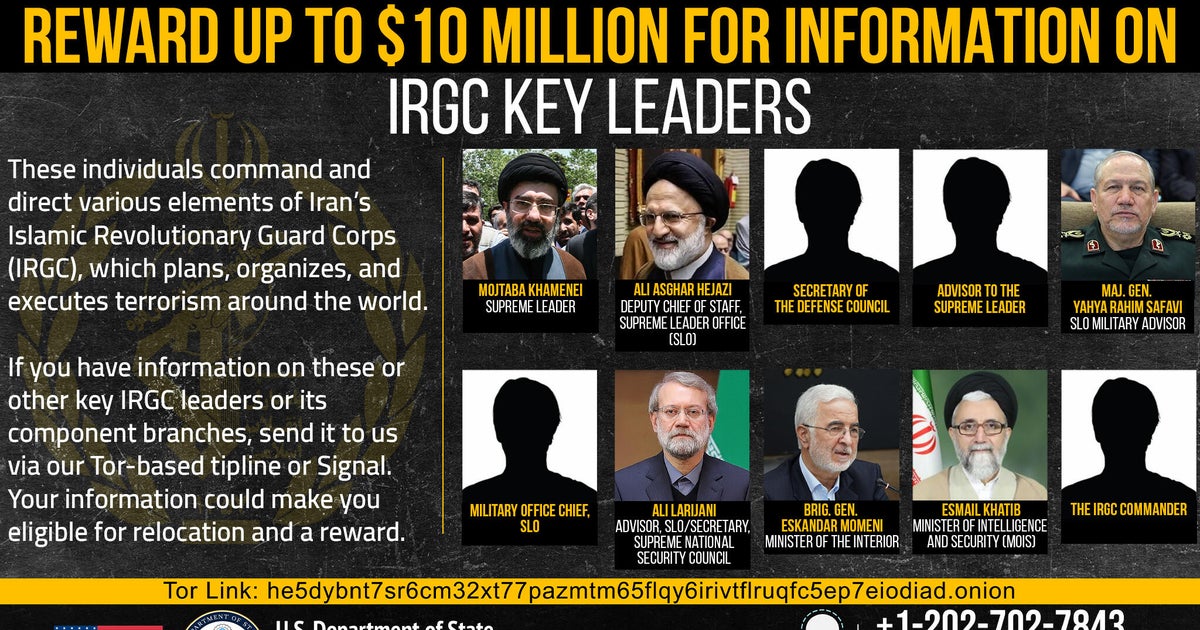
At the top of America’s most-wanted list is Mojtaba Khamenei, Iran’s newly appointed Supreme Leader who only issued his first public statement this week. According to U.S. Defense Secretary Pete Hegseth, Khamenei is believed to be “wounded and likely disfigured,” presumably from the same attack that killed his predecessor, Ayatollah Ali Khamenei, along with other senior Iranian officials when the current conflict erupted. Beyond the Supreme Leader, the list reads like a who’s who of Iran’s military and intelligence establishment. It includes Deputy Chief of Staff Ali Asghar Hejazi, Military Adviser Major General Yahya Rahim Safavi, Interior Minister Brigadier General Eskandar Momeni, Minister of Intelligence and Security Esmail Khatib, and Ali Larijani, who serves as secretary of the Supreme National Security Council. Interestingly, four individuals on the list are identified only by their positions rather than by name: the secretary of the defense council, an adviser to the supreme leader, the military officer chief of the supreme leader’s office, and the IRGC commander, suggesting either the classified nature of their identities or the fluid nature of Iran’s current leadership structure.
Targeting the Revolutionary Guard’s Global Network
The State Department’s announcement left no ambiguity about why these individuals are being targeted. According to the official news release, “These individuals command and direct various elements of the IRGC, which plans, organizes, and executes terrorism around the world.” The Islamic Revolutionary Guard Corps has long been designated by the United States as a foreign terrorist organization, accused of orchestrating attacks, supporting proxy forces throughout the Middle East, and destabilizing regional security. By offering substantial financial rewards and relocation assistance, the U.S. is essentially attempting to create cracks within Iran’s security apparatus, encouraging those with inside knowledge to defect or share intelligence. This approach recognizes that even in authoritarian regimes, loyalty can be tested when personal safety and financial security are at stake, particularly during times of crisis when the normal chains of command may be disrupted.
A Direct Appeal to the Iranian People
Perhaps most tellingly, the State Department released two versions of the reward posters—one in English and one in Farsi—making it crystal clear that this initiative is aimed not just at international intelligence networks but directly at Iranian citizens themselves. The Rewards for Justice program actively promoted the campaign on social media with a straightforward message: “Got information on these Iranian terrorist leaders? Send us a tip. It could make you eligible for a reward and relocation.” This direct outreach represents a sophisticated information warfare strategy, attempting to leverage the power of financial incentives and the promise of a new life to pierce the veil of secrecy surrounding Iran’s leadership. For ordinary Iranians who may have become disillusioned with their government, especially in the chaos following the death of the previous Supreme Leader, this offer presents a potentially life-changing opportunity. The inclusion of relocation assistance is particularly significant, acknowledging the extreme danger that anyone providing such information would face and demonstrating America’s commitment to protecting those who cooperate.
Part of a Broader Intelligence Campaign
This latest reward announcement doesn’t exist in isolation but rather represents the continuation of an intensifying American intelligence effort focused on Iran. Just two months ago, in January, the State Department offered a separate $15 million reward for information on Iranian oil shipments and another reward of equal value for intelligence regarding the IRGC’s financial network. These earlier initiatives were designed to disrupt Iran’s economic lifelines and its ability to fund operations abroad. Then, on February 24—mere days before the current conflict erupted—the CIA took the extraordinary step of publicly offering assistance to potential informants inside Iran, providing detailed instructions on secure methods to contact the American spy agency. This progression of initiatives reveals a comprehensive strategy to gather intelligence, disrupt Iranian operations, and encourage defections at multiple levels of Iran’s government and military structure. The timing suggests that U.S. intelligence agencies were preparing for the current confrontation and working aggressively to build information networks inside Iran.
The Implications of This High-Stakes Gambit
This audacious campaign raises profound questions about the current state of affairs between Washington and Tehran and where this conflict might be heading. By publicly offering millions of dollars for information on Iran’s top leadership—including the Supreme Leader himself—the United States is essentially declaring open season on Iranian officials and signaling that it considers regime change or at least the neutralization of current leadership as a viable objective. For Iran, this represents not just a security challenge but a psychological warfare campaign designed to create paranoia within the leadership and undermine trust among those in positions of power. The success or failure of this initiative could significantly impact how the conflict evolves. If the rewards program generates actionable intelligence that leads to strikes against Iranian leadership or encourages significant defections, it could accelerate Iran’s destabilization. Conversely, if the campaign fails to produce results, it might strengthen Iranian resolve and unity against what they perceive as American aggression. For the broader international community, this development raises concerns about the escalating nature of the U.S.-Iran conflict and whether diplomatic solutions remain possible when one side is actively seeking to eliminate the other’s leadership through whatever means available.