


Navigating Dangerous Waters: America’s High-Stakes Plan to Escort Oil Tankers Through the Strait of Hormuz
A Critical Maritime Chokepoint Under Threat
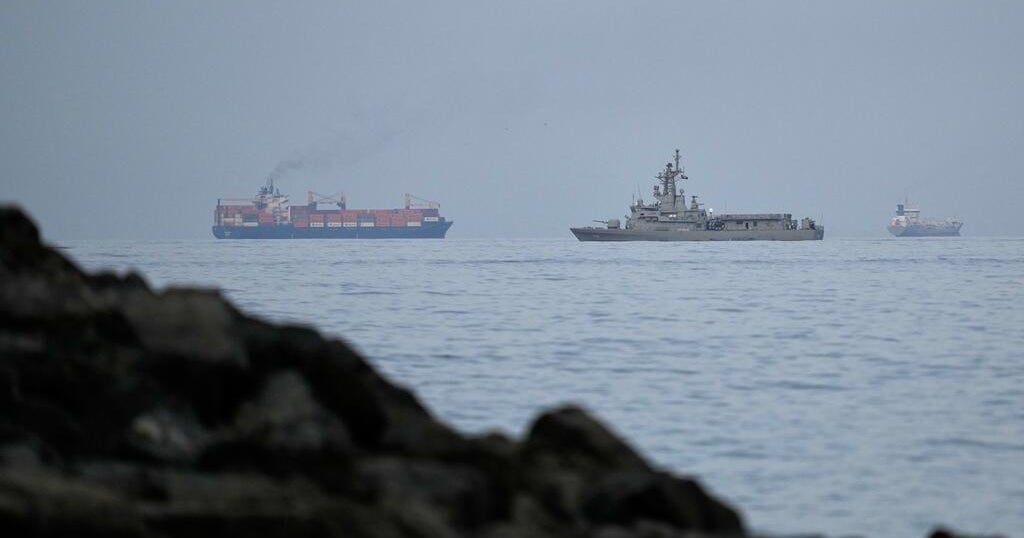
The world’s oil markets have ground to a near standstill as tensions between the United States and Iran escalate into open conflict, creating a crisis that threatens the global economy. At the heart of this disruption lies the Strait of Hormuz, a narrow waterway barely 21 miles wide at its tightest point, yet responsible for carrying approximately 20% of the world’s oil supply. Since hostilities began two weeks ago, this vital maritime corridor has become a battleground, with more than a dozen reported attacks on oil tankers and cargo vessels traversing the Persian Gulf and Arabian Sea. Iranian officials haven’t been subtle about their intentions, openly threatening any ships attempting passage through the strait. The result has been predictable and alarming: oil tankers have essentially stopped making the journey, with only Iranian and Chinese vessels daring to navigate these dangerous waters. Major Arab oil exporters, finding themselves with nowhere to send their product, have been forced to cut production. The economic impact has been swift and severe, with oil prices surging roughly 40% in just two weeks as global markets panic over potential supply shortages. This isn’t just an abstract economic problem—it affects everything from the price consumers pay at the pump to the cost of heating homes and powering industries worldwide.
The Trump Administration’s Response: Naval Escorts on the Horizon
Faced with this mounting crisis, President Trump has floated a dramatic solution: deploying the U.S. Navy to escort commercial oil tankers through the contested waters, essentially providing a military shield to break the gridlock strangling global oil supplies. “When the time comes, the U.S. Navy and its partners will escort tankers through the Strait if needed,” Trump told reporters on Monday, adding cautiously, “I hope it’s not going to be needed, but if it’s needed, we’ll escort them right through.” However, administration officials have been notably more hesitant about committing to an immediate timeline. Energy Secretary Christopher Wright acknowledged this week that while escorts will happen “relatively soon,” they can’t begin immediately, suggesting the end of the month as a possible start date. Treasury Secretary Scott Bessent echoed this careful approach, stating that escorts would commence “as soon as it is militarily possible.” This measured response suggests that behind the scenes, military planners are grappling with the enormous complexity and inherent dangers of such an operation. It’s not simply a matter of sailing some warships through the strait alongside commercial vessels—the mission requires extensive preparation, coordination, and calculated risk assessment before a single ship can be safely shepherded through waters where Iranian forces lie in wait with missiles, drones, explosive boats, and potentially thousands of naval mines.
The Two-Phase Battle Plan: Preparing the Dangerous Passage
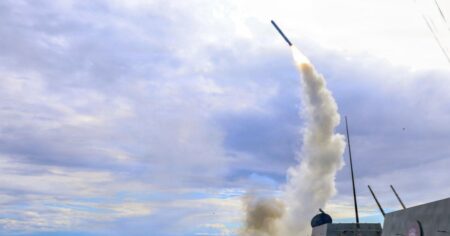
Military experts speaking to CBS News have outlined what such an escort operation would actually entail, and it’s far more complex than simply providing protection. Aaron MacLean, a Marine Corps veteran, former U.S. Naval Academy faculty member, and CBS News military analyst, describes a necessary two-phase approach. The first phase, which may already be underway, involves what military strategists call “preparing the battlefield”—essentially reducing Iran’s ability to attack ships before any escorts begin. Over the past two weeks, U.S. Central Command reports striking approximately 6,000 Iranian targets, including anti-ship missile sites, drone manufacturing facilities, and mine-laying vessels. This sustained bombardment serves a critical purpose: reducing the volume of incoming fire that escort vessels would face to a level that can be “reliably intercepted,” as MacLean puts it. Seth Jones, president of the defense and security department at the Center for Strategic and International Studies, confirms that the U.S. military is likely working to degrade Iranian capabilities for laying mines and striking targets before any escort mission begins. “I suspect the U.S. Navy is not going to want to enter that Strait unless it’s pretty confident that the threats have been degraded, largely by the airstrikes,” Jones explained. Energy Secretary Wright’s comments on CNBC support this assessment, acknowledging that “we’re simply not ready” and that current military assets remain focused on destroying Iran’s offensive capabilities and the manufacturing infrastructure supporting them. The timing of when to transition from this preparatory phase to actual escort operations represents a delicate judgment call that U.S. Central Command must make—waiting long enough to reduce risks but not so long that the economic crisis deepens beyond repair.
How the Escort Operation Would Actually Work
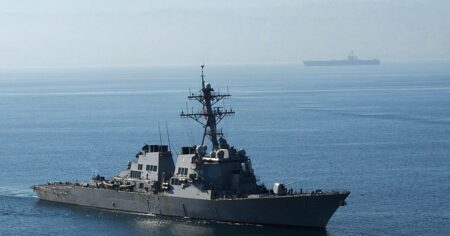
Once military commanders determine that Iranian capabilities have been sufficiently degraded, the second phase would begin with what MacLean describes as a carefully choreographed operation involving staging areas, coordinated movements, and comprehensive military support. The Navy would likely establish secure zones at either end of the contested waters—potentially just the Strait of Hormuz itself or extending further into the Persian Gulf depending on threat assessments. Commercial vessels would gather at these staging areas under military protection, then move through the dangerous passage in convoys. “Like a mother duck with her little baby ducks, a U.S. Navy ship, or a ship from a partner navy, is going to escort several ships through at a time,” MacLean explained, offering a surprisingly gentle metaphor for what would be an extremely tense military operation. These escort vessels wouldn’t be alone—they’d be supported by air cover providing protection from above, extensive surveillance systems monitoring for threats, mine-sweeping capabilities to detect and neutralize underwater explosives, and quick reaction forces positioned nearby to respond to attacks. Treasury Secretary Bessent has indicated the operation could involve an “international coalition” rather than just American forces, with countries like France already considering participation. French President Emmanuel Macron has mentioned the possibility of a “purely defensive” escort mission by French naval forces. Military planners anticipate that initial convoys will likely face attacks as Iranian forces test the escorts, but this is actually part of the strategy. “We know the Iranians are going to shoot. We’re looking to see where they shoot from, and then we hit them once they reveal themselves,” MacLean noted, describing how each attack would help identify and eliminate remaining Iranian positions.
The Array of Iranian Threats Lurking in the Waters
The threats facing any escort operation are varied, deadly, and in some cases extremely difficult to counter. Iran’s arsenal for disrupting shipping includes naval mines (with estimates of their stockpile ranging from 2,000 to 6,000 over the years), anti-ship cruise missiles capable of striking from considerable distances, armed drones that can swarm targets, fast-attack boats operated by Iran’s Revolutionary Guards, and remote-controlled explosive boats essentially functioning as seaborne suicide bombers. The narrow geography of the Strait of Hormuz—just 21 miles at its narrowest point—makes it an ideal chokepoint for Iran to exploit, giving them relatively short distances to cover when launching attacks and limiting the maneuverability of large vessels passing through. Earlier this week, U.S. officials indicated Iran appeared to be signaling its capability and willingness to lay mines throughout the strait, though top administration officials have said there’s currently no evidence of active mining. Defense Secretary Pete Hegseth told reporters Friday that the only thing preventing transit right now is “Iran shooting at shipping,” adding that the strait remains physically open for vessels brave enough to risk the journey. However, the threat of mining remains serious—while the U.S. has reportedly struck about 30 Iranian mine-laying ships in recent weeks, Jones points out that Iran possesses potentially hundreds of smaller boats capable of laying a few mines at a time, making complete elimination of this capability nearly impossible. Some experts remain skeptical about the entire enterprise. Michael Eisenstadt, director of the Washington Institute for Near East Policy’s military and security studies program, questions whether escort operations will actually succeed in restoring commercial shipping. He notes that Iran’s remaining missiles and drones could be hidden deep in protective tunnels, surviving the recent strikes and remaining capable of attacking ships. “All you need is half a dozen drones to hit ships,” Eisenstadt warned, “and then tanker owners are going to say ‘forget it, thanks guys, nice try.'”
Historical Precedent and Uncertain Outcomes
This wouldn’t mark the first time American warships have shepherded commercial vessels through these contested waters, and the historical precedent offers both guidance and cautionary lessons. In 1987, as the brutal Iran-Iraq War neared its conclusion, the U.S. Navy began what became known as Operation Earnest Will, escorting Kuwaiti oil tankers through the Persian Gulf and Strait of Hormuz to protect them from Iranian mines and missiles. MacLean describes it as “a big deal,” involving dozens of U.S. ships in a sustained operation that lasted over a year. The mission wasn’t without cost or incident. In 1988, the USS Samuel B. Roberts struck an Iranian mine, suffering significant damage that prompted then-President Ronald Reagan to authorize strikes against Iranian oil platforms and naval vessels. Later that same year came one of the operation’s darkest moments when the USS Vincennes shot down Iran Air Flight 655, an Iranian passenger plane carrying 290 people that the ship’s crew tragically mistook for an attacking fighter jet—what a subsequent U.S. report called a “tragic and regrettable accident” that remains a source of deep resentment in Iran to this day. That conflict eventually ended with a ceasefire between Iran and Iraq, bringing the escort operation to a close. If the Trump administration proceeds with a similar mission nearly four decades later, MacLean suggests it could conclude in comparable fashion—either through a negotiated ceasefire or because Iran’s capabilities become so degraded that continuing attacks becomes futile. “You basically keep going until there’s some kind of inflection point,” he explained, acknowledging that nobody can predict exactly how long such an operation might need to continue or what ultimate resolution might look like. What remains clear is that the stakes couldn’t be higher: the global economy depends on oil flowing through the Strait of Hormuz, but protecting that flow could require American forces to operate in extremely dangerous waters, potentially for months, with the ever-present risk of escalation, casualties, and unintended consequences that could reshape the entire conflict.