



Understanding Bitcoin’s Recent Drop Below $70,000: A Reality Check, Not a Crisis
The Return to Earth: Bitcoin’s Price Correction
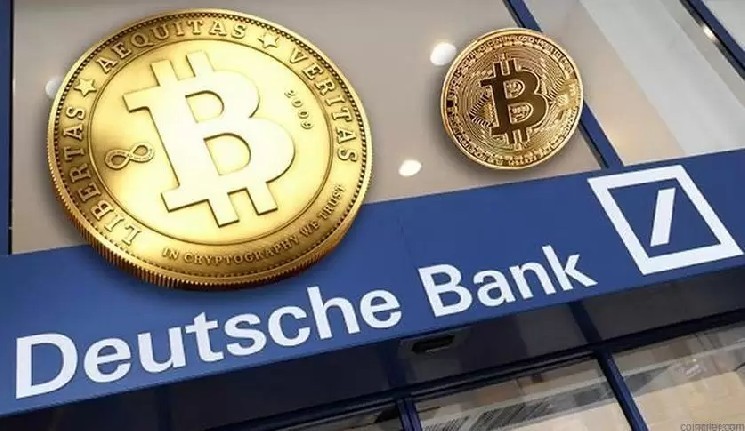
For the first time since November 2024, Bitcoin has broken through a psychological barrier that many investors hoped would hold strong – the $70,000 mark. This milestone represents more than just a number on a chart; it’s a moment that has sent ripples of concern through the cryptocurrency community. After experiencing consecutive declines, the world’s most prominent digital currency has entered territory that has both longtime believers and newer investors questioning what comes next. While headlines might scream about crashes and catastrophes, Germany’s financial heavyweight, Deutsche Bank, is offering a different perspective – one that suggests we’re witnessing a recalibration rather than a collapse. The bank’s analysts argue that what we’re seeing isn’t the end of Bitcoin’s story but rather a necessary chapter in its ongoing evolution from speculative asset to mature financial instrument.
The cryptocurrency market has always been characterized by dramatic swings, but this particular downturn carries unique significance because of the context surrounding it. Bitcoin had experienced remarkable growth over the past two years, attracting unprecedented attention from institutional investors, corporate treasuries, and everyday people looking to participate in what many believed was a financial revolution. Now, as prices retreat from those highs, the real test begins: can Bitcoin prove it’s more than just a speculative bubble? Can it demonstrate genuine utility and staying power? Deutsche Bank’s analysis suggests that the current situation, while painful for those holding losses, might actually be a healthy development in the long-term maturation of cryptocurrency markets.
The Three Pillars of Decline: Understanding What’s Really Happening
Deutsche Bank analysts Marion Laboure and Camilla Siazon have identified three primary factors driving Bitcoin’s current price weakness, and understanding these elements is crucial for anyone trying to make sense of the market. First and foremost is the issue of persistent institutional outflows – essentially, the smart money that flooded into Bitcoin during its ascent is now flowing back out. This isn’t necessarily a sign that institutions have lost faith in cryptocurrency as a concept, but rather that they’re reassessing their positions, taking profits, or responding to changing market conditions. The numbers tell a sobering story: U.S. spot Bitcoin ETFs (exchange-traded funds) have hemorrhaged more than $7 billion in November alone, followed by approximately $2 billion in December and over $3 billion in January. These aren’t retail investors panic-selling; these are sophisticated financial players making calculated decisions to reduce their exposure.
The second factor identified by Deutsche Bank is Bitcoin’s deteriorating correlation with traditional financial markets, which has significant implications for how investors view the cryptocurrency. For a while, Bitcoin moved somewhat in tandem with stock markets, which actually helped it gain legitimacy as an asset class that institutional investors could incorporate into their portfolios. However, that relationship has weakened, leaving Bitcoin in a kind of limbo – it’s not behaving like a traditional financial asset, but it’s also not consistently acting as the uncorrelated alternative investment that some proponents claimed it would be. This unpredictability makes it harder for professional money managers to justify holding Bitcoin, especially when they need to explain their decisions to clients or boards of directors.
The third pillar of Bitcoin’s decline is slowing regulatory progress in the United States. The cryptocurrency industry has long awaited clear, comprehensive regulation that would provide certainty and legitimacy to the market. While there have been steps forward, including the approval of spot Bitcoin ETFs, the overall pace of regulatory development has slowed, leaving many questions unanswered. This regulatory uncertainty creates a challenging environment for institutional adoption because major financial players need to know the rules of the game before committing significant capital. When combined with the other two factors, this regulatory stagnation contributes to an atmosphere of diminished confidence that naturally exerts downward pressure on prices.
The Digital Gold Narrative Under Pressure
One of the most compelling stories told about Bitcoin over the years has been its potential to serve as “digital gold” – a store of value that could protect wealth against inflation and economic uncertainty. This narrative has been central to Bitcoin’s appeal, particularly among those who view it as a hedge against traditional financial system risks. However, Deutsche Bank’s analysis highlights a uncomfortable truth: when directly compared to actual gold, Bitcoin’s performance recently has been disappointing. While physical gold is projected to gain over 60% in value during 2025, driven by continuous central bank purchases and safe-haven demand from investors seeking stability, Bitcoin has struggled to maintain its price levels, let alone post significant gains.
This divergence between gold and Bitcoin is significant because it strikes at the heart of one of cryptocurrency’s core value propositions. If Bitcoin can’t perform the function of a safe-haven asset during times of uncertainty – something gold has done for thousands of years – then what exactly is its purpose? This question isn’t meant to dismiss Bitcoin entirely, but rather to acknowledge that the “digital gold” narrative may have been oversimplified or premature. Perhaps Bitcoin needs to develop its own distinct identity rather than trying to replicate the characteristics of precious metals. The weakening of this correlation suggests that investors are making exactly this reassessment, moving away from the assumption that Bitcoin automatically functions as digital gold and instead evaluating it on its own merits and limitations.
Institutional Exodus: Following the Money
The most immediate and measurable pressure on Bitcoin’s price comes from institutional selling, and the scale of these outflows deserves closer examination. When institutional investors – including hedge funds, family offices, corporate treasuries, and investment firms – began entering the Bitcoin market in significant numbers, it was heralded as a sign of cryptocurrency’s maturation and mainstream acceptance. These weren’t speculative retail traders; these were professional money managers with fiduciary responsibilities and sophisticated risk management frameworks. Their participation was supposed to bring stability, legitimacy, and sustained upward pressure on prices.
However, institutional investors are also notoriously sensitive to changing conditions and quick to adjust their positions when their investment thesis weakens. The sustained outflows from U.S. spot Bitcoin ETFs represent billions of dollars in selling pressure, and this creates a challenging dynamic for price stability. When institutions sell, they typically do so in large quantities, and even when they try to execute these sales carefully to minimize market impact, the sheer volume creates downward pressure. Additionally, institutional selling can create a psychological effect – if the smart money is leaving, shouldn’t everyone else follow? This concern, whether rational or not, can accelerate declines as other investors rush to exit before prices fall further. The institutional exodus doesn’t necessarily mean Bitcoin is doomed, but it does mean that the market has lost a major source of buying power and price support that helped fuel the previous rally.
A Reset, Not a Collapse: Reframing the Narrative
Perhaps the most important insight from Deutsche Bank’s analysis is the framing of current events not as a collapse but as a reset. This distinction matters enormously for how investors, regulators, and the general public understand what’s happening with Bitcoin. A collapse implies systemic failure, a fundamental flaw that renders the asset worthless or severely compromised. A reset, on the other hand, suggests a return to more reasonable valuations after a period of excessive speculation – a natural and even healthy process in market cycles. According to the bank’s analysts, what we’re witnessing is essentially a reversal of the outsized gains accumulated over the past two years, a process that brings prices back toward levels more justified by actual usage, adoption, and fundamental value.
Marion Laboure and Camilla Siazon emphasize that while Bitcoin’s recent price drop may appear dramatic when viewed in isolation, placing it in a longer-term context reveals a different story. The cryptocurrency had experienced extraordinary gains that, in retrospect, may have gotten ahead of the underlying developments in technology, adoption, and regulation. This reset process is actually a test – can Bitcoin mature from a speculative vehicle into a genuine financial asset with lasting utility? Can it attract and maintain support from both regulators who provide legal clarity and institutional capital that provides stability? These questions don’t have immediate answers, but the fact that serious financial analysts are framing current events as a maturation process rather than a death spiral suggests that Bitcoin’s story is far from over. The coming months and years will reveal whether this reset creates a foundation for sustainable growth or marks the beginning of a longer decline, but understanding it as a reset rather than a collapse provides a more nuanced and ultimately more useful framework for making sense of cryptocurrency markets.