


Global Reactions to the U.S.-Israeli War with Iran: A World on Edge
Rising Concerns in Moscow: Solidarity with Iranian Civilians
As the U.S.-Israeli military campaign against Iran enters its second week, the Russian capital has become a focal point of sympathy for the Iranian people. Outside Iran’s embassy in Moscow, a growing memorial of flowers, candles, and stuffed animals tells the story of ordinary Russians mourning what Iranian officials report as over 1,000 civilian casualties. The scene is both touching and political, with Muscovites like Natalia expressing raw emotion: “It’s so sad, so many children died, it’s simply inhumane. How can this be?” she asked state broadcaster MIR24, her voice capturing the disbelief many feel watching ancient mosques and historic sites potentially reduced to rubble.
The Kremlin’s position mirrors popular sentiment, at least according to state-controlled media channels that report overwhelming Russian disapproval of the operation. President Vladimir Putin personally conveyed condolences to Iranian President Masoud Pezeshkian following the death of former Supreme Leader Ayatollah Ali Khamenei in the initial strikes, a gesture loaded with geopolitical significance as Russia positions itself as Iran’s defender on the world stage. The Russian Foreign Ministry hasn’t minced words either, condemning what it calls “a pre-planned and unprovoked act of armed aggression against a sovereign and independent UN member state.” For Russians like Tatiana Pluzhnikova, who lived and worked in Iran for years, the conflict is deeply personal. Describing Iran as “the friendliest, most peace-loving country,” she urged Iranians to “be strong,” adding that “no normal person could support such vile acts, such inhuman attacks.” Whether these sentiments reflect genuine grassroots feeling or state-orchestrated messaging, they reveal how the conflict is being framed in Moscow as an unprovoked Western assault on a peaceful nation.
European Anxiety: From Stranded Tourists to Existential Questions
Across Europe, the war’s impact has been immediate and unsettling. In Germany, the first wave of headlines focused on the desperate situation of approximately 30,000 German nationals stranded in the United Arab Emirates and other Gulf countries as airlines canceled thousands of flights amid the chaos. Tourist Richard Grüttmöller’s account captures the surreal experience: hearing sirens at his hotel around midnight and telling his children it was “just thunder” to avoid panic. René Lembke, stuck in Dubai airport for twelve hours waiting for a flight that never materialized, described the cognitive dissonance of being “in a holiday paradise” where “something could happen at any moment.”
Beyond the immediate crisis of stranded citizens, Germans are grappling with deeper questions about international order and their place in it. A recent “DeutschlandTrend” survey revealed that over half of Germans believe the war is unjustified, while three-quarters fear it will spread to other countries. Perhaps most telling, nearly nine in ten Germans now believe international politics is increasingly shaped by “the law of the strongest” rather than international law and diplomacy. This represents a profound shift in how Europeans view the post-World War II international order that has largely kept the continent at peace.
Poland shares this unease, with visible anxiety on city streets. When Polish news website WP conducted impromptu interviews, an elderly woman simply stated, “I’m afraid. Wars are easy to start but hard to end.” A younger woman in her twenties articulated what many feel: understanding the goal of regime change in Iran but questioning the cost when “so many countries are affected by this war—even Cyprus.” The concerns in Poland are particularly acute given the ongoing Russian war in Ukraine on their border. Polling across Europe’s six largest countries, including Poland, shows that approximately one in five respondents now view the United States as “a major threat” to their security—a shocking turnaround in transatlantic relations that would have been unthinkable just a few years ago.
Mixed Calculations: Ukraine’s Complicated Position and British Dilemmas
For Ukraine, the Iran conflict presents a complex mix of opportunities and threats. On Ukrainian social media, an AI-generated image of President Volodymyr Zelenskyy holding an ace of spades with a drone at its center has gone viral, celebrating Ukraine’s newfound leverage after the U.S. Defense Department requested Ukrainian drone interceptors and pilots be sent to Jordan. The symbolism is powerful: a year ago, President Trump told Zelenskyy he had “no cards” to play in their contentious Oval Office meeting, while Vice President JD Vance questioned whether the Ukrainian leader would ever “say thank you” to America. “It seems like we have the cards now,” one Kyiv-based soldier told CBS News, adding that he was waiting for Vance to thank Ukraine.
Yet this satisfaction is tempered by strategic concerns. Ukrainians harbor deep resentment toward Iran for supplying Russia with the drones that have terrorized their cities for four years, and many would welcome the fall of both the Iranian and Russian governments. However, as Ukrainian parliamentarian Oleg Dunda explained, the situation presents serious risks: “If American resources are expended in the Persian Gulf, there will be less to defend NATO’s eastern flank. And as long as oil prices continue to rise, Russia will use that money on rockets and drones for Ukraine.” Dunda articulated a dream scenario—”A free democratic Iran is a dream for Ukraine”—where an Iran joining the international order would cause oil prices to drop, undermining Russia’s budget and reducing the weapons flow to Moscow. But the current reality sees dwindling Western interceptor stockpiles being consumed in the Middle East rather than potentially making their way to Kyiv.
In the United Kingdom, the war has strained the much-vaunted “special relationship” with the United States. Prime Minister Keir Starmer, who had been praised for cultivating a positive relationship with President Trump while other European leaders struggled, faced a harsh reality check when Britain declined U.S. requests to use British bases for offensive strikes against Iran. Trump’s mocking response—”This is not Winston Churchill that we’re dealing with”—triggered fierce debate about British national interests versus Atlantic alliance obligations. Starmer has held firm, preferring a negotiated settlement on Iran’s nuclear program and urging deescalation, a position backed by most British voters who tell pollsters the justification for strikes is “unclear.” The BBC’s political editor observed that “after all the effort invested into building up this relationship, it has never been in a rockier place than it is now.” The U.K. is permitting defensive operations from its bases and belatedly sending a warship to protect its Cyprus air base, but the transatlantic rift is evident and growing.
Ireland, Spain, and the Limits of American Influence
In Ireland and Spain, the conflict has revived long-standing debates about military cooperation with the United States and adherence to international law. Ireland’s response has been particularly critical, with President Catherine Connolly stating that Ireland cannot ignore the “catastrophic consequences of violating the U.N. charter,” describing the violations of international law as “shocking and numbing.” Political commentator Fintan O’Toole captured the Irish mood: “Most people in Ireland view the war as reckless and illegal. It is hard to find anyone who believes that Iran posed an imminent threat to the U.S. or who understands exactly what the envisaged endgame is.” The Irish government, already a vocal critic of Israel’s Gaza campaign and a supporter of South Africa’s genocide case against Israel at the International Court of Justice, sees the Iran strikes as an extension of policies they’ve consistently opposed.
The conflict has reignited debate over Shannon airport, which has served as a convenient transatlantic refueling stop for the U.S. military since 1945. Left-wing politicians are now calling for a ban on American military use of the facility, arguing that Irish neutrality has been compromised. O’Toole noted that fuel price increases have “badly affected” ordinary people who “don’t see anything good happening as a consequence” of the war, connecting foreign policy principles to kitchen-table economics in a way that resonates with voters.
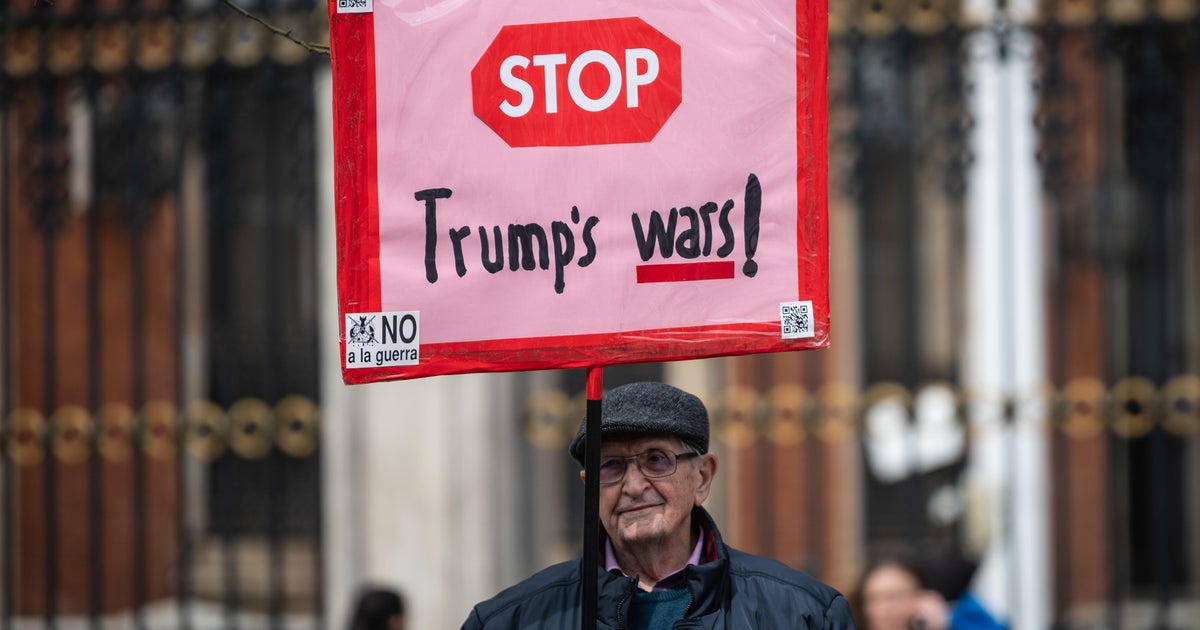
Spain’s Prime Minister Pedro Sanchez has been equally defiant, summarizing his government’s position in just four words: “No a la guerra”—No to war. When President Trump threatened to “cut off all trade with Spain” after the country refused to allow use of jointly-run bases in Morón and Rota for strikes on Iran, Sanchez held firm. His stance reflects the views of two-thirds of Spaniards who oppose the war, according to polling, and may help heal the national trauma from 2003 when the conservative government backed the Iraq War despite approximately 90% public opposition and massive protests. Spain’s relationship with Israel has deteriorated further, with the withdrawal of its ambassador this week and previous bans on weapons-carrying ships and planes using Spanish territory. Sanchez drew a clear moral line: “Protecting your country and your society is one thing; bombing hospitals and starving children is another.”
India’s Silence and France’s Diplomatic Balancing Act
India’s response reveals the complications facing countries trying to maintain relationships with multiple powers. At the Iranian Embassy in New Delhi, a condolence book sits on a black-draped table beneath a portrait of the late Ayatollah Khamenei. Indians have been signing it, with teacher Raza from Uttar Pradesh simply writing “I am deeply saddened,” and Taslim Ahmed Rehmani, president of the Muslim Political Council of India, calling Khamenei’s death “an insult to Iran.” Protests erupted in Muslim-majority Kashmir and cities like Lucknow and Ranchi, with demonstrators burning effigies of Trump and Netanyahu. Yet Prime Minister Narendra Modi’s government has released only carefully worded statements of “concern” without condemnation, and eventually banned the anti-U.S.-Israel protests.
This cautious approach has frustrated many Indians who see their government’s silence as diminishing India’s voice on the world stage. It took four days of mounting domestic pressure before India’s Foreign Minister even signed the embassy condolence book. Former National Security Adviser Shiv Shankar Menon articulated the criticism bluntly: “We stayed silent on Russia’s invasion of Ukraine and did not call it an invasion. We stayed silent on the slaughter in Gaza, now on the U.S.-Israel aggression in Iran. If you stay silent all the time, you diminish your voice…the world stops listening to you.” The comments reflect frustration with a foreign policy that prioritizes maintaining good relations with all powers over taking principled stands.
France, by contrast, has tried to position itself as an active mediator. President Emmanuel Macron has spoken with both Trump and Iranian President Pezeshkian, urging Iran to stop strikes on Persian Gulf countries and reopen the Strait of Hormuz while stressing diplomacy as the only solution. During a televised national address, Macron walked a careful line, blaming Tehran for the current conflict but describing the U.S.-Israeli strikes as “outside international law” that France could not “approve of.” He ordered the aircraft carrier Charles de Gaulle to the eastern Mediterranean after attacks on the British base in Cyprus, emphasizing France’s defensive posture: “When Cyprus is attacked, Europe is attacked.” French public opinion largely opposes foreign military interventions, a legacy of the 2003 Iraq War, though polling shows a slim majority (55%) would support a specifically defensive international mission to escort commercial ships through the Strait of Hormuz. Macron’s approach reflects an attempt to maintain French influence and European relevance while respecting domestic opposition to offensive military action—a difficult balance that may not satisfy anyone completely.
The global response to this conflict reveals a world where American influence is increasingly contested, where international law means different things to different nations, and where economic disruption from energy market chaos affects political calculations everywhere. President Trump promises to end the war on his own timetable, while Iran vows a “long-term war of attrition” aimed at destroying the global economy. Caught between these positions are billions of ordinary people—from Moscow to Mumbai, Dublin to Dubai—watching nervously as great powers collide and wondering whether their leaders can navigate the crisis without dragging the world into a broader catastrophe.