


Hungary’s Election Drama: Orbán Promises Evidence of Ukrainian Interference
A Political Showdown Brewing in Budapest
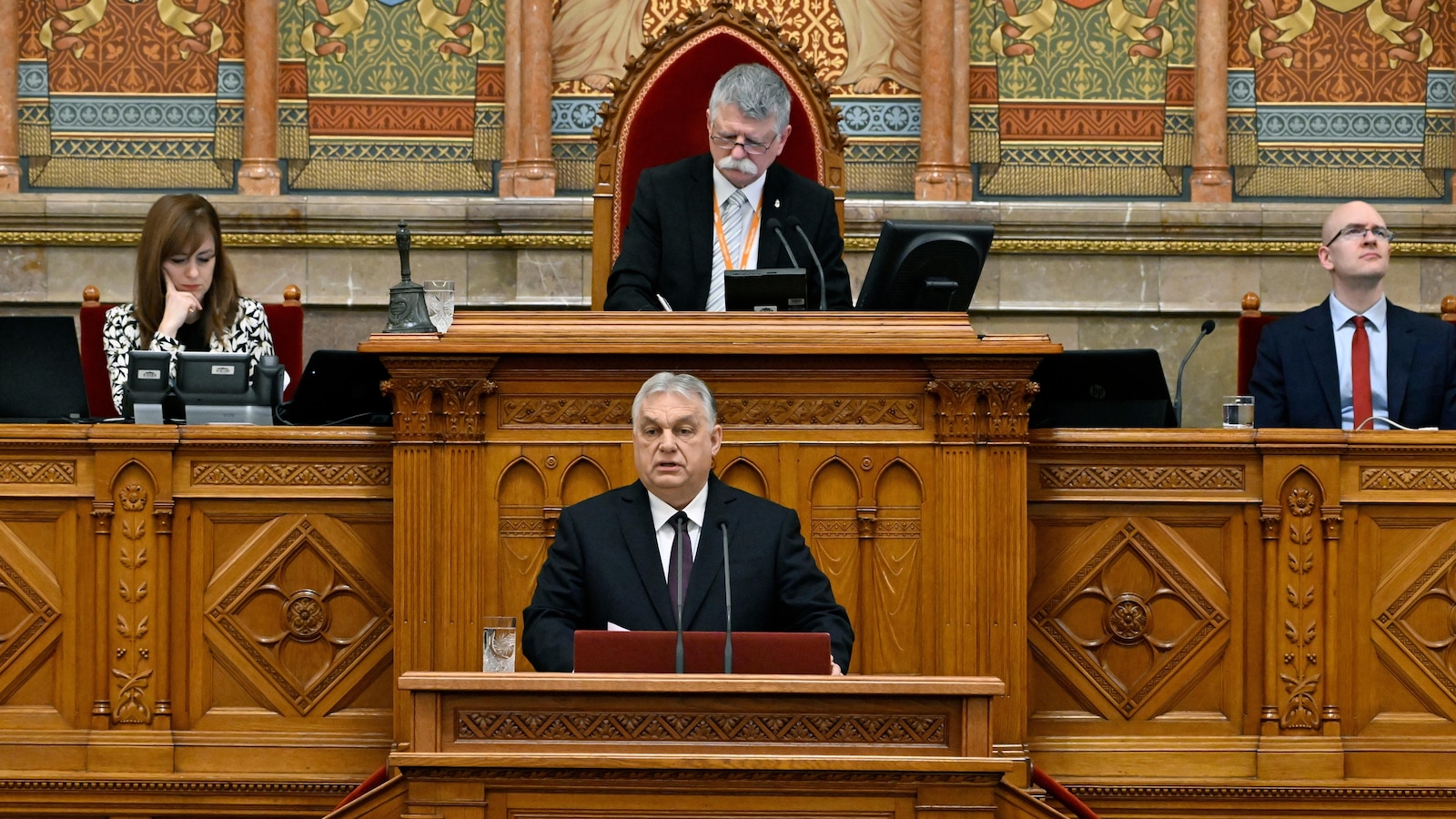
Hungary is gearing up for what could be the most dramatic election in recent memory, and the political temperature in Budapest is reaching a boiling point. Prime Minister Viktor Orbán, who has dominated Hungarian politics for years, finds himself in unfamiliar territory—trailing in the polls with just weeks to go before voters head to the ballot box on April 12th. His opponent, 44-year-old lawyer Péter Magyar, represents something Orbán hasn’t faced before: a credible challenge from someone who knows the inner workings of his political machine. Magyar isn’t just any opposition candidate; he’s a former insider from Orbán’s own Fidesz party who has broken ranks and formed the Tisza party, positioning himself as a center-right alternative to Orbán’s increasingly hardline government. The stakes couldn’t be higher, and Orbán knows it. This isn’t just another election—it’s a fight for political survival.
In response to this threat, Orbán’s government has announced plans to declassify a national security report that the prime minister claims will prove his explosive allegations: that Magyar and his Tisza party have been receiving illegal financing from Ukraine. Gergely Gulyás, Orbán’s chief of staff, told reporters on Thursday that “the declassification process is underway” and that the report would be released “in the foreseeable future.” It’s a bold move, one that demonstrates just how seriously Orbán is taking this challenge. For years, the Hungarian leader has cultivated a reputation as a political strategist who always stays several steps ahead of his opponents. Now, with his back against the wall, he’s pulling out all the stops, promising to present concrete evidence of what he describes as a vast conspiracy involving Ukraine, the European Union, and his political rivals—all supposedly working together to topple his government and install one more favorable to Kyiv’s interests.
The Ukraine Card: Orbán’s Central Campaign Strategy
At the heart of Orbán’s reelection campaign lies an aggressive, unrelenting anti-Ukraine message that has dominated Hungarian public discourse in recent weeks. The prime minister has repeatedly claimed that Ukraine is funneling “significant” sums of money to the Tisza party, allegedly to fund IT applications and voter mobilization efforts. Magyar firmly denies these allegations, but Orbán has doubled down, insisting his claims are “not assumptions, but facts” that he has personally reviewed in classified national security documents. It’s worth noting that until now, Orbán has provided no public evidence to support these serious accusations, which is precisely why his promise to declassify the report has generated so much attention and controversy.
Orbán’s relationship with Ukraine—or rather, his antagonism toward it—has become the defining feature of his campaign messaging. While most European leaders have rallied behind Ukraine following Russia’s invasion, Orbán has maintained what he describes as “cordial relations” with the Kremlin, positioning himself as one of Vladimir Putin’s few remaining friends within the European Union. This stance has made Hungary something of an outlier in European politics, and Orbán has leaned into this role, framing it as a matter of Hungarian national interest rather than ideological alignment with Moscow. His central campaign message is stark and designed to provoke fear: he claims that if Magyar wins, Hungary will be bankrupted by supporting Ukraine’s war effort, and worse, that Hungarian youth will be sent to die on the front lines of a conflict he insists is not Hungary’s fight. It’s a message that resonates with war-weary voters concerned about their country’s economy and their children’s future.
The campaign itself has been nothing short of extraordinary in its use of modern propaganda techniques. Orbán’s government has deployed public funds to blanket the country with billboards featuring an artificially manipulated image of Ukrainian President Volodymyr Zelenskyy sporting a sinister, menacing smile—a far cry from the determined wartime leader most of the world has come to know. The caption reads: “We won’t let Zelenskyy have the last laugh!” It’s a chilling example of how AI-generated content is being weaponized for political purposes, blurring the line between reality and fiction. Critics have pointed out that the campaign is rife with disinformation, relying heavily on pictures and videos created by artificial intelligence to shape public perception. This isn’t just traditional political advertising; it’s a sophisticated information operation designed to manufacture emotional responses and reinforce Orbán’s narrative that Hungary is under threat from external forces.
The Opposition’s Counterattack and Growing Tensions
Péter Magyar hasn’t taken these attacks lying down. The Tisza party leader has fired back with his own serious allegations, warning that Russian intelligence services may be working to influence the election outcome in Orbán’s favor. It’s a charge that flips Orbán’s conspiracy theory on its head, suggesting that if anyone is receiving illicit foreign support, it’s the prime minister himself, backed by Moscow rather than Kyiv. Magyar’s emergence as a political force is particularly significant because of his insider status—he knows how Orbán’s government operates from the inside, which makes him a uniquely dangerous opponent. His center-right positioning also allows him to appeal to voters who may have grown tired of Orbán’s increasingly authoritarian tendencies but aren’t comfortable with a sharp turn to the left.
The timing of this electoral showdown couldn’t be more critical for ordinary Hungarians, who are grappling with serious economic and social challenges. The Hungarian economy has been chronically stagnant, failing to deliver the prosperity that many citizens expected. Social services, including healthcare and education, have been deteriorating, with widespread reports of underfunded hospitals and overworked teachers. Perhaps most damaging of all are the persistent allegations of corruption that have dogged Orbán’s government, with critics accusing his inner circle of enriching themselves through questionable contracts and sweetheart deals. With only four weeks until election day, these bread-and-butter issues are competing with Orbán’s Ukraine narrative for voters’ attention, creating an unpredictable electoral environment where the outcome is genuinely in doubt for the first time in years.
Hungary’s Hardline Actions Against Ukraine
Orbán’s anti-Ukraine stance isn’t just rhetoric—it has translated into concrete policy actions that have strained Hungary’s relationships with both Ukraine and the European Union. The Hungarian government has consistently opposed EU financial and military aid packages for Ukraine and has vowed to veto any steps toward Ukraine’s accession into the bloc. Recently, Hungary vetoed a new round of EU sanctions against Russia and blocked a massive 90-billion-euro (approximately $104 billion) loan for Kyiv, ostensibly in retaliation for an interruption in Russian oil shipments crossing Ukrainian territory. Orbán has even gone so far as to deploy military forces to key energy infrastructure sites across Hungary, claiming without evidence that Ukraine is plotting sabotage operations against Hungarian facilities.
The situation reached a dramatic peak last week when masked commandos from Hungary’s Counter Terrorism Center detained seven Ukrainian state bank employees who were transporting a substantial shipment of valuables through Hungarian territory. The armored vehicles they were traveling in contained 40 million U.S. dollars, 35 million euros, and 9 kilograms (about 19.8 pounds) of gold—a total value of approximately $82 million. After more than a day in detention, the Ukrainian employees were deported back to Ukraine, but the money and gold remained in Hungary, effectively seized by Orbán’s government. The incident provoked outrage in Kyiv, with Ukrainian officials insisting that the shipment was part of routine services between state banks, traveling from Austria to Ukraine with Hungary merely serving as a transit country. Ukraine’s foreign minister didn’t mince words, accusing Hungary of “state terrorism” and “taking hostages.” It was an extraordinary diplomatic confrontation between two countries that, despite their differences, are both technically part of Europe’s security architecture. The incident perfectly encapsulates the depth of antagonism that has developed between Orbán’s Hungary and Zelenskyy’s Ukraine—a conflict that goes far beyond ordinary diplomatic disagreements.
What’s Really at Stake
As the April 12 election approaches, it’s clear that this contest represents more than just a choice between two political leaders or parties. Orbán has framed the election in existential terms, suggesting that Hungary’s very future hangs in the balance. From his perspective, a victory for Magyar and Tisza would represent a fundamental reorientation of Hungarian foreign policy—away from Hungary’s traditional pragmatism and toward what he characterizes as a dangerous entanglement in Ukraine’s conflict with Russia. His critics, however, see things very differently. They argue that Orbán’s increasingly close relationship with Putin’s Russia has isolated Hungary within Europe, damaged its economy through lost EU funds (withheld due to rule-of-law concerns), and compromised its security by aligning with an aggressive authoritarian power.
The promised declassification of the national security report will be a crucial moment in this election. If Orbán can produce credible evidence of Ukrainian financing for the opposition, it could potentially turn the tide in his favor, validating his conspiracy claims and damaging Magyar’s credibility. However, if the report proves underwhelming or fails to substantiate his allegations, it could backfire spectacularly, reinforcing the narrative that Orbán is desperately manufacturing threats to distract from his government’s failures. Either way, Hungary’s election has become a fascinating test case for how information warfare, foreign influence claims (whether real or fabricated), and nationalist populism interact in modern European politics. The outcome will not only determine Hungary’s direction for the next several years but could also have implications for European unity, especially regarding support for Ukraine. As voters prepare to make their choice, they face fundamental questions about their country’s identity, its place in Europe, and whether the politics of fear and confrontation or the promise of change and reform will carry the day.