


Tiger Woods DUI Arrest: Body Camera Footage Reveals Details of Florida Crash
The Incident Unfolds on Camera
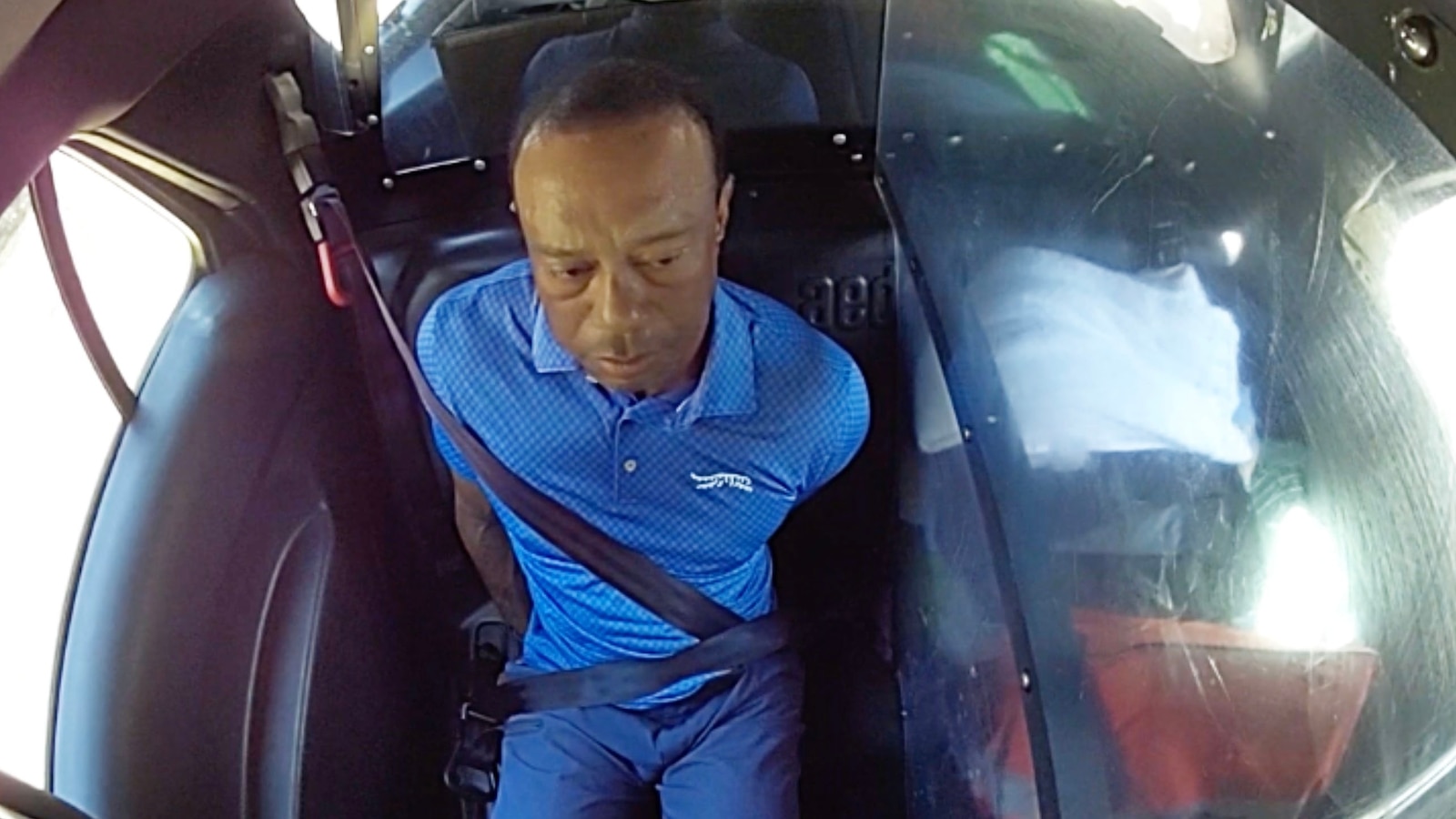
The Martin County Sheriff’s Office has released body camera footage capturing the moments following Tiger Woods’ arrest for driving under the influence after a rollover crash in Jupiter Island, Florida. The footage provides a detailed look at what transpired on that fateful Friday, showing one of golf’s most iconic figures going through field sobriety tests, being handcuffed, and ultimately being transported in a police vehicle. The video begins with one of the first responding officers arriving at the scene, where a bystander who had stopped after discovering the crash informs the deputy that the overturned vehicle appears to be empty. When the officer inquires about who was involved in the accident, the witness reveals it’s Tiger Woods, prompting an audible reaction of surprise from the deputy. The vehicle is clearly visible in the footage, lying on its side, a stark reminder of how serious the crash could have been for the legendary golfer.
Woods’ Account and the Sobriety Test
In the body camera footage, viewers can see Woods interacting with a female deputy who arrived to conduct a field sobriety test as part of the DUI investigation. During their conversation, Woods explains what led to the accident, telling the officer that he had been “looking down at my phone, about ready to change the radio station” when the crash occurred. He admits to the deputy that he takes “a few” medications, though several of these are redacted in the released video for privacy reasons. Woods maintains that he had consumed no alcohol that day and doesn’t use any illegal substances. Throughout the field sobriety test, the footage captures Woods hiccuping repeatedly, a detail that would later factor into the deputy’s assessment of his condition. At the conclusion of the test, the deputy informs Woods that she believes his “normal faculties are impaired” due to an “unknown substance,” and proceeds to place him in handcuffs. Woods appears somewhat surprised, asking for confirmation that he’s being arrested, to which the deputy responds affirmatively, explaining he’s being arrested for driving under the influence.
The Charges and Woods’ Response
Following his arrest, Woods was formally charged with driving under the influence with property damage and refusal to submit to a lawful test, according to the Martin County Sheriff’s Office. Fortunately, despite the severity of the crash, no injuries were reported. Woods was released on bail later that same Friday evening. In the days that followed, Woods exercised his legal rights by waiving his right to an arraignment and entering a not guilty plea through his legal representation, as documented in court records. The probable cause affidavit provides additional context about the accident itself, explaining that Woods had been attempting to pass a truck ahead of him when his SUV clipped the back of the truck’s trailer, causing his vehicle to tip over onto its side. This account aligns with Woods’ own statement to deputies that he was distracted by his phone and adjusting the radio, failing to notice that the truck in front of him had slowed down considerably.
Medical Findings and Behavioral Observations
The probable cause affidavit reveals several concerning details about Woods’ physical condition at the time of the arrest. Deputies discovered two hydrocodone pills in Woods’ pants pocket during the investigation. Hydrocodone is a prescription medication typically prescribed for severe, chronic pain, and it comes with significant side effects including dizziness and drowsiness that can impair one’s ability to operate a vehicle safely. The officers noted that Woods exhibited several signs of impairment: his eyes were described as “bloodshot and glassy” with “extremely dilated” pupils. Interestingly, his behavior presented something of a contradiction – while his movements were characterized as “lethargic,” he was simultaneously described as “extremely alert and talkative.” When administered a breathalyzer test at the scene, the results showed no presence of alcohol in Woods’ system. However, when asked to submit to a urine test, which would have helped detect the presence of drugs or medication in his system, Woods refused. This refusal to submit to the lawful test became one of the charges filed against him.
Woods Breaks His Silence and Seeks Treatment
After several days of silence following the incident, Tiger Woods released a public statement on Tuesday addressing the crash and his arrest. In his carefully worded statement, Woods acknowledged the gravity of the situation, saying, “I know and understand the seriousness of the situation I find myself in today. I am stepping away for a period of time to seek treatment and focus on my health.” He emphasized that this decision was necessary for him to “prioritize my well-being and work toward lasting recovery,” suggesting a commitment to addressing the underlying issues that contributed to the incident. The following day, Woods appeared before a Martin County judge who granted him permission to travel outside the United States to begin “comprehensive inpatient treatment,” according to court records. This permission was necessary given the pending charges against him and the typical travel restrictions that accompany such legal situations. The decision to seek inpatient treatment demonstrates Woods’ recognition that professional help is needed to address whatever challenges he’s facing.
Impact on Woods’ Career and Golf Community Response
The arrest and subsequent decision to seek treatment have immediate implications for Woods’ professional golf career. Tournament officials announced that Woods would not be participating in the upcoming Masters tournament, scheduled to begin on April 9th – one of golf’s most prestigious events and a tournament where Woods has historically excelled with multiple victories throughout his career. The PGA Tour released an official statement expressing their support for the embattled golfer, saying, “Our focus is on his health and well‑being. Tiger continues to have our full support as he takes this important step.” This response from the professional golf community reflects not only the respect Woods has earned throughout his career but also a broader understanding within professional sports about the importance of addressing health and wellness issues, whether physical or mental. The incident serves as another chapter in Woods’ complicated personal life, which has seen multiple comebacks and setbacks over the years. As he steps away from competition to focus on his recovery, fans and fellow players alike are left hoping that he can successfully address these issues and eventually return to the sport that made him a household name. The release of the body camera footage provides transparency about what occurred that day in Florida, but it also humanizes a difficult moment for someone who has spent much of his life in the public eye, reminding everyone that even the most accomplished individuals can struggle with personal challenges.