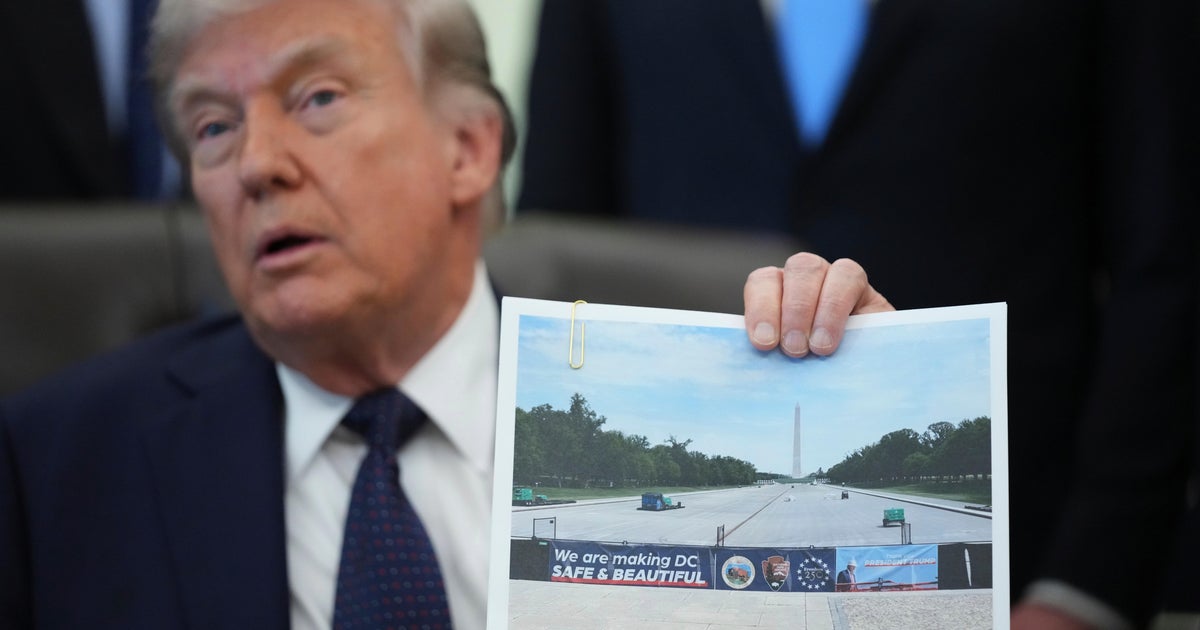

Trump’s Vision for an “American Flag Blue” Reflecting Pool
The Lincoln Memorial Reflecting Pool, one of Washington D.C.’s most iconic and historically significant landmarks, has become the latest target of President Trump’s ambitious renovation agenda. During a Thursday press briefing ostensibly focused on drug prices, the president unveiled plans to completely resurface the bottom of the historic pool with what he described as the “latest and greatest filament” in a patriotic shade he’s calling “American flag blue.” This announcement represents yet another chapter in Trump’s ongoing effort to reshape the capital’s most recognizable monuments and public spaces, a campaign that has generated both enthusiasm and significant controversy since he returned to the presidency.
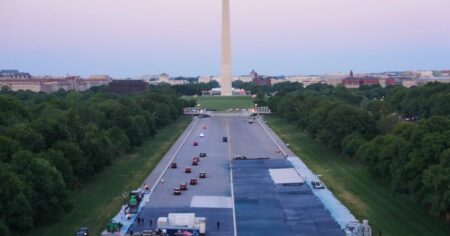
The Reflecting Pool, originally constructed in the 1920s, holds an extraordinary place in American history. It served as the backdrop for Dr. Martin Luther King Jr.’s legendary “I Have a Dream” speech during the 1963 March on Washington, and has witnessed countless other pivotal moments in the nation’s civil rights movement and political history. The pool and its surrounding areas underwent a comprehensive $34 million renovation during the Obama administration in 2012, funded through stimulus money aimed at infrastructure improvements. Since that time, the National Park Service has performed routine maintenance work, including periodic draining to remove algae buildup, accumulated trash, goose droppings, and various other debris that naturally accumulates in such a large outdoor water feature.
Despite this relatively recent major overhaul, President Trump expressed strong dissatisfaction with what he characterized as the “terrible” current condition of the pool during his Oval Office remarks. Drawing on his background as a New York real estate developer, Trump told reporters that he has personal experience with water features, claiming to have built more than 100 swimming pools throughout his business career. He instructed contractors to approach the project as if they were building a swimming pool, despite the fact that the Reflecting Pool’s basin spans more than 300,000 square feet—roughly equivalent to the area of twelve Olympic-sized swimming pools laid end to end. According to the president’s estimates, the renovation project will require approximately one week of work and cost around $1.5 million, with contractors already beginning work on the stone surfaces and starting to lay down the new “industrial-grade” material. Trump showed photographs documenting the construction process, promising that Americans would soon witness “a beautiful, beautiful reflecting pool, the way it’s supposed to be—much better than it ever was, actually.”
The Color Choice and Design Philosophy
An interesting detail emerged regarding the aesthetic direction of the project during Trump’s presentation. The president revealed that he initially favored a turquoise color scheme reminiscent of the pristine waters found in the Bahamas, presumably aiming for a more tropical and vibrant appearance. However, an unspecified contractor successfully convinced him to opt instead for “American flag blue,” arguing that this more patriotic hue would be far more appropriate for such a nationally significant monument. This decision reflects a broader theme in Trump’s renovation projects—an emphasis on American symbolism and what he perceives as proper recognition of the country’s heritage and values.
Trump’s commitment to addressing the Reflecting Pool predates this current announcement. Back in November, he shared a video on social media showing garbage scattered near the pool’s edge, accompanied by a characteristically combative caption: “Study it hard because you won’t be seeing this Biden filth and incompetence much longer!” Earlier this month, he doubled down on his pledge, writing that he and Interior Secretary Doug Burgum would restore the pool “at a fraction of the cost” that the administration had initially been quoted. These statements fit into Trump’s broader narrative positioning himself as a more efficient steward of public resources compared to his predecessor, though critics might point out that the Obama-era renovation was completed just over a decade ago and that regular maintenance issues are normal for any outdoor public facility.
A Pattern of Presidential Redesign
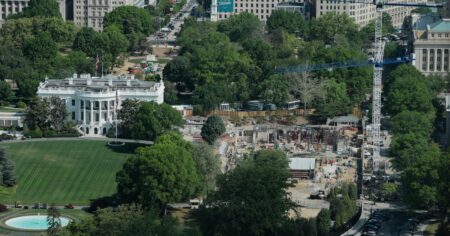
The Reflecting Pool project represents just one component of Trump’s sweeping vision to reshape Washington D.C.’s architectural landscape. Since returning to the presidency, Trump has initiated or proposed an ambitious array of changes to major landmarks throughout the capital area, ranging from relatively modest additions to dramatic structural overhauls. These projects span a spectrum from small touches—like the addition of a “Presidential Walk of Fame” in the West Wing—to massive undertakings, such as the controversial decision to tear down the White House’s historic East Wing to construct a new grand ballroom in its place.
Among his other proposals, Trump has suggested completely overhauling the Kennedy Center for the Performing Arts, one of the nation’s premier cultural institutions. Perhaps most audaciously, he has floated the idea of constructing a gigantic triumphal arch spanning the Potomac River directly across from the Lincoln Memorial, a project that would dramatically alter the capital’s iconic skyline and viewsheds. Additionally, he has proposed painting the Eisenhower Executive Office Building—a stunning example of French Second Empire architecture that has stood beside the White House since the 1870s—entirely white, fundamentally changing its distinctive appearance.
Trump has consistently framed these renovation initiatives as serving dual purposes: beautifying the nation’s capital while simultaneously addressing legitimate, long-overdue maintenance needs that previous administrations allegedly neglected. In the case of the planned White House ballroom, he has argued that the new space will fulfill a genuine functional requirement, providing much-needed capacity for state dinners, diplomatic receptions, and other official functions that currently strain the executive mansion’s existing facilities. From Trump’s perspective, these projects demonstrate his unique ability to think big, execute efficiently, and leave a lasting physical legacy that will endure long after his presidency concludes.
Mounting Criticism and Concerns
However, Trump’s architectural ambitions have not been universally welcomed. Several of his projects have drawn sharp criticism from historic preservation organizations, architectural experts, and congressional Democrats who argue that the president is unilaterally altering—and in some cases completely destroying—iconic public spaces that belong to all Americans, without adequate input from Congress or meaningful public consultation. These critics contend that such significant changes to nationally significant landmarks should require extensive review processes, environmental impact studies, and democratic oversight rather than being implemented at presidential whim.
The funding mechanisms for some projects have raised additional ethical questions and transparency concerns. The White House ballroom, for instance, is being financed through hundreds of millions of dollars in private donations rather than taxpayer funds. While Trump has touted this as fiscally responsible, critics worry about potential conflicts of interest, the identities of major donors, and what influence or access these contributors might expect in return for their generosity. Similarly, controversy erupted when the Kennedy Center’s board voted to add President Trump’s name to the institution, a decision that many viewed as inappropriate politicization of a cultural landmark that has traditionally maintained bipartisan support and independence.
The debate over Trump’s renovation agenda ultimately reflects deeper disagreements about presidential power, the stewardship of public heritage, and competing visions for how America should present itself to the world. Supporters see a decisive leader who isn’t afraid to make bold improvements and restore American grandeur to neglected spaces. Critics perceive an authoritarian impulse to impose personal preferences on shared national treasures without proper democratic processes. As work begins on the “American flag blue” Reflecting Pool, these tensions show no signs of resolution, ensuring that Trump’s architectural legacy will remain as controversial as virtually every other aspect of his unprecedented presidency. Whether future generations will view these changes as inspired improvements or regrettable alterations to irreplaceable historic sites remains an open question that only time will answer.