

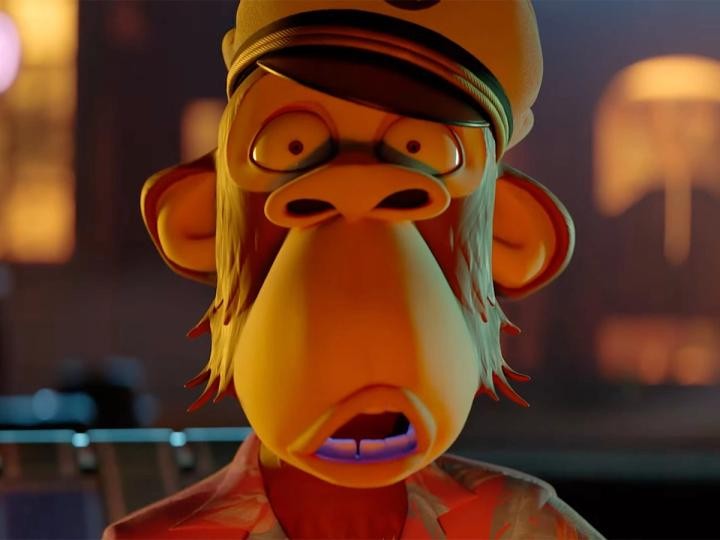

The Bored Ape Comeback: Is the NFT Market Making a Real Recovery?
A Surprising Resurgence in Digital Collectibles
After what felt like an eternity of doom and gloom in the NFT space, something unexpected is happening: Bored Ape Yacht Club (BAYC) tokens are climbing back from the depths. Over the past month, we’ve witnessed the floor price—essentially the minimum you’d pay to join this exclusive digital club—double from around 5 ETH to 10 ETH. That’s not just a small bump; it’s a significant vote of confidence from collectors and traders alike. Meanwhile, ApeCoin (APE), the governance token that powers the broader ecosystem, has also experienced a notable jump, rising from under ten cents to roughly sixteen cents, accompanied by a surge in trading activity that suggests real money is flowing back into the space.
This isn’t happening in isolation either. The revival of BAYC is part of a broader pattern emerging across the cryptocurrency landscape, where riskier, more speculative assets are suddenly back in fashion. Memecoins and other high-octane digital assets are outperforming their more conservative cousins in the decentralized finance (DeFi) sector, painting a picture of retail traders—everyday people betting on crypto—returning to the market after months of sitting on the sidelines. It’s as if the collective appetite for risk is awakening from hibernation, and the NFT market is one of the first places where that renewed energy is manifesting.
More Than Just Hype: The CEO’s Perspective
Michael Figge, who recently stepped into the CEO role at Yuga Labs (the company behind Bored Ape Yacht Club), sees this rally as more than just another pump-and-dump cycle. He’s been with the company in various executive capacities since 2022, so he’s witnessed both the stratospheric highs and the crushing lows of the NFT market firsthand. In his view, the recent price recovery isn’t just speculative fever—it’s a correction of a market that had become fundamentally mispriced. “It’s clear from the numbers that for some time, as far as blue-chip digital collectibles go, it was oversold,” Figge explained in a recent interview. During the prolonged downturn, something interesting happened: while prices cratered, the number of unique holders actually increased. In other words, more people were buying and holding these digital assets even as their value plummeted.
This disconnect between participation and price is crucial to understanding what’s happening now. Figge acknowledges that skeptics might point out that while prices have doubled, the holder count hasn’t matched that growth. But that criticism misses the point, he argues. The market had fallen so disproportionately compared to actual user engagement that what we’re seeing now isn’t irrational exuberance—it’s recovery. The prices had compressed so dramatically that they no longer reflected the underlying community activity and interest. It’s like a rubber band that was stretched too far in one direction and is now snapping back toward equilibrium. Whether this equilibrium holds, of course, remains to be seen, but there’s at least an argument that the recent rally has some foundation beyond pure speculation.
Art Institutions Quietly Embraced What Speculators Abandoned
While the financial markets were melting down, something fascinating was happening in a completely different world: traditional art institutions were quietly integrating NFTs and blockchain-based art into their collections. A recent essay by a pseudonymous NFT analyst known as “Van” highlighted this parallel narrative that most people missed while obsessing over price charts. Major institutions like the Museum of Modern Art (MoMA), Centre Pompidou in Paris, and the Los Angeles County Museum of Art (LACMA) have all made acquisitions of blockchain-based artworks over the past four years. These aren’t institutions known for chasing trends or making impulsive decisions—they’re cultural gatekeepers that move deliberately and with scholarly consideration.
This institutional adoption suggests that while the speculative bubble surrounding NFTs largely popped after 2021, the underlying medium proved its staying power. “The speculation died, but the medium survived,” as Van’s essay put it. This is perhaps the most important distinction to make when evaluating the current NFT resurgence. The market isn’t just experiencing another pump driven entirely by greed and FOMO (fear of missing out). Instead, there’s a more mature understanding developing around digital art and on-chain ownership as concepts with value beyond short-term price speculation. The cultural legitimacy that comes with museum acquisitions and scholarly attention provides a foundation that didn’t exist during the first NFT boom. It’s the difference between a house built on sand and one built on bedrock—the structure might look similar, but one is far more likely to weather the storms.
DeFi’s Troubles May Be NFTs’ Opportunity
The timing of the NFT rebound is also worth examining in the context of broader crypto market dynamics. Decentralized finance, which once seemed like the most “serious” and sustainable use case for blockchain technology, has been experiencing significant growing pains. A series of hacks, exploits, and security breaches have rattled confidence in DeFi protocols, while yields across lending platforms have declined, making these investments less attractive. When you can lose your entire stake to a well-executed hack, the promise of passive income becomes considerably less appealing. Figge didn’t mince words on this subject: “With one well-planned hack, you can lose it all. That has to get solved in DeFi, but it’s definitely made people rethink the idea that it’s the only use case.”
This creates an interesting dynamic where NFTs suddenly look more appealing by comparison. While they certainly have their own risks—including price volatility, liquidity issues, and marketplace reliability concerns—they offer something fundamentally different from DeFi tokens. NFTs are tied to communities and social networks that can persist even when prices fluctuate. That social layer provides a kind of value that exists independently of financial returns, something that pure financial instruments can’t replicate. We’re even seeing this play out in the development of NFT financial markets. A recent $2.8 million loan backed by a CryptoPunk NFT made waves across social media, with the lender positioned to earn roughly $138,000 in interest over 90 days. This represents one of the largest NFT-backed loans on record and demonstrates that sophisticated market participants are developing financial instruments around these digital assets, treating them as legitimate collateral rather than worthless JPEGs.
The recovery isn’t limited to Bored Apes either. Pudgy Penguins, another prominent NFT collection, has seen strong rallies in recent weeks, suggesting that the rising tide is lifting multiple boats. There’s also growing speculation around OpenSea—the marketplace that became synonymous with the 2021 NFT boom—potentially launching its own token, which could catalyze another wave of activity and interest in the space. These developments point to an ecosystem that’s maturing and diversifying rather than simply repeating old patterns.
Community Over Speculation: A New (Old) Focus
Despite the positive price action, Figge is remarkably candid about the role speculation plays in the NFT market. “It would be naive to say financial speculation isn’t a huge driver,” he admitted. He’s not pretending that everyone buying Bored Apes is doing so purely for the art or the community—money matters, and it always will in these markets. However, he does believe that this cycle, while it may “rhyme” with previous ones, won’t be identical. Markets evolve, participants learn (sometimes), and ecosystems develop new characteristics over time.
With this in mind, Yuga Labs has deliberately shifted its strategy back toward what made BAYC successful in the first place: community building. Over the past month, the company has organized more than 30 in-person meetups around the world, creating opportunities for holders to connect face-to-face rather than just watching Discord channels and price charts. “A lot of what made Bored Ape work in the first place—the social layer—hasn’t really been serviced in recent years,” Figge explained. “We’ve gone back to basics.” This represents a notable pivot from the previous approach of constantly launching new products, expanding the metaverse, and pursuing ambitious (some would say overambitious) projects. Instead, the focus is on nurturing the existing community and remembering what initially created value.
What This Means for the Future of Digital Ownership
So what should we make of all this? Is the NFT market genuinely recovering, or are we just witnessing another speculative bubble inflating before our eyes? The honest answer is probably “both.” Financial speculation will always be part of these markets—that’s not necessarily good or bad, it just is. But what’s different this time is the foundation underneath the speculation. Institutional adoption provides cultural legitimacy. Community-building efforts create social value that exists independently of price. The development of financial instruments like NFT-backed loans suggests market maturation. And the problems plaguing alternative sectors like DeFi make NFTs look relatively more attractive by comparison.
None of this guarantees sustained growth or prevents another crash. Markets are unpredictable, especially in the wild world of cryptocurrency and digital assets. What we can say is that NFTs have survived their first major crash and are showing signs of life that appear to be based on more than pure hype. The technology has proven useful enough that major cultural institutions are incorporating it into their collections. The social dynamics have proven compelling enough that communities persist even through brutal bear markets. And the financial infrastructure is developing to the point where these assets can serve functions beyond simple buying and selling.
Whether Bored Apes specifically will maintain their cultural relevance and financial value over the long term remains an open question. Trends change, new collections emerge, and yesterday’s blue-chip can become tomorrow’s forgotten relic. But the broader question of whether blockchain-based digital ownership has a future beyond speculation seems to be answering itself: yes, it does. The challenge now is separating the signal from the noise, identifying which projects are building real value versus which are just riding the current wave of optimism. For those paying attention, the current moment offers a fascinating case study in how technology, art, finance, and community can intersect in unexpected ways—and how markets can recover from what looked like terminal decline.