


The End of an Era: CBS News Radio Falls Silent After 99 Years
The Golden Age of Audio Journalism Comes to a Close
After nearly a century of bringing breaking news, firsthand accounts, and authoritative reporting directly into American homes, CBS News Radio will cease operations later this month, marking the end of an extraordinary 99-year run. Long before YouTube content creators, podcast hosts, or even television evening news programs became household staples, millions of Americans turned their radio dials to CBS to understand what was happening in their country and around the world. The network’s decision to shutter its radio news operations reflects the dramatic transformation in how modern audiences consume information, with social media platforms increasingly dominating the news landscape. CBS executives have acknowledged these shifting consumption patterns alongside what they describe as “challenging economic realities” that have made maintaining the service unsustainable. For those who grew up with CBS News Radio as their lifeline to world events, this closure represents more than just a business decision—it marks the final chapter of broadcast journalism’s founding institution, the pioneering service that essentially invented the format and established standards that would influence generations of reporters across all media.
Revolutionary Beginnings: When CBS Changed Journalism Forever
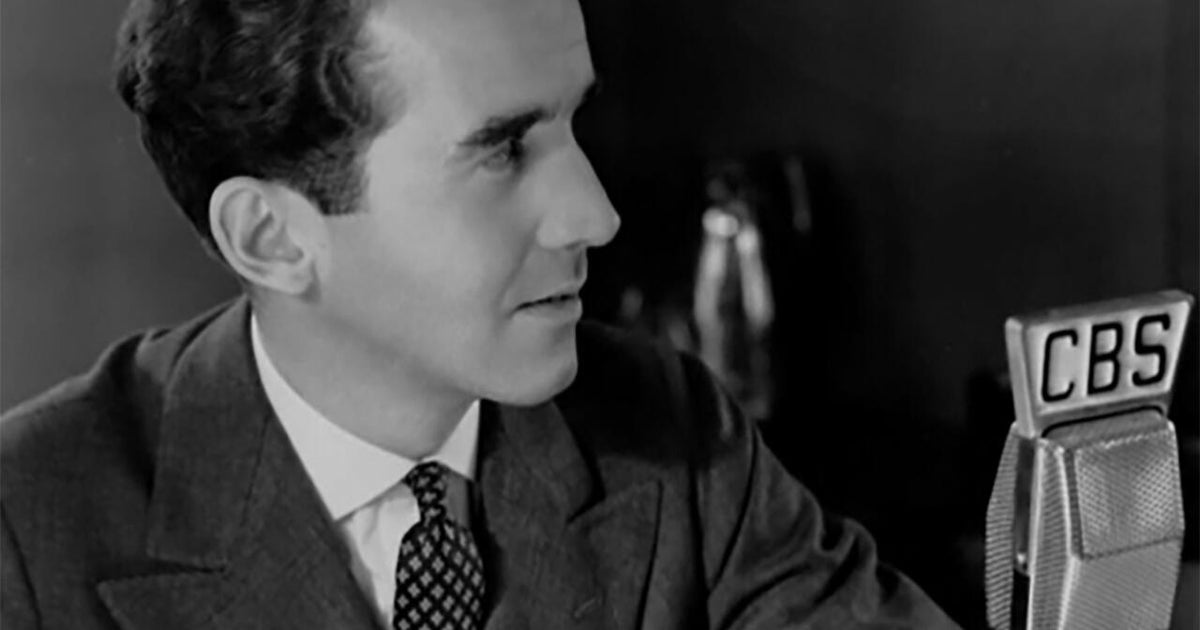
The story of CBS News Radio’s profound impact on journalism begins not with its founding in 1927 as a radio network, but with a single groundbreaking broadcast that changed everything about how news was reported. On March 13, 1938, CBS essentially invented broadcast journalism as we know it today, according to Craig Swagler, who worked at CBS News Radio for 23 years before becoming the network’s top radio executive. Just one day earlier, Adolf Hitler’s army had marched into Austria, annexing the entire nation in what became known as the Anschluss. As anchor Robert Trout reported to stunned American listeners: “Right at this moment, Austria is no longer a nation, but is now officially a part of the German empire. The Nazis have taken over the radio, and they are out to control everything.” What made this broadcast revolutionary wasn’t just the urgency of the news, but how it was delivered. A then-unknown 29-year-old named Edward R. Murrow happened to be in Europe, originally sent there by CBS chief William S. Paley simply to recruit voices for various radio programs. But when Murrow witnessed firsthand the danger Hitler posed, he worked with executives back in New York to create something unprecedented: a live news program featuring remote reports from five different European cities—a technical marvel for the era—all coordinated by Trout anchoring from New York. Murrow himself reported from Vienna, marking the first time the American public heard his voice: “This is Edward Murrow speaking from Vienna. It’s now nearly 2:30 in the morning, and Herr Hitler has not yet arrived.” That 1938 broadcast electrified audiences across America and gave birth to the “CBS World News Roundup,” which would become America’s longest-running news program, bringing the realities of war and its aftermath directly into American living rooms.
The Voices That Defined a Generation
For Steve Kathan, the current and final anchor of the “CBS World News Roundup,” the discovery of CBS News Radio in the 1960s came through a transistor radio, where he first heard “some of the great CBS News broadcasters.” What captivated him was the immediacy of the experience: “You were hearing something live. It was a live broadcast.” This sense of being connected to history as it unfolded became CBS News Radio’s defining characteristic. Dan Rather, who would later become anchor and managing editor of “The CBS Evening News,” began as a CBS Radio reporter covering the assassination of President John F. Kennedy: “The mood in Dallas is still one of very deep shock. There are many people in Dallas who sincerely and literally still have a very difficult time believing what happened here today.” Growing up in Texas, Rather’s parents viewed radio as a “magic carpet” that transported listeners to distant places and events. Young Dan, confined to bed with rheumatic fever, stayed “riveted to the radio because it was my constant companion.” The standard set by Edward R. Murrow and his colleagues—known as “Murrow’s Boys”—established benchmarks throughout the news division that influenced everyone who followed. “All of them could write well,” Rather recalled. “You didn’t work for Murrow if you couldn’t write well.” The quality of writing from correspondents like Charles Kuralt and Charles Collingwood pushed Rather to improve: “I would say to myself, ‘Dan, you’ve got to make yourself a better writer and you better do it in a hurry or you’re not going to be around here.'”
A Training Ground for Excellence
CBS News Radio didn’t just deliver news—it shaped the journalists who would define American broadcasting for decades. Martha Teichner, now a correspondent for “Sunday Morning,” started her career at a country-western station in Grand Rapids, Michigan, that was a CBS Radio affiliate. She used CBS Radio broadcasts as her personal journalism school, transcribing what she heard after hours and then reading those scripts over the original recordings. “I would read the transcriptions to Eric Sevareid or Walter Cronkite or Douglas Edwards,” she explained. This karaoke-like practice “taught me how they wrote, and it taught me how they breathed in a sentence. I really was learning from the best.” These voices became her earliest broadcasting mentors, though she noted they were “absolutely” all male, adding pointedly: “There weren’t any women.” Charles Osgood, who joined CBS Radio in 1967 and passed away two years ago, exemplified the network’s commitment to not just reporting news but making it memorable and meaningful. His daily “Osgood File” broadcasts turned news into poetry, transforming even mundane subjects like Census Bureau terminology into entertaining commentary. The network’s New York headquarters coordinated reporting from correspondents stationed around the globe—from Rio de Janeiro, London, and Paris to Beijing, Seoul, and Sydney. As CBS Radio News manager Dustin Gervais put it simply: “We covered the whole world.”
Bearing Witness to History’s Darkest and Defining Moments
The power of CBS News Radio was perhaps never more evident than when it brought Americans face-to-face with the horrors and triumphs that defined the twentieth century. Edward R. Murrow’s April 15, 1945 broadcast describing what he found at the Buchenwald concentration camp after German forces fled remains one of the most powerful pieces of journalism ever produced. He warned listeners: “Permit me to tell you what you would have seen and heard had you been with me on Thursday. It will not be pleasant listening.” His description included the haunting detail of children, some only six years old, with numbers tattooed on their arms, and an elderly man’s chilling words: “The children—enemies of the state.” Decades later, correspondent Allison Keyes, who has covered countless stories during her more than 25 years in radio, found herself reporting live during the September 11, 2001 attacks in a moment that captured CBS News Radio’s essential purpose: “I can hardly breathe. It looks like a nuclear war happened here. You can’t see the sky at all. It’s all grey smoke.” Reflecting on that day, Keyes emphasized what CBS News Radio had always provided: “People needed to know what was going on that day in real time, no filter, no politics. Here’s what’s happening.” These moments of raw, immediate journalism embodied the legacy that drew people like Craig Swagler to CBS, who described his entry-level position as a desk assistant as “a very starry-eyed dream to fulfill, to sit in that room with giants.”
A Legacy Beyond Headlines: Holding America Together
As CBS News Radio prepares to broadcast its final reports, those who worked there and those who were shaped by it are reflecting on its significance beyond just delivering information. Dan Rather believes “CBS Radio should be remembered for becoming a national institution” that served a function far greater than simply reporting events. “It, for many, many years, was part—and I would argue not a small part—of what held the country together,” he said. In an era of increasingly fragmented media consumption, where audiences self-select into ideological echo chambers and social media algorithms determine what information people see, the idea of a single trusted voice providing unfiltered, straightforward news to millions of Americans simultaneously seems almost quaint. Yet that shared experience of collective understanding, of a nation listening together to the same facts about the same events, created a common foundation for democratic discourse that has become increasingly rare. Program host Allison Keyes emphasized that “everyone knows the legacy of CBS; everybody knows the power and respect that that name engenders,” while current anchor Steve Kathan noted the unique immediacy of the medium that drew him in as a child. As the network prepares to go silent, it’s fitting to remember Edward R. Murrow’s famous sign-off, words that have closed countless broadcasts over the decades and now serve as a farewell to an institution that defined American journalism: “Good night, and good luck.” The end of CBS News Radio reminds us that while technology and platforms change, the fundamental need for trustworthy, well-crafted, immediate journalism remains constant—even if the ways we access it continue to evolve.