

The Burning Truth: What Really Happened When Pacific Palisades Was Left to Burn
An Illusion of Safety Shattered
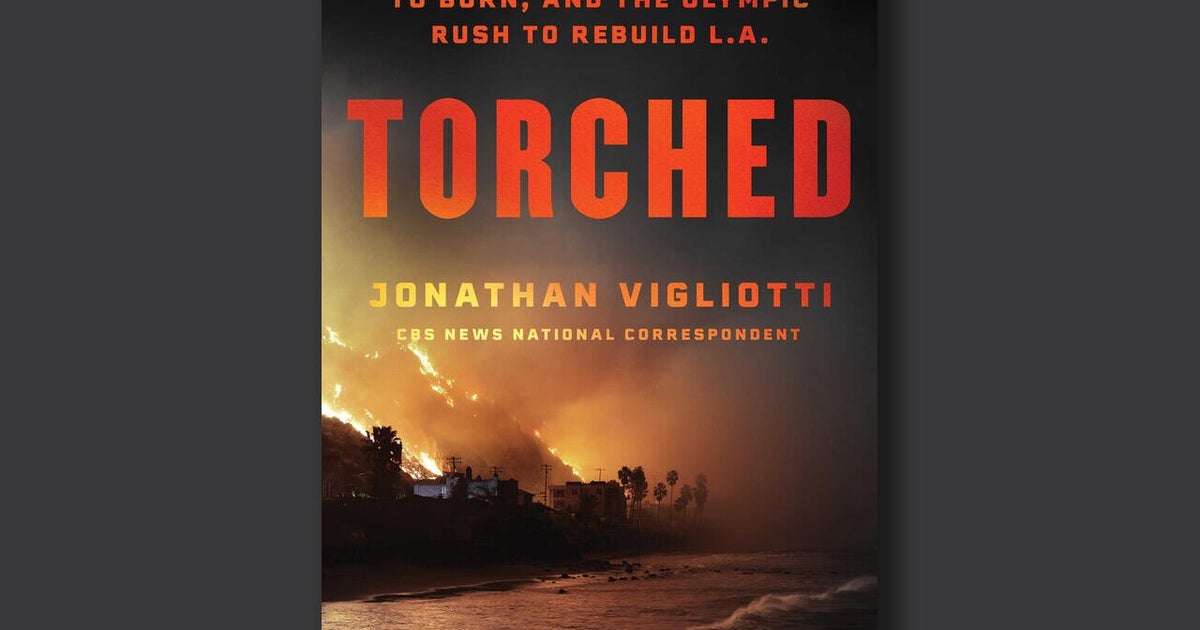
Pacific Palisades seemed like paradise—a picturesque coastal enclave where California’s mountains dramatically meet the sea. For over a century, this community perched on mahogany-colored cliffs represented humanity’s triumph over nature’s wildest impulses. Named after the wooden palisades that once protected early American forts, the town itself became a different kind of fortress: one built on the dangerous illusion that wealth, modern infrastructure, and human ingenuity could permanently hold back environmental threats. From its founding in the early 1900s, when horse-drawn carriages struggled along rough dirt roads to reach this remote mesa, through its evolution from a Methodist utopia to a glamorous haven for Hollywood’s elite, Pacific Palisades reinvented itself generation after generation. What never changed was the fundamental bargain its residents made with the land—a wager that technology and resources could indefinitely protect increasingly valuable property in one of America’s most fire-prone landscapes. On January 7, 2025, that illusion burned to the ground alongside thousands of homes and businesses, exposing uncomfortable truths about how unprepared even our wealthiest communities are for the climate reality we now face. CBS News correspondent Jonathan Vigliotti’s forthcoming book “Torched” pulls back the curtain on a disaster that wasn’t just predictable—it was preventable.
When the System Failed Catastrophically
The Palisades Fire began deceptively small—a wisp of smoke curling from Temescal Canyon before 10:30 on a Tuesday morning. What residents filming on their phones didn’t realize was that they were documenting the awakening of a “silent assassin”—an ember that had been smoldering secretly for days in vegetation previously scorched by fireworks. Once discovered by a light breeze, that hidden spark transformed almost instantly into an unstoppable inferno. The response failures began immediately and cascaded disastrously. Fire crews didn’t arrive quickly enough to establish containment lines in the hills, allowing flames to race downslope into residential neighborhoods that fire officials had long ago identified as “non-defensible” if breached. Without official evacuation orders, terrified residents fled spontaneously, jamming Sunset Boulevard and other major arteries with abandoned vehicles that created impassable barriers when fire engines finally did arrive. Radio transmissions captured the desperation: “Civilians abandoning cars are impeding firefighting operations.” Some engines were rerouted; others simply turned back. Entire neighborhoods became unreachable islands as the fire advanced through them unchecked. Those residents who chose to stand their ground found themselves fighting forty-foot walls of flame armed with nothing but garden hoses, screaming “Where are the firefighters?” as their community burned around them. The fuel feeding this monster—bone-dry chaparral and eucalyptus—was so volatile it might as well have been pre-soaked in gasoline, and when 100-mile-per-hour winds arrived by nightfall, individual structure fires merged into a single town-consuming front that devoured five football fields every minute.
The Ground Truth No One Wanted to Acknowledge
Vigliotti’s account stands apart because he and his team were actually there—not after the danger passed, not once officials declared it safe for media, but during the critical first four days when the disaster was still unfolding. What they witnessed contradicted the official narrative that quickly took shape. While the fire still burned and winds still howled, officials faced cameras and pointed to weather—the wind, the drought, acts of nature beyond human control. What they conspicuously avoided mentioning were the dozens of homeowners who held defensive lines on their own when no public resources arrived, or the private firefighting crews hired by wealthy residents that stopped flames where city engines never appeared. Acknowledging these uncomfortable facts would have required admitting that the system failed, that the chain of breakdowns started long before the first spark and continued long after containment. Vigliotti’s team didn’t just observe and record—they pulled dogs from burning homes because no one else was there to do it. They documented failures at every stage: the inadequate preparation, the missing resources, the officials who hesitated, the bureaucracy that proved as flammable as the chaparral. The Palisades Fire ultimately became one of the costliest natural disasters in American history, destroying four out of every five structures and flattening entire neighborhoods and the business core into grids of ash and twisted steel. Yet in its aftermath, sustainability experts have called the recovery “deeply flawed and dangerously fast-tracked”—more concerned with appearances and political legacies than genuine public safety reform.
Building for Yesterday’s Climate in Tomorrow’s World
The fundamental problem extends far beyond Pacific Palisades. Nearly half of all American homes were built before 1980—before our current era of megafires, catastrophic floods, and intensifying hurricanes. These structures were designed for a climate that no longer exists, with safety margins calculated for weather patterns that have fundamentally shifted. Even modern building codes lag dangerously behind the accelerating pace of climate change, and government officials at every level continue permitting and even subsidizing new construction in areas scientists have identified as increasingly high-risk. First responders find themselves holding an ever-weakening line with aging equipment, understaffed crews, and tactical approaches developed for the milder conditions of past decades. The Palisades embodied this dangerous disconnect—homes and defensive infrastructure built for one climate reality, now facing an entirely different and far more dangerous one. As former President Barack Obama observed on the tenth anniversary of Hurricane Katrina, rebuilding housing is hard enough, but achieving real structural change requires courage to experiment with new approaches and abandon old ways of doing things. It requires time, political will, and a willingness to make difficult choices that may be unpopular in the short term but essential for long-term survival. No such conversation happened in the wake of the Palisades Fire. Instead, political rivals who would normally be at odds became “strange bedfellows,” united not in service of public safety but in protecting their own legacies and rushing through a recovery that addressed symptoms while ignoring underlying causes.
A Warning the World Cannot Afford to Ignore
Vigliotti’s motivation for writing “Torched” stems from a conviction that this disaster didn’t have to happen—and that communities still standing can take concrete actions right now to avoid a similar fate. The Palisades Fire serves as more than a California tragedy; it functions as a global warning about what happens when societies fail to adapt to changing environmental realities and when leaders prioritize political narratives over uncomfortable truths. The optical illusion that gave Pacific Palisades its name—those cliffs resembling protective wooden stakes—proved tragically prophetic. The real palisades, the actual defenses the community relied upon, were equally illusory: building codes designed for yesterday’s climate, emergency response systems stretched beyond capacity, and a collective assumption that wealth and technology could indefinitely hold back increasingly extreme natural forces. When those defenses failed, the resulting catastrophe exposed vulnerabilities that extend far beyond one California coastal community. Cities and towns across America—and indeed around the world—face similar challenges: aging infrastructure, development patterns that put more people and property in harm’s way, emergency systems designed for conditions that no longer exist, and political cultures that reward short-term thinking over long-term resilience.
Learning from Loss Before It’s Too Late
The legendary actor and social critic Will Rogers, a longtime Pacific Palisades resident whose historic home stood for over a century before being consumed by the flames, once observed that “the short memories of American voters is what keeps our politicians in office.” His words resonate with bitter irony in the aftermath of this disaster, where political theater quickly replaced genuine accountability and the rush to rebuild risked repeating the same mistakes that made the community vulnerable in the first place. Vigliotti’s book exists as a counterweight to that institutional amnesia—a detailed record of what actually happened, who made which decisions, and what the consequences were. More importantly, it serves as a roadmap for communities that want to avoid becoming the next cautionary tale. The actions needed aren’t mysterious: updating building codes to reflect current climate science rather than historical weather patterns, investing in emergency response capacity that matches actual risk levels rather than budget convenience, prohibiting or severely restricting development in areas where defense is impossible, creating redundant evacuation routes that won’t become death traps when everyone uses them simultaneously, and perhaps most difficult of all, having honest public conversations about what can realistically be protected and what cannot. These conversations require political courage because they demand acknowledging that some popular policies—allowing continued development in fire-prone areas, maintaining low property taxes that starve emergency services, prioritizing rapid rebuilding over thoughtful redesign—may need to change dramatically. The Palisades Fire destroyed a beautiful community and shattered many lives, but if its lessons are learned and applied, that terrible loss might prevent future catastrophes. If those lessons are ignored in favor of comforting illusions and political expedience, the next disaster is simply a matter of when, not if.