


Federal Reserve Holds Steady: Jerome Powell Navigates Economic Uncertainty
The Fed’s Decision and Economic Assessment
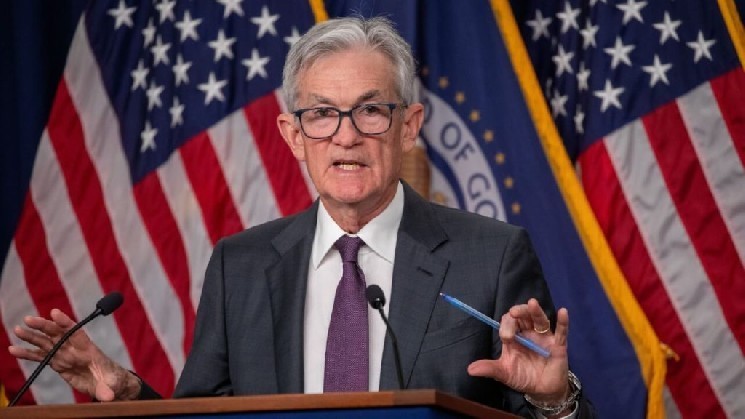
The Federal Reserve has once again chosen to maintain its benchmark interest rate in the range of 3.5% to 3.75%, a decision that came as no surprise to market watchers and economists who had anticipated this move. During his press conference following the March policy meeting, Federal Reserve Chairman Jerome Powell painted a picture of an economy that continues to demonstrate resilience even as it faces multiple challenges. Powell characterized the current state of the American economy as one showing continued growth, though he acknowledged that inflation remains stubbornly elevated above the Fed’s comfort zone. The central bank chief emphasized that the current monetary policy stance is appropriate for the moment, supporting progress toward the Fed’s dual mandate of maximum employment and price stability. However, Powell was careful to note that the Fed would continue to closely monitor all potential risks to the economy, particularly highlighting the uncertain impact of ongoing developments in the Middle East, which could have far-reaching implications for energy prices and broader economic conditions.
Mixed Economic Signals and Labor Market Dynamics
The economic landscape that Powell described reveals a story of contradictions and complexities that the Federal Reserve must carefully navigate. On one hand, consumer spending—the engine that drives roughly two-thirds of U.S. economic activity—continues to show remarkable resilience, suggesting that American households remain confident and willing to open their wallets despite higher prices and borrowing costs. On the other hand, the housing sector, which is particularly sensitive to interest rate changes, continues to show weakness, reflecting the impact of elevated mortgage rates that have priced many potential buyers out of the market. When it comes to employment, Powell noted that the unemployment rate has remained relatively stable since last summer, indicating a labor market that has neither significantly strengthened nor weakened in recent months. This stability represents something of a Goldilocks scenario for the Fed—not so hot that it would fuel wage-driven inflation, but not so cold that it would signal economic distress. Powell expressed confidence that the Fed’s previous interest rate cuts have helped stabilize the labor market, preventing the kind of significant deterioration that some economists had feared might result from the central bank’s aggressive tightening campaign.
Inflation Concerns and Energy Price Pressures
Inflation remains at the heart of the Federal Reserve’s policy deliberations, and Powell’s comments revealed ongoing concerns about price pressures that refuse to fully retreat to the Fed’s 2% target. The Fed anticipates that the Personal Consumption Expenditures (PCE) price index for February will come in at 2.8%, while core PCE inflation—which excludes volatile food and energy prices—is expected to register 3.0%. Powell acknowledged that high inflation largely reflects commodity prices, particularly energy, and noted that inflation expectations have risen recently, a development that concerns policymakers because elevated expectations can become self-fulfilling as workers demand higher wages and businesses raise prices in anticipation of future cost increases. The chairman repeatedly emphasized that rising energy prices, driven in part by geopolitical tensions in the Middle East, will push overall inflation higher, though he stressed it remains too early to fully assess the extent and duration of this impact. Powell noted that the Fed cannot become complacent by simply ignoring energy inflation, as prolonged high oil prices would not only directly affect consumer prices but could also seep into core inflation as businesses pass along higher transportation and production costs. However, he also pointed out that strong U.S. energy production could help offset some of the impact of the oil price shock, providing a buffer that wasn’t available during previous energy crises.
The Path Forward: Interest Rate Outlook and Policy Flexibility
One of the most significant revelations from Powell’s press conference concerned the Federal Reserve’s evolving outlook for future interest rate adjustments. The chairman emphasized that the Fed is in a favorable position to be patient in deciding on future rate changes, noting that the central bank is not operating on a predetermined path and that decisions will be made separately at each meeting based on incoming data. Powell revealed that while the median forecast for the trajectory of interest rates remained unchanged from the previous projection, the number of Fed officials preferring fewer rate cuts increased significantly. In fact, the “dot plot”—which charts individual policymakers’ interest rate expectations—showed that four out of five officials now favor reducing the number of anticipated interest rate cuts. This shift reflects the Fed’s assessment that while inflation is expected to improve, this improvement will not be as rapid as previously anticipated. Powell was explicit in stating that interest rates will not be cut unless there is clear progress on bringing inflation down, adding that by mid-year, the Fed should have a clearer picture of whether progress is being made on both tariff-related inflation and commodity prices.
Tariffs, Oil Shocks, and Economic Uncertainty
Powell’s comments revealed that the Federal Reserve is grappling with multiple sources of inflation pressure beyond traditional demand-pull factors. The chairman noted that tariffs and commodity prices are the main drivers of elevated goods inflation, and he emphasized that making progress in reducing commodity inflation this year is vital to the Fed’s overall inflation-fighting efforts. Powell acknowledged that slow progress in reducing tariff-related price pressures is affecting the Fed’s inflation forecasts, and he expressed the view that while progress will eventually be made on tariff inflation, it may take more time than initially expected. Regarding the oil price shock resulting from heightened Middle East tensions, Powell stressed repeatedly that “nobody knows the full extent of the economic impact” and that “we really don’t know what kind of impact rising energy prices will have.” He explained that the net effect of an oil shock creates conflicting forces in the economy—pushing inflation upward while simultaneously putting downward pressure on consumer spending and employment as households are forced to allocate more of their budgets to fuel costs. Powell even injected a moment of levity into an otherwise serious discussion by remarking that if there were ever a good time to skip publishing the Summary of Economic Projections, this would be it, given the extraordinary level of uncertainty surrounding the economic outlook.
Looking Ahead: Balancing Risks in a Complex Environment
As the Federal Reserve navigates this complex economic environment, Chairman Powell’s press conference made clear that the central bank is committed to a data-dependent, patient approach that weighs multiple competing considerations. The Fed’s decision to keep interest rates unchanged with an 11-1 vote (with Fed member Stephen Miran being the sole dissenter in favor of a quarter-point cut) reflects a consensus that the current policy stance appropriately balances the risks of doing too much or too little. Powell emphasized that the Fed is fully aware that a series of inflationary shocks have hampered progress toward the 2% inflation target and that future inflation will be affected to some extent by current developments. The chairman stressed that before the Fed can confidently move forward with interest rate cuts, it first needs to see a clear improvement in goods inflation, and whether energy inflation can be looked through depends on whether commodity inflation can be contained. The decision text from the meeting specifically highlighted the impact of the Middle East conflict on the economic outlook, noting that uncertainties were increasing and that officials would closely monitor risks to both inflation and employment targets. As the American economy continues to grow robustly while facing headwinds from geopolitical tensions, energy price volatility, and persistent inflation, the Federal Reserve finds itself in a waiting game—ready to adjust policy when the data provides clearer signals, but unwilling to move prematurely in either direction and risk undermining the progress made thus far in stabilizing the economy.