



The Reality Check: How Decentralized Is DeFi Actually?
Breaking Down the Decentralization Myth
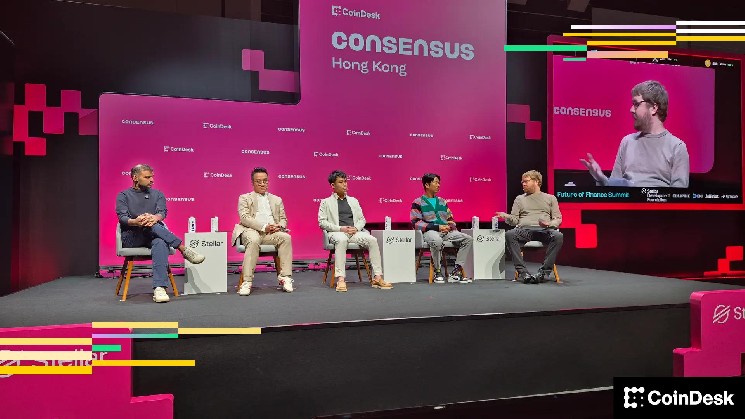
At the recent Consensus Hong Kong 2026 conference, industry veterans gathered to address one of cryptocurrency’s most controversial questions: just how decentralized is decentralized finance really? The panel titled “How Decentralized is DeFi Really?” brought together some of the sharpest minds in blockchain technology to tackle this uncomfortable truth head-on. What emerged from their discussion wasn’t the idealistic vision many newcomers to crypto might expect, but rather a pragmatic acknowledgment that the path to true decentralization is far more nuanced than advertised. The leaders didn’t shy away from admitting that what we call “decentralized” finance today often contains significant elements of centralized control—and they argued that’s not just acceptable, but necessary for survival in the early stages of a protocol’s life.
The conversation represented a significant shift in how the industry talks about itself. Rather than clinging to absolutist definitions of decentralization, these industry leaders presented a more honest picture: decentralization exists on a spectrum, not as a simple yes-or-no checkbox. Most protocols occupy a middle ground, somewhere between fully centralized traditional finance and the completely trustless, permissionless systems that blockchain enthusiasts dream about. This acknowledgment of what panelists called the “decentralization illusion” reflects a maturing industry willing to confront the gap between its revolutionary ideals and the messy realities of building functional, secure financial infrastructure. While the ultimate goal remains to replace traditional intermediaries with automated smart contracts, the journey there requires temporary compromises that would have been controversial to admit just a few years ago.
The Parenting Approach to Protocol Development
Anand Gomes, who heads Paradigm and Paradex, offered perhaps the panel’s most memorable analogy when he compared protocol founders to parents raising children. His perspective challenges the purist view that protocols should be immediately decentralized from day one. Instead, Gomes introduced the concept of an “incubation phase”—a period during which centralized controls aren’t just acceptable but represent responsible stewardship. “You want your kids to be strong and independent once they grow up,” Gomes explained with striking clarity, “but that doesn’t mean you leave them unattended in their infancy.” This parental framework reframes what critics might call centralization as actually being a form of protective guidance during a protocol’s most vulnerable early days.
According to Gomes, the use of admin keys and centralized guardrails during roughly the first 18 months of a protocol’s existence isn’t a betrayal of decentralized principles—it’s a fiduciary responsibility to the community and investors. His reasoning is straightforward and difficult to argue with: a protocol that gets exploited or collapses within its first six months simply won’t have a future to decentralize. There’s no point in achieving perfect decentralization if the protocol doesn’t survive long enough to matter. This perspective acknowledges that early-stage protocols face significant security risks, potential bugs in untested code, and unforeseen attack vectors that require human oversight to address quickly. Removing all centralized controls too early, in this view, is less about ideological purity and more about reckless endangerment of user funds and the protocol’s long-term viability.
Layer 1 Governments Versus Layer 2 Businesses
Gomes drew another fascinating distinction when comparing different roles within the blockchain ecosystem, specifically contrasting Vitalik Buterin’s position with that of layer 2 protocol founders. He positioned Buterin, Ethereum’s co-founder, as essentially running a “government” at the base layer—focusing on stability, neutrality, and establishing constitutional-level rules that apply universally. Buterin’s well-documented push for what he calls “stage 1” decentralization aims to ensure Ethereum itself remains what Gomes termed a “freedom machine,” a neutral foundation that doesn’t favor any particular party or use case. This governmental role requires different priorities than those running specific applications or layer 2 scaling solutions.
In contrast, layer 2 founders function more like businesses, according to Gomes—they’re focused on growth, user acquisition, and building sustainable products that people actually want to use. While the base layer can afford to prioritize decentralization and neutrality above all else, these application-layer builders face different pressures and competitive dynamics. Gomes argued that these founders must be “stubborn” in maintaining protective controls during their protocols’ early vulnerability, even if that means temporarily holding more centralized power than purists would prefer. This doesn’t make them antagonistic to decentralization; it simply recognizes that different layers of the blockchain stack face different challenges and timelines for achieving their decentralization goals. What works for a foundational blockchain protocol doesn’t necessarily translate to a DeFi application trying to gain traction in a competitive market.
The Infrastructure Reality and Institutional Demands
Glenn Woo, representing Blockdaemon, a major infrastructure provider in the blockchain space, brought a ground-level perspective to the discussion that’s often overlooked in theoretical debates about decentralization. His point was simple but profound: as DeFi scales to meet the demands of institutional players—the banks, asset managers, and financial giants who control trillions of dollars—the hardware and security requirements naturally create layers of centralization. This isn’t about ideology or preference; it’s about meeting the non-negotiable standards that institutional participants require before they’ll trust a system with significant assets.
Woo’s observation highlights a tension that’s become increasingly apparent as DeFi has grown beyond its crypto-native origins. For decentralized finance to earn a place alongside or within traditional finance, handling transactions for entities like the DTCC (Depository Trust & Clearing Corporation, which processes quadrillions of dollars in securities annually), it needs what Woo called “professionalized, robust infrastructure.” This institutional-grade reliability often requires sacrificing some degree of absolute decentralization in favor of performance guarantees, regulatory compliance capabilities, and security standards that major financial institutions demand. It’s a trade-off, certainly, but one that Woo and others on the panel view as necessary if DeFi wants to be more than a niche experiment and instead become genuine infrastructure for global finance.
The Price of Entry for Wall Street Capital
Benji Loh of Treehouse reinforced this theme by describing temporary centralization as the “price of entry” for accessing the massive capital and legitimacy that traditional Wall Street institutions can bring to the crypto ecosystem. His perspective is unabashedly practical: the DeFi industry needs the funding, expertise, and market access that established financial players provide, and those players simply won’t participate in systems that don’t meet their requirements for oversight, security, and accountability. Even the most successful DeFi protocols, Loh observed, typically don’t push toward their decentralized ideals until after they’ve achieved product-market fit and built stable, reliable trading infrastructure that works consistently.
This sequencing—building first, decentralizing later—represents a significant departure from earlier crypto philosophy, which often treated decentralization as a starting point rather than a destination. Loh’s argument is that you need something worth decentralizing before the decentralization itself matters. A perfectly decentralized protocol that nobody uses and that doesn’t solve real problems is far less valuable than a somewhat centralized system that actually provides utility and attracts users and capital. Once a protocol has proven its value proposition and built the technical infrastructure to deliver reliably, then it can progressively decentralize without risking collapse. This pragmatic approach acknowledges that ideological purity doesn’t pay the bills or fund development teams, and that sustainable growth sometimes requires accepting support from traditional finance even when that support comes with strings attached.
Building Transparent Pathways to True Decentralization
Arion Ho, CEO of ENI, provided perhaps the most forward-looking perspective by focusing not on whether protocols start centralized, but on how they create credible paths toward eventual decentralization. His emphasis on “transparent rules” suggests that the real measure of a project’s decentralization commitment isn’t its current state but the systems it puts in place to gradually reduce human intervention. “Decentralization is not really a form of what kind of governance we’ve been doing,” Ho explained, “it’s how to avoid having too much human intervention.” This reframing shifts the conversation from organizational structure to operational philosophy—it’s less about who currently holds the keys and more about building systems that increasingly don’t need anyone to hold keys at all.
Ho’s approach involves hard-coding rule-based, verifiable structures into a protocol’s DNA from the very beginning, even if centralized teams initially maintain override capabilities. By establishing these transparent frameworks early, founders create a clear roadmap that the community can verify and hold them accountable to over time. When the moment eventually arrives to hand control to the community—to remove the admin keys, eliminate the multisig controls, and let the protocol run autonomously—this transition becomes both safer and more sustainable because the systems were designed for that handoff from day one. As institutional giants like Goldman Sachs begin moving multitrillion-dollar operations onto blockchain rails, this kind of thoughtful, transparent approach to progressive decentralization becomes not just philosophically preferable but practically essential. The panel’s ultimate consensus was clear: the goal isn’t simply to remove intermediaries for the sake of ideology, but to build systems mature and robust enough that when the “parental” guardrails finally come off, the protocols can withstand the intense scrutiny and demands of global markets without collapsing.